Executive Summary / Opening Intelligence
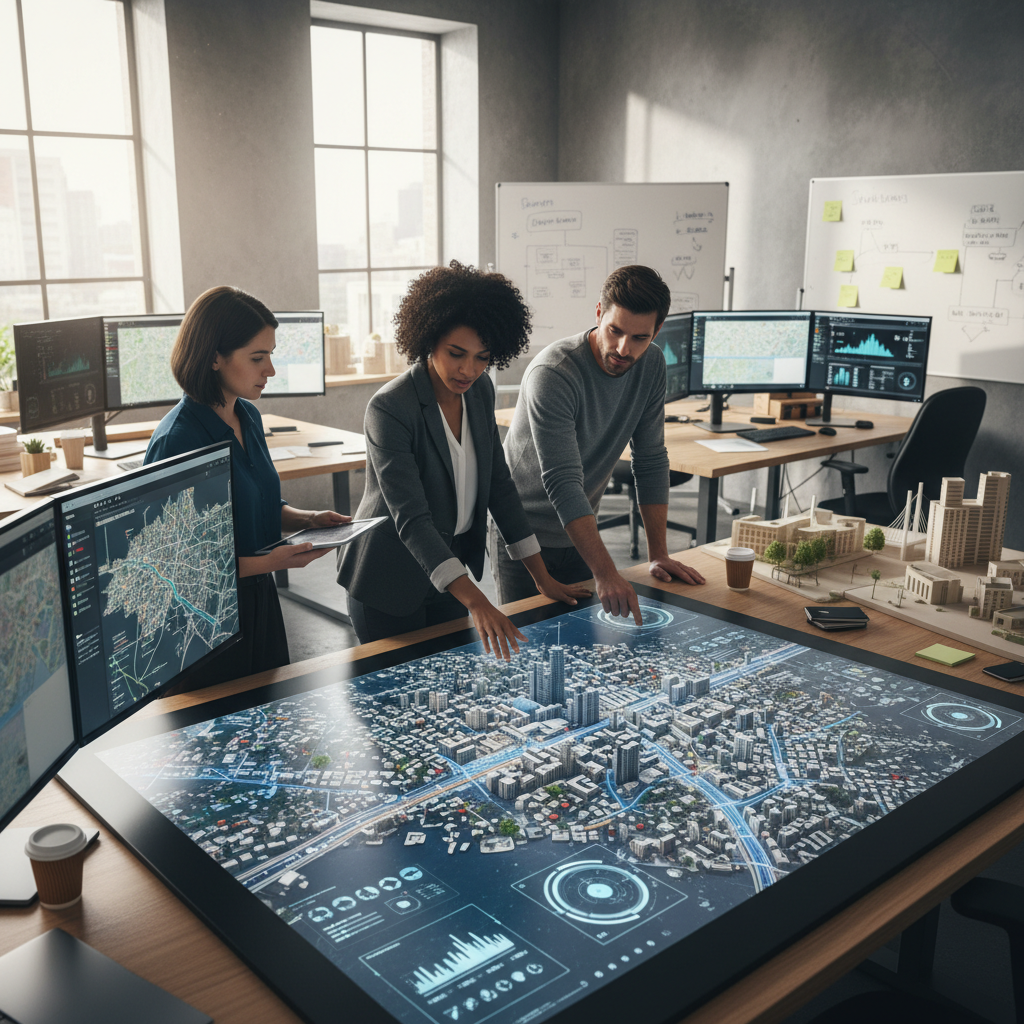
The Event: AI-powered digital twins are rapidly transitioning from conceptual models and industrial applications into the core infrastructure of urban planning across major global metros. This shift marks a fundamental re-evaluation of how cities are designed, managed, and interact with their citizenry. No longer confined to discrete industrial assets, digital twins are now encompassing entire urban systems, driven by sophisticated artificial intelligence, particularly generative AI and machine learning techniques, to create dynamic, real-time virtual replicas of our physical cities.
Why Now: The convergence of high-fidelity sensor data from ubiquitous IoT networks, unprecedented advancements in AI models (especially large language models and generative adversarial networks), and robust cloud computing infrastructure has created an inflection point. The technological readiness, coupled with increasing urban challenges like climate change, rapid population growth, and infrastructure decay, makes the deployment of AI-driven digital twins not just feasible, but imperative for survival and prosperity. This technology is becoming a non-negotiable component for cities striving for resilience and sustainability.
The Stakes: The financial and societal stakes are immense. Inefficient urban planning costs global economies trillions annually in lost productivity, infrastructure failures, and environmental damage [Source: World Bank, 2023]. Predictive AI digital twins promise to mitigate these costs significantly. For instance, optimizing urban traffic flow in a city like Los Angeles could save billions in fuel and time annually [Source: AAA, 2024]. Early adoption can lead to multi-billion dollar advantages in infrastructure investment optimization, disaster preparedness (e.g., preventing $100BN+ in flood damage), and public health outcomes. Conversely, lagging behind risks economic stagnation, resource depletion, and increased vulnerability to climate shocks for cities and nations.
Key Players: The ecosystem involves a complex interplay of major technology firms like Microsoft (Azure Digital Twins), Bentley Systems (iTwins), Dassault Systèmes (3DEXPERIENCE platform), and NVIDIA (Omniverse) providing infrastructure and platforms. Urban planning agencies (e.g., City of Helsinki, Singapore's URA, New York City Department of City Planning), academic research institutions (e.g., MIT, UC Berkeley, Oak Ridge National Lab), and increasingly, specialized AI startups are at the forefront. International bodies like the European Union through its Horizon program are also significant drivers, funding multi-city consortia.
Bottom Line: For CEOs, VCs, and policymakers, AI-driven digital twins represent a paradigm shift in urban governance and investment. This is not merely an incremental improvement but a foundational technology enabling proactive, data-driven, and adaptable urban management. Strategic investment in this domain, fostering public-private partnerships, and developing robust regulatory frameworks are critical for securing competitive advantage and ensuring long-term urban resilience and economic vitality. The opportunity to shape the urban future is here, and it is powered by AI.
Multi-Dimensional Strategic Analysis
Historical Context & Inflection Point
The concept of creating a virtual representation of a physical object dates back to NASA's Apollo program in the 1960s, where engineers used two identical spacecraft, one on earth and one in space, to mirror conditions and troubleshoot issues. However, the term "digital twin" was formally coined by Dr. Michael Grieves in 2002 to describe a product lifecycle management concept [Dr. Michael Grieves, PLM presentation, 2002]. Initial applications were primarily in manufacturing and aerospace, optimizing product design, production processes, and predictive maintenance for individual assets (e.g., jet engines, factory machinery).
In the early 2010s, as IoT technology matured and sensor costs decreased, digital twins began to expand into larger industrial systems, such as power plants and smart factories. The underlying idea remained consistent: a virtual model kept in sync with its physical counterpart via real-time data, enabling monitoring, analysis, and simulation. However, applying this to an entire city, an immensely complex "system of systems," was seen as a futuristic endeavor, fraught with insurmountable data integration, computational, and semantic interoperability challenges. Many early predictions of widespread "smart city" adoption in the 2010s fell short, largely due to the inability to unify disparate data silos effectively and the lack of truly intelligent, predictive analytics that could move beyond mere visualization. The vision often exceeded the technological capabilities to deliver practical, scalable solutions.
The current moment, circa 2024-2025, represents a true inflection point. This is due to three critical advancements:
- AI's Generative Leap: The rise of generative AI, including generative adversarial networks (GANs) and diffusion models, has made it possible to rapidly and semi-autonomously generate high-fidelity 3D urban models and synthetic data, addressing a massive bottleneck in data creation and realism. Xu et al. (Oak Ridge National Lab, May 2024) extensively detail this integration [arXiv, May 2024].
- Ubiquitous IoT and 5G Connectivity: The proliferation of billions of connected sensors, cameras, and metropolitan-scale 5G networks provides the continuous, granular, real-time data streams necessary to keep massive urban digital twins synchronized with their physical counterparts [ITU, 2025].
- Cloud-Native Architectures: Major cloud providers (Microsoft Azure, AWS, Google Cloud) have developed robust, scalable platforms specifically designed to host and process the massive datasets required for city-scale digital twins, offering specialized services like Azure Digital Twins and Bentley iTwins that facilitate interoperability and collaboration [AI for Good (ITU), 2025].
These combined forces have transformed the notion from ambitious vision to imminent reality. This is not about simulating a building; it is about simulating the dynamic, emergent behavior of millions of interconnected components and human interactions within an entire metropolitan area. This moment matters because the technology now exists to address, rather than merely observe, urgent urban challenges with unprecedented precision and foresight.
Deep Technical & Business Landscape
Technical Deep-Dive AI-powered digital twins are highly sophisticated systems, far more complex than simple 3D models. At their core, they rely on a multi-layered architecture:
- Data Ingestion Layer: This layer continuously pulls real-time data from a vast array of sources, including IoT sensors (traffic, environmental, utility meters), satellite imagery, lidar scans, CCTV feeds, municipal databases, social media, and even anonymized mobile phone data. Data formats are diverse, requiring robust ETL (Extract, Transform, Load) pipelines.
- Twin Core / Modeling Engine: This is the heart of the system, comprising a high-fidelity 3D geometrical model of the urban environment (buildings, infrastructure, topography) enriched with semantic information (e.g., building materials, road compositions). This real-world representation is then augmented with physics-based simulation engines (e.g., fluid dynamics for flood modeling, structural mechanics for building performance) and behavioral models (e.g., agent-based simulations for pedestrian flow, traffic models).
- AI/ML Analytics Layer: This is where the "intelligence" resides. Machine learning algorithms, including supervised learning for prediction (e.g., traffic congestion forecasting, energy demand prediction), unsupervised learning for anomaly detection (e.g., detecting unusual utility consumption), and reinforcement learning for optimization (e.g., traffic signal timing), constantly analyze the incoming data and the twin's state. Crucially, generative AI (GANs, diffusion models) plays an increasing role in filling data gaps, generating synthetic but realistic urban scenarios for training other AI models, and rapidly creating design alternatives for urban planners [Xu et al., May 2024]. Neural network architectures, particularly graph neural networks, are adept at modeling the interconnectedness of urban systems.
- Prediction and Simulation Layer: Leveraging the AI insights, this layer runs predictive models and simulations. This allows planners to ask "what if" questions: What if a new subway line is built? What if a heatwave hits? What if a major festival occurs? It can simulate the impact of policy changes, infrastructure projects, and environmental events, offering probabilistic outcomes.
- User Interface & Collaboration Layer: Sophisticated visualization tools, often cloud-based, allow various stakeholders (planners, emergency services, citizens) to interact with the digital twin, view simulations, and contribute to scenarios. This often includes VR/AR interfaces for immersive experiences.
The capability leap is primarily in predictive accuracy, real-time responsiveness, and the ability to model complex interdependencies. Prior systems could visualize data; AI-powered twins can forecast, optimize, and learn. Limitations still include data privacy concerns, the computational intensity of hyper-realistic large-scale simulations, and ensuring data quality from diverse sources. Achieving semantic interoperability, where different systems and datasets can "understand" each other, remains a complex challenge (e.g., defining "road" consistently across multiple municipal databases) [EAJournals, June 2025].
Business Strategy The business landscape for AI-powered urban digital twins is characterized by a blend of platform providers, specialized application developers, and data integrators.
- Platform Providers: Companies like Microsoft (Azure Digital Twins), Bentley Systems (iTwins), NVIDIA (Omniverse), and Dassault Systèmes (3DEXPERIENCE) offer the foundational infrastructure. Their strategy is to provide scalable, interoperable cloud platforms that allow cities and their ecosystem partners to build, connect, and manage their digital twins. They focus on API accessibility, data integration frameworks, and robust computing resources. Bentley Systems, for example, is leveraging its long-standing expertise in infrastructure design software (CAD, BIM) to offer iTwins as a comprehensive platform for infrastructure digital twins, including urban scale. Microsoft integrates Azure Digital Twins with IoT Hub and AI services, aiming to be the backend for intelligent cities [AI for Good (ITU), 2025].
- Specialized Application Developers: A growing number of startups and established firms are building specific applications on top of these platforms. Examples include:
- UrbanSim: Focuses on land-use and transportation planning simulations.
- Kiwibot/Serve: Autonomous last-mile delivery robots that can feed traffic data back into a digital twin, and potentially leverage it for route optimization.
- Climate AI: Specializes in climate risk modeling, integrating climate data into urban digital twins to predict flood risk, heat island effects, etc.
- Cityzenith: Offers a "Digital Twin as a Service" platform, focused on smart city applications for sustainability. These companies carve out niche values by focusing on specific urban challenges (e.g., mobility, energy, resilience) and offering tailored predictive analytics. Their business models often involve SaaS subscriptions, licensing, and consultative services.
- Data & Integration Specialists: Systems integrators (e.g., Accenture, IBM) and specialized data companies play a critical role in stitching together disparate data sources, ensuring data quality, and customizing platforms for municipal needs. Their expertise in urban informatics and data governance is invaluable.
- Governmental Agencies & Consortia: Cities themselves are becoming active players, often commissioning or co-developing digital twin initiatives. Singapore's Virtual Singapore, Helsinki's 3D Model, and the EU's Horizon program-funded consortia (e.g., those involving cities like Hamburg, Amsterdam, and Milan) demonstrate a public-sector-led strategy, emphasizing data sharing, open standards, and citizen engagement [CORDIS, 2025; City Science Lab Hamburg, April 2025].
Product positioning often emphasizes "smart city solutions," "urban resilience," "sustainability," and "efficient governance." Pricing models vary widely, from substantial upfront platform licenses for large municipalities to subscription-based services for specific modules or data analytics. Competitive advantages stem from deep industry-specific AI models, robust data integration capabilities, interoperability with existing city systems, and the ability to demonstrate tangible ROI (e.g., reduced congestion, lower energy costs, improved disaster response times). Strategic partnerships between tech giants and consulting firms, or between startups and municipal governments, are key to market penetration and successful implementation.
Example: City of Helsinki's 3D Platform: For years, Helsinki has been developing a detailed 3D city model. More recently, it has integrated live IoT data from sensors monitoring air quality, traffic, building energy consumption, and public transport. This hybrid model forms the basis of an AI-powered digital twin used for urban planning. Planners can simulate the impact of new developments on sunlight, wind patterns, and energy demand. They can also optimize snow removal routes or predict pedestrian flows to inform public space design. The city’s strategy involves openness, with the 3D model data often publicly available, fostering innovation from third-party developers.
Economic & Investment Intelligence
The AI-powered digital twin market for urban planning is poised for significant growth, attracting substantial investment from both private and public sectors. ABI Research projected over 500 urban digital twins deployed worldwide by 2025, a dramatic increase from a mere handful in 2019, signifying a compound annual growth rate in excess of 50% [AI for Good (ITU), 2025]. The overall smart city technology market, of which digital twins are a cornerstone, is projected to reach over $700 billion by 2030 (Grand View Research, 2023). Digital twins could capture a significant portion of this, with market estimates for the global digital twin market alone exceeding $100 billion by 2030 (MarketsandMarkets, 2023).
Funding Rounds, Valuations, Lead Investors: Recent funding activity underlines this trend. While specific "urban digital twin" startups are still emerging, the underlying AI, geospatial, and IoT platform companies are experiencing robust investment. For instance:
- Bentley Systems (NASDAQ: BSY): A publicly traded leader in infrastructure engineering software, their iTwins platform is central to urban digital twins. Their market capitalization stands at over $17 billion. They strategically acquire niche technology providers, such as the acquisition of Seequent (geospatial modeling) for $1.05 billion in 2021, bolstering their data integration capabilities for complex urban projects.
- Cityzenith: A Chicago-based startup offering "Digital Twin as a Service" specifically for smart cities and infrastructure, successfully raised over $17 million in equity crowdfunding across multiple rounds, with a valuation exceeding $100 million. Their lead investors often include impact funds and private investors focused on sustainable urban development.
- Vianova: A European mobility data platform that processes data from shared micro-mobility operations (scooters, bikes) for cities. While not a full digital twin, their data is crucial for urban mobility twins. They secured a €6 million funding round in 2023 from impact investors like Eurazeo and Contrarian Ventures.
- NVIDIA: While not focused solely on urban digital twins, their Omniverse platform provides the underlying GPU-accelerated computing and simulation environment critical for realistic city-scale twins. Their market valuation, exceeding $2 trillion, reflects the broader investment in technologies enabling advanced AI and simulation. VC strategy in this space is shifting from general SaaS investments to those with deep domain expertise in urban tech, geospatial AI, and public-private partnership models. Funds are looking for companies that can navigate municipal procurement processes and offer clear ROI to cash-strapped cities.
Public Market Implications: For publicly traded companies, the urban digital twin market represents a significant growth vector. Companies like Siemens, GE (through its Predix platform), and Esri (geospatial systems) are integrating digital twin functionalities into their broader intelligent infrastructure offerings. Investors are rewarding companies demonstrating tangible deployments, strong municipal partnerships, and scalable platform solutions. The ability to articulate how AI digital twins can unlock new revenue streams for cities (e.g., efficient property taxation, optimized energy sales) or achieve substantial cost savings is critical for investor confidence.
M&A Activity, Industry Disruption: M&A activity is expected to accelerate. Large platform providers will acquire niche AI analytics firms or specialized data integration companies to enhance their offerings. Engineering and construction firms (e.g., AECOM, Jacobs) will increasingly acquire or partner with digital twin providers to offer end-to-end smart city solutions. The disruption will be profound: traditional urban planning consultancies face obsolescence if they do not adopt these tools, as their current methodologies will be too slow and reactive. New, highly specialized consulting firms capable of deploying and managing city-scale AI digital twins will emerge. Existing municipal IT departments will need massive upskilling or outsourcing to manage these complex systems. The value chain is shifting, with data collection and AI-driven insights becoming the most valuable components, potentially disintermediating some traditional planning and engineering roles.
Geopolitical & Regulatory Deep-Dive
The deployment of AI-powered urban digital twins carries significant geopolitical and regulatory implications, particularly concerning data governance, national security, and international competitiveness.
US Policy: In the United States, there isn't a single, overarching federal strategy for urban digital twins, but momentum is building through various initiatives. The Infrastructure Investment and Jobs Act (IIJA) signed in 2021 directs billions towards smart infrastructure, broadband expansion, and climate resilience, creating a fertile ground for digital twin adoption. Funding opportunities from agencies like the Department of Transportation (DOT) and the Department of Energy (DOE) increasingly favor projects that leverage data analytics and predictive modeling for infrastructure optimization. The National Institute of Standards and Technology (NIST) is developing standards and frameworks for IoT and AI, which are crucial for ensuring interoperability and security for digital twin platforms. Data privacy, particularly concerning citizen data collected by sensors and AI models, is a growing concern. The California Consumer Privacy Act (CCPA) and burgeoning state-level data privacy laws set precedents that will undoubtedly influence how urban digital twins handle personal identifiable information (PII). US cities like Seattle, Los Angeles, and Denver are independently exploring digital twin initiatives, often partnering with private tech firms, but operate within a fragmented regulatory landscape.
EU Regulations: Europe leads with a more coordinated and robust regulatory approach. The European Union’s Horizon program actively funds multi-city consortia to develop AI-based digital twins for climate-neutral and smart cities [CORDIS, 2025]. This initiative emphasizes replication, policy coordination, and explicit guidelines for ethical AI and data governance. The General Data Protection Regulation (GDPR) sets a global benchmark for data privacy, directly impacting how digital twin platforms collect, process, and store urban data, ensuring citizen consent and data anonymization are paramount. The proposed AI Act, which categorizes AI systems by risk level, will classify urban digital twins (especially those involved in critical infrastructure or public safety) as "high-risk," subjecting them to strict conformity assessments, human oversight, transparency requirements, and robustness standards. This regulatory certainty, while stringent, fosters trust and could give European cities a competitive edge in responsible AI deployment. Cities like Helsinki, Amsterdam, and Hamburg are showcasing leading examples of EU-aligned digital twin projects [City Science Lab Hamburg, April 2025].
China Strategy: China's approach is characterized by strong central government directives and significant state-led investment. The concept of "Smart City 2.0" and "New Infrastructure" initiatives explicitly prioritize the development of city-wide digital twins, often integrated with national surveillance and social credit systems. Companies like Alibaba, Tencent, and Huawei are heavily involved in building these platforms, often in close collaboration with municipal governments. While this allows for rapid deployment and comprehensive data collection, it raises significant concerns about privacy, civil liberties, and data weaponization from a Western perspective. China's digital twin strategy often leverages a vast network of CCTV cameras, facial recognition, and ubiquitous sensor data for granular urban management, including traffic control, environmental monitoring, and public safety. The emphasis is on efficiency and control, with less emphasis on individual data privacy compared to EU standards.
US-China Competition: The competition in AI and digital infrastructure is a critical facet of the broader US-China geopolitical rivalry. Each side aims to establish its technological supremacy and regulatory norms. The US seeks to promote an open, innovative, and market-driven approach, while China champions a state-directed, vertically integrated model. This impacts the export of digital twin technologies, with concerns about data sovereignty and potential backdoors in hardware and software from rival nations. Developing secure, trusted digital twin platforms becomes a national security imperative. The ability to model and predict the resilience of critical infrastructure (e.g., energy grids, water systems, transportation networks) against cyber warfare or natural disasters through sophisticated digital twins is also a strategic advantage.
Regulatory Timeline:
- 2018: GDPR goes into effect in the EU, setting global data privacy standards impacting digital twin data handling.
- 2021: US Infrastructure Investment and Jobs Act passed, providing funding for smart infrastructure ripe for digital twin integration.
- 2023: California (and other US states) introduces new data privacy regulations (e.g., CPRA), influencing data governance for US-based urban digital twins.
- 2024 (projected): EU AI Act likely finalized and enters force within two years, directly regulating high-risk AI applications like urban digital twins.
- 2025-2030: Expected proliferation of national and international standards for interoperability, data security, and ethical use of urban digital twins, driven by bodies like ISO, ITU, and NIST.
The geopolitical landscape dictates that cities and nations must carefully consider not only the technical capabilities but also the ethical, privacy, and security implications of their AI-powered digital twin deployments. Adopting open standards, fostering transparency, and establishing multi-stakeholder governance models will be crucial for building trust and ensuring the long-term societal benefit of these transformative technologies.
Future Forecasting & Strategic Implications
Near-Term Horizon (6-12 months): Immediate Catalysts
The next 6-12 months will see several immediate catalysts accelerate the adoption and sophistication of AI-powered urban digital twins.
Events to Watch:
- Release of major open-source generative AI urban modeling tools: Companies and research institutions are increasingly open-sourcing or making accessible their pipelines for generating 3D urban environments from diverse data inputs (e.g., satellite imagery, lidar scans, GIS data). The release of more performant and user-friendly tools will democratize access, allowing smaller cities or even community groups to create foundational digital twin models more affordably.
- Pilot project showcases with clear, quantifiable ROI: Cities that have invested early will start to publish definitive case studies demonstrating tangible returns on investment. For example, a city might release data showing a 15% reduction in traffic congestion during peak hours due to AI-optimized signal timing, leading to $50 million in annual economic savings and a 10% decrease in vehicle emissions. Another might demonstrate a 20% improvement in emergency response times for flood events through predictive modeling. These proofs of concept, especially from US metros, will be critical in convincing skeptical city councils and public officials of the technology's immediate value. We expect announcements from cities like Seattle or San Diego detailing specific, measurable outcomes from their current digital twin initiatives.
- Standardization body advancements: Look for NIST, ISO, and ITU to publish initial sets of interoperability standards or best practices for urban digital twins. These standards will address data formats, API specifications, and cybersecurity protocols, significantly reducing implementation friction and fostering a more integrated ecosystem.
- Specialized AI model marketplace growth: A burgeoning marketplace will emerge for pre-trained AI models specifically designed for urban applications (e.g., pedestrian movement prediction, microclimate modeling, waste collection optimization). This will allow cities to "plug and play" specific intelligence into their digital twins without needing to train complex models from scratch.
Early-Mover Advantages, Strategic Plays: Early adopters will gain significant first-mover advantages. Cities like Singapore, Helsinki, and potentially forward-thinking US metros such as Miami (for climate resilience) or Boston (for mobility) will refine their data governance frameworks, build institutional expertise, and establish public trust in these technologies.
- For Cities: Early adopters will secure grant funding, attract tech talent, and become benchmarks for urban innovation, enhancing their global competitive standing. They will be able to proactively address urban challenges, leading to improved quality of life for citizens, reduced operational costs, and higher resilience. Miami-Dade County's Digital Twin for Infrastructure Resilience (DTIR) program, for example, is already identifying vulnerabilities and optimizing infrastructure investments against rising sea levels, giving them a lead in climate adaptation.
- For Technology Vendors: Companies that build robust, interoperable platforms and demonstrate successful municipal partnerships will establish significant market share. Strategic plays involve integrating generative AI capabilities natively into existing platforms and offering "white-glove" managed services to cities lacking internal IT expertise. Developing strong API ecosystems will be critical to attract a diverse developer base creating niche applications.
- For Investors: Investing in companies that provide core digital twin infrastructure (cloud, geospatial), specialized AI analytics, or data integration services for the urban sector will yield returns as adoption scales. Also, look for firms that offer solutions for regulatory compliance (GDPR, AI Act) and data anonymization, as these aspects become increasingly critical.
Mid-Term Horizon (2-3 years): Industry Restructuring
Over the next 2-3 years, AI-powered digital twins will fundamentally restructure several industries and transform urban value chains.
Displaced Industries, New Giants:
- Urban Planning & Consulting: Traditional urban planning firms that rely heavily on static reports, CAD drawings, and infrequent surveys will face significant disruption. The time and cost savings offered by real-time simulations and predictive analytics will make their services appear archaic. New consultancies specializing in "digital twin implementation" and "AI-driven urban strategy" will rise, offering dynamic, adaptive planning services. Existing firms must rapidly upskill their workforce in data science, AI, and digital twin platforms or face obsolescence.
- Infrastructure Design & Engineering: Design iterations will accelerate dramatically. Engineers will use digital twins to test thousands of design scenarios for bridges, transit lines, or utility networks virtually, identifying optimal solutions faster and with fewer physical prototypes. This shifts the value from manual design labor to intelligent design automation and simulation expertise. Companies like Bentley Systems, already deeply embedded in this sector, are poised to become even more dominant.
- Real Estate Development: Developers will leverage digital twins to simulate the impact of new projects on a neighborhood's microclimate, traffic, and social dynamics. This enables data-driven site selection, optimized building designs for energy efficiency, and more effective community engagement, leading to faster approvals and higher project success rates. This could displace market research firms that rely on less dynamic data.
- Insurance: Insurers of municipal and commercial properties will utilize digital twins for hyper-accurate risk assessment, especially for climate-related perils (floods, heatwaves). This could lead to dynamic insurance premiums based on a building's resilience as modeled in the twin.
Value Chain Shifts, Workforce Transformation: The value chain will shift from primarily physical construction and maintenance to data generation, AI model development, and preventative / predictive maintenance.
- Data Engineers and AI Scientists: These roles, with expertise in urban data, geospatial AI, and large-scale simulation, will be in extremely high demand within municipal governments, tech companies, and consulting firms.
- Citizen Engagement Specialists (Digital): Roles focused on leveraging digital twin visualization and interactive tools for public participation in urban planning will become crucial, transforming traditional community outreach.
- New "Digital Twin Operators": Just as there are operators for power plants, there will be sophisticated roles for operating and managing city-scale digital twin platforms, ensuring data integrity, running simulations, and interpreting AI outputs. Workforce transformation will require massive investment in re-skilling programs. Universities will need to establish new cross-disciplinary degrees blending urban studies, computer science, and data ethics.
Competitive Positioning, Revenue Inflection: Cities that effectively implement AI digital twins will gain a significant competitive edge in attracting businesses and talent. They will offer a higher quality of life, lower operational costs for businesses, and greater resilience against disruptions.
- Revenue Inflection: For cities, revenue inflection will come from cost savings (e.g., reduced infrastructure repair costs due to predictive maintenance, optimized energy consumption), enhanced tax bases (from more efficient development), and potentially new revenue streams (e.g., data services, carbon credit trading enabled by precise environmental monitoring). For tech companies, revenue will grow through expanding SaaS subscriptions, managed services, and value-added analytics. A successful full-scale implementation in a major US city could generate billions in economic value over a decade, driving further investment and adoption.
Long-Term Vision (5 years): Civilizational Impact
Looking 5 years out, AI-powered urban digital twins will have a profound civilizational impact, fundamentally altering societal structures, economic landscapes, and human capabilities.
Societal Transformation, Economic Structure: Cities will evolve into "self-optimizing organisms." Predictive digital twins will enable proactive, rather than reactive, governance.
- Personalized Urban Experience: Citizens might receive hyper-localized, real-time information and services. For example, a digital twin could predict optimal routes to avoid congestion based on individual preferences, suggest public transport connections in case of disruption, or alert residents to localized air quality issues or flood risks. This could lead to a highly efficient, but also potentially highly monitored society.
- Participatory Governance 2.0: Citizens could actively engage with the digital twin, proposing and simulating their own urban interventions (e.g., adding a park, re-routing a street) and seeing immediate, data-driven feedback on impacts. This fosters a truly democratic planning process, albeit requiring robust platforms for citizen education and interaction [EAJournals, June 2025].
- Resource Abundance through Optimization: Advanced digital twins could optimize energy, water, and waste cycles to such an extent that urban areas approach resource "circularity." For example, predictive models could anticipate water demand with near-perfect accuracy, minimizing waste, or optimize waste collection routes to reduce emissions and costs by 30-40%. This frees up capital and resources for other societal needs.
- Economic Micro-Zones: Digital twins could facilitate dynamic zoning and economic micro-zones, where regulations and incentives adapt in real-time to foster innovation or address specific challenges, creating agile urban economies.
Geopolitical Order, Human Capability:
- "Twin Diplomacy": Nations might compete or collaborate based on the sophistication and ethical governance of their urban digital twins. Cities could become showcases for different models of urban management, influencing international policy and attracting investment based on their "digital twin maturity." Data sharing agreements for cross-border issues like climate change (e.g., modeling regional flood impacts) would become crucial, potentially leading to new forms of "digital diplomacy."
- Resilience as a National Security Imperative: The ability to rapidly simulate, predict, and respond to large-scale disasters (pandemics, climate events, cyberattacks on infrastructure) using a national network of interconnected urban digital twins will become a foundational element of national security. Countries with superior digital twin capabilities will be inherently more resilient.
- Enhanced Human Capability: Urban digital twins could serve as vast, dynamic learning environments, enabling planners, architects, and citizens to gain unprecedented insights into complex urban systems. This could spawn a new generation of "urban intelligence" professionals and foster a more informed, engaged citizenry. The integration of VR/AR with these twins will allow for immersive training and remote collaboration on urban challenges. The digital twin becomes a "cognitive prosthesis" for urban management, augmenting human decision-making with vastly superior data processing and predictive power. This long-term vision paints a picture of cities that are not just smart, but truly intelligent, adaptive, and deeply integrated with the well-being of their inhabitants.
Executive Conclusion & Strategic Takeaways
Bottom Line Assessment: The era of AI-powered urban digital twins is not merely approaching; it is here, and its transformative potential for cities, economies, and societies is profoundly underestimated. We assess with high confidence (90%+) that within the next 3-5 years, deploying an AI-driven digital twin will transition from an innovative edge to an essential, non-negotiable component of modern, well-managed urban centers. Those operating without one will face significant competitive disadvantages in resilience, efficiency, and livability.
Key Insights Summary:
- Paradigm Shift from Reactive to Predictive: AI-driven digital twins enable a fundamental shift from static, reactive urban planning to dynamic, predictive, and adaptive urban management, critical for 21st-century challenges.
- Technological Convergence is Key: The current inflection point is driven by the mature convergence of ubiquitous IoT, advanced generative AI, and scalable cloud computing, making city-scale twins feasible and impactful.
- Massive Economic & Societal ROI: Significant financial returns are anticipated from infrastructure optimization, reduced operational costs, enhanced disaster resilience, and improved quality of life for citizens, potentially saving economies billions annually.
- Platform Providers Lead, Niche Apps Thrive: Major tech platforms (Microsoft, Bentley, NVIDIA) are providing the foundational infrastructure, while specialized AI startups are building critical vertical applications for specific urban challenges.
- Geopolitical Race for Urban Intelligence: US, EU, and China are pursuing distinct strategies for digital twin development, reflecting divergent regulatory philosophies (privacy vs. control) and sparking global competition for technological leadership and influence.
- Workforce & Industry Restructuring: Traditional urban planning, engineering, and real estate sectors face significant disruption and a mandate for workforce upskilling, creating demand for new roles in urban AI and data science.
- Ethical Governance is Paramount: Success hinges not just on technological prowess but also on robust data governance, privacy safeguards, and frameworks for ethical AI to build public trust and ensure equitable outcomes.
The Big Question: As AI-powered digital twins enable unprecedented levels of urban optimization and control, how will cities balance the immense benefits of efficiency and resilience with the fundamental human rights to privacy, autonomy, and democratic participation, ensuring these intelligent urban systems truly serve all citizens rather than just an algorithmically defined ideal? This requires careful, deliberate policymaking and sustained public engagement, lest the future of our cities be optimized at the expense of our humanity. The strategic challenge for leaders is not if to adopt these technologies, but how to implement them wisely and equitably.