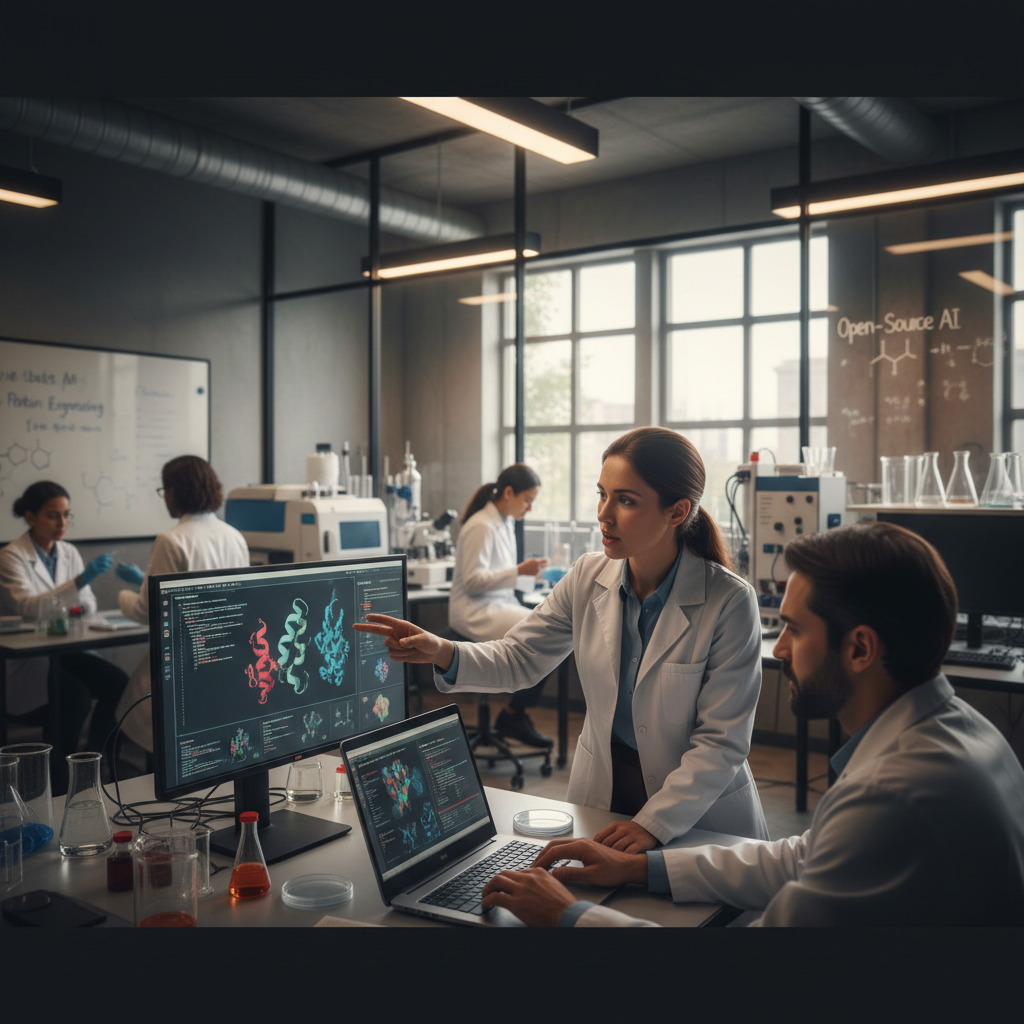
Executive Summary / Opening Intelligence
The Event: A seismic shift is underway in biotechnology as advanced AI-powered, open-source protein design models are rapidly democratizing access to custom enzyme engineering. Platforms like EPFL's BindCraft, Nano Helix's Boltz-2, and the autonomous iBioFAB are moving protein design from specialized labs to a broader scientific community, enabling unprecedented acceleration in enzyme discovery and optimization. This evolution leverages generative AI, deep learning architectures, and robotic automation to design, synthesize, and validate novel enzymes with specific functional properties.
Why Now: This moment is critical due to the convergence of several factors: the maturation of deep learning in biology (e.g., AlphaFold2's impact on structural prediction), the increasing availability of computational resources, and a growing open-source ethos in scientific software development. The release of user-friendly platforms under permissive licenses (e.g., MIT License for Boltz-2) drastically lowers the barrier to entry, catalyzing innovation beyond traditional biopharma R&D silos. The economic imperative for sustainable manufacturing, novel therapeutics, and enhanced agricultural solutions is also driving investment and adoption.
The Stakes: The stakes are immense, potentially unlocking a multi-trillion-dollar bioeconomy across various sectors. For pharmaceutical and biotech companies, custom enzymes can lead to faster drug discovery cycles, more efficient manufacturing processes, and novel therapeutic modalities (e.g., precise gene editors, targeted drug delivery systems). Industrial applications stand to gain significantly from optimized enzymes for biofuels, sustainable chemicals, and waste remediation. Early estimates suggest that the market for custom enzymes, currently valued in the tens of billions, could expand rapidly, exceeding $100 billion by 2030, driven by AI-accelerated design. Companies that fail to integrate these tools risk significant competitive disadvantage, facing longer R&D timelines and higher operational costs. Conversely, those that embrace open innovation and adopt these AI platforms could achieve market leadership through rapid product cycles and superior intellectual property.
Key Players:
- Academic Pioneers: EPFL (BindCraft), MIT (collaborator on BindCraft), University of Illinois Urbana-Champaign (iBioFAB).
- Open-Source Contributors: Broad scientific community behind ProteinMPNN and RFdiffusion, Nano Helix (Boltz-2).
- Industry Adopters: Pharmaceutical giants (e.g., Pfizer, Novartis exploring AI for biologics), Biotech startups (e.g., Ginkgo Bioworks leveraging massive-scale biofoundries), Industrial chemical companies (e.g., BASF, DuPont for sustainable solutions).
- Funding & Policy: Venture Capital firms (Andreessen Horowitz, Flagship Pioneering actively investing in synthetic biology), government science agencies (NIH, NSF funding fundamental research in AI/bio).
Bottom Line: For decision-makers, the immediate imperative is to understand, evaluate, and strategically integrate open-source AI protein design capabilities into their R&D pipelines. This is not merely an incremental technological advancement; it represents a fundamental change in how biological engineering is performed. The era of democratic, AI-driven bio-innovation is here, demanding proactive engagement to secure competitive advantage and mitigate emerging risks, particularly in biosecurity and intellectual property.
Multi-Dimensional Strategic Analysis
Historical Context & Inflection Point (400-500 words)
The journey to AI-powered protein design has been a long and iterative one, marked by several key intellectual and technological milestones. For decades, enzyme engineering relied predominantly on laborious, trial-and-error experimental methods, such as directed evolution. This involved random mutagenesis and high-throughput screening, a process that, while effective, was slow, expensive, and often failed to explore the vast "dark matter" of protein sequence space. Rational design, which sought to engineer proteins based on biophysical principles, emerged in the late 20th century but was frequently limited by an incomplete understanding of protein structure-function relationships.
The first significant inflection point arrived with the advent of computational biology in the 1980s and 90s, offering rudimentary protein modeling tools. However, these were largely constrained by computational power and the simplicity of underlying algorithms. The early 2000s saw the rise of machine learning, particularly support vector machines and neural networks, applied to predicting protein properties like solubility or stability. Yet, these models were feature-engineered and lacked the capacity for true generative design.
A pivotal moment occurred in December 2018 with the release of DeepMind's AlphaFold, which demonstrated unprecedented accuracy in protein structure prediction during CASP13. This was followed by the transformative July 2021 release of AlphaFold2, which achieved atomic-level accuracy for many proteins, effectively "solving" the protein folding problem for many practical purposes. This singular event, making accurate structural information broadly accessible, paved the way for inverse protein design: instead of predicting structure from sequence, design sequences that fold into a desired structure.
Prior predictions often underestimated the speed at which generative AI would move beyond static prediction to active design. Many experts, prior to 2020, believed robust generative protein design would remain a decade away, constrained by the complexity of simultaneously optimizing sequence, structure, and function. The rapid advancement in large language models (LLMs) and diffusion models in domains like text and image generation unexpectedly provided architectural blueprints for molecular design.
This specific moment, mid-2025, is an undeniable inflection point. The simultaneous emergence of sophisticated open-source generative AI models like BindCraft (August 2025), Boltz-2 (2025), and the integration of these AI capabilities with robotic automation platforms like iBioFAB (July 2025) signifies a qualitative leap. We have moved from prediction to active, autonomous design within a framework that encourages broad participation. The open-source nature is not merely a distribution model; it is a catalyst for combinatorial innovation, allowing rapid iteration, adaptation, and unforeseen applications by an emergent global community, differentiating it starkly from previous proprietary, closed-source initiatives. This democratization has the potential to redefine the intellectual property landscape of biotechnology.
Deep Technical & Business Landscape (600-800 words)
Technical Deep-Dive The core technical advancements driving this revolution in AI-powered protein design lie in the sophisticated integration of deep learning architectures, particularly those inspired by natural language processing (NLP) and generative adversarial networks (GANs) or diffusion models. Traditional protein design struggled with the vastness of sequence space (20^N for a protein of N amino acids), making exhaustive search impossible. Modern AI, however, approaches this challenge differently.
- AlphaFold2's Legacy: The breakthrough performance of AlphaFold2 provided a robust foundation. While AlphaFold2 predicts structure from sequence, its underlying neural network architectures, particularly the attention mechanisms, taught us how to model complex inter-residue relationships. Critically, these models are now being inverted.
- Generative Models (e.g., RFdiffusion, BindCraft): These models take desired structural characteristics (e.g., a binding pocket shape, a stable fold) or functional criteria (e.g., binding to a specific target) as input and generate novel protein sequences that are predicted to fold into those structures or perform those functions.
- RFdiffusion: This open-source framework, typically deployed via tools like RosettaFold, uses a diffusion-based generative model. It starts with random noise representing a protein backbone and iteratively refines it, guided by structural constraints (e.g., desired symmetry, specific motifs) or even purely de novo creation of novel folds. This allows for the design of completely new protein scaffolds, which can then be optimized for sequence. Benchmarks show RFdiffusion can generate stable, novel protein folds with high structural accuracy, often outperforming template-based methods for de novo design.
- BindCraft (EPFL, MIT, 2025): This platform specifically focuses on protein binder design. It leverages deep learning informed by AlphaFold2's insights, but instead of predicting all structures, it conditions its generative process on a target molecule. Given a structural template of a target (e.g., AAV, CRISPR-Cas9), BindCraft generates protein sequences that are predicted to bind with high affinity. Its 46% average success rate in target binding, as reported by Phys.org in August 2025, from in silico design to in vitro validation, is a significant leap compared to traditional library screening, which often experiences much lower hit rates. The model’s strength lies in its ability to focus on quality over quantity, directly producing functional sequences.
- Sequence Design (e.g., ProteinMPNN): Once a target structure or scaffold is identified (either de novo or existing), ProteinMPNN provides a powerful tool for designing optimal amino acid sequences. It uses message-passing neural networks to predict sequences that are likely to stabilize a given protein backbone, often ensuring natural-looking protein sequences that fold correctly. It's often used in conjunction with structural generators.
- Multi-property Design (e.g., Boltz-2): Reflecting a trend towards more holistic solutions, Boltz-2 (Nano Helix, 2025) exemplifies models that predict both protein structure and functional properties (e.g., binding affinity, thermostability, catalytic activity). By considering multiple desiderata simultaneously, these models optimize for a more complete picture of enzyme utility rather than isolated properties, reducing the need for iterative, single-property optimizations.
- LLMs in Bioengineering (e.g., iBioFAB): The surprising utility of large language models for biological sequences is also being harnessed. The iBioFAB platform (Nature Communications, July 2025) leverages LLMs not just for natural language interfaces, but also for reasoning over biological data, guiding experimental design, and interpreting complex results. These LLMs can interface with robotic platforms, creating an autonomous cycle of design, build, test, and learn, pushing the boundaries towards self-optimizing biological systems.
Business Strategy The strategic landscape created by these technologies is characterized by intense competition, rapid technological iteration, and the emergence of new business models.
Player Breakdown:
- Traditional Pharma/Biotech: While typically slower to adopt, major players like Novartis and Pfizer are now funneling substantial investments into internal AI initiatives and strategic partnerships. They aim to leverage these tools to shorten drug discovery timelines from years to months and reduce the astronomical costs associated with clinical failures. Early movers are establishing dedicated AI-biologics divisions.
- AI-Native Biotech Startups: Companies like Generate Biomedicines (focused on de novo protein design for therapeutics), Cradle (optimizing proteins and enzymes), and even Ginkgo Bioworks (using AI in their massive biofoundries) are built from the ground up around these computational paradigms. They often attract significant VC funding ($100M+ per round) due to their potential for disruptive innovation.
- "Pick-and-Shovel" Providers: Companies providing infrastructure (e.g., cloud compute providers like AWS, NVIDIA with specialized AI hardware) or software platforms (e.g., benchling for LIMS with AI integrations) are crucial enablers.
- Open-Source Communities: The academic and independent developer communities driving ProteinMPNN, RFdiffusion, and now BindCraft and Boltz-2 are critical innovation engines. Their output often forms the foundational layer upon which commercial applications are built.
Product Positioning & Pricing:
- Platform-as-a-Service (PaaS): Many AI-biotech firms are moving beyond single-product development to offer their design platforms as a service to other biopharma companies. This model allows for recurring revenue and leverages the platform's scalability. Pricing often involves a combination of upfront access fees, per-project charges, and success-based royalties.
- Proprietary Molecules: Other companies use similar platforms to develop their own therapeutic pipelines, aiming for high-value intellectual property and direct market entry with novel biologics.
- Enzyme Solutions: For industrial applications, custom enzyme solutions are priced based on performance metrics (e.g., efficiency, stability, yield improvement) and often offered through licensing agreements or direct sales.
- Open-Source Advantage: The open-source nature of tools like BindCraft and Boltz-2 means direct revenue is not generated from the software itself. Instead, the value comes from accelerated research, community development, and potentially consulting or enhanced proprietary offerings built atop the open capabilities.
Partnerships & Competitive Advantages:
- Academic-Industry Partnerships: Critical for translating cutting-edge research into commercial products (e.g., EPFL's output finding industry adoption cited for BindCraft).
- Cross-Industry Collaborations: Biopharma partnering with AI specialists (e.g., Sanofi and Exscientia for AI drug discovery).
- Data Moats: Companies with exclusive access to large, high-quality experimental protein data can train superior models, creating a significant competitive advantage.
- Automation Integration: Firms like iBioFAB that can seamlessly integrate in silico design with in vitro synthesis and testing (Design-Build-Test-Learn cycles) will dramatically outpace those reliant on manual laboratory work. This automation reduces cycle times from months to weeks or even days, allowing for orders of magnitude more design iterations.
The regulatory landscape is just beginning to grapple with AI-designed biologics, with agencies like FDA beginning to issue guidance on AI/ML in medical devices, but specific frameworks for de novo engineered proteins are still nascent. This creates both opportunity for rapid innovation and risk related to unforeseen health impacts or biosecurity issues, which must be addressed proactively through responsible innovation and collaboration with policymakers.
Economic & Investment Intelligence (500-700 words)
The economic implications of AI-powered protein design are profound, attracting significant capital and reshaping investment strategies across the biotechnology and pharmaceutical sectors. The ability to rapidly design and optimize enzymes and protein-based therapeutics is shortening R&D cycles, lowering costs, and opening entirely new markets for engineered biological solutions.
Funding Rounds, Valuations, Lead Investors: Over the past 24-36 months, venture capital investment in AI-driven biotech, particularly in protein design and synthetic biology, has exploded. Startups in this space routinely secure Series A and B rounds ranging from $50 million to over $200 million.
- Generate Biomedicines: Raised over $370 million in its Series C round by October 2023, bringing its total to approximately $700 million. Valuations for leading AI protein design companies frequently exceed $1 billion, with some "unicorn" status firms approaching $5-10 billion. Lead investors in this area include prominent biotech and deep-tech VCs such as Flagship Pioneering, Andreessen Horowitz Bio + Health, ARCH Venture Partners, and SoftBank Vision Fund. These firms recognize the potential for platform technologies to yield multiple high-value products.
- Atomic AI: Focused on RNA-targeted drug discovery using AI, raised $35 million in Series A in September 2023, showcasing investor interest in AI's application across different biomolecule types.
- Cradle: Focused on designing improved proteins and enzymes with deep learning, announced a $24 million seed round in April 2023 with prominent investors including Index Ventures.
- Public Market Performance: While most pure-play AI protein design companies remain private, the public market is showing increasing interest. Companies with strong AI differentiation often command valuation premiums over traditional biotech firms on public exchanges, reflecting perceived higher growth potential and reduced R&D risk. The general biotech market, after a recent downturn, is showing signs of recovery, with AI being a key driver for renewed investor interest.
VC Strategy, Public Market Implications: VC firms are pursuing a multi-pronged strategy:
- Platform Investments: Prioritizing companies developing robust, scalable AI platforms capable of designing a wide array of proteins or enzymes, rather than single-product companies. This de-risks initial investments across multiple potential therapeutic or industrial applications.
- Foundational Model Plays: Investing in groups that are pushing the boundaries of generative AI for molecular design, similar to how large language model ventures attracted significant capital. This includes efforts around de novo protein generation and multi-property optimization.
- Automation & Integration: Backing companies that combine AI with robotic automation (e.g., biofoundries), recognizing that the "design-build-test-learn" cycle needs to be fully integrated and autonomous to unlock true exponential speed and scale. This reduces the friction between in silico design and in vitro validation.
For the public markets, the emergence of AI-designed biologics implies several shifts:
- Reduced R&D Volatility: The ability to rationally design molecules with higher success rates in preclinical and early clinical stages could mitigate the high failure rates infamous in drug development, potentially leading to more stable, predictable revenue pipelines for biopharma.
- Pipeline Acceleration: Companies demonstrating significantly accelerated pipelines due to AI are likely to see positive investor sentiment, leading to higher stock valuations.
- New Revenue Streams: The creation of entirely novel functional enzymes for industrial processes (e.g., enhancing biofuel production, enzyme-catalyzed chemical synthesis, plastic degradation) will open new multi-billion dollar markets.
- M&A Activity: As the technology matures, expect increased M&A activity. Larger pharmaceutical and chemical companies will seek to acquire AI biotech startups to internalize these capabilities, secure intellectual property, and gain competitive advantage. Examples could mirror large tech acquisitions of AI startups in other sectors.
M&A Activity, Industry Disruption: M&A is an inevitable outcome. Major pharmaceutical entities, facing patent cliffs and pressure for innovation, are strategically evaluating AI protein design firms for acquisition. These acquisitions would bring not only advanced technological platforms but also critical talent and proprietary datasets. For instance, a pharmaceutical giant looking to expand its biologics portfolio might acquire a company with a strong platform for designing novel antibodies or therapeutic peptides. Similarly, industrial enzyme manufacturers may acquire firms specializing in AI-driven enzyme optimization for specific industrial processes.
The disruption extends to several industries:
- Pharmaceuticals: Faster drug discovery, novel biologics, personalized medicine. Impact: Potential reduction in time-to-market by 25-50%, significant reduction in R&D spend for lead compound identification.
- Chemical Manufacturing: Replacement of harsh chemical catalysts with highly specific, energy-efficient enzymes. Impact: Billions of dollars in energy savings, reduced waste, and more sustainable production.
- Agriculture: Enzymes for enhanced crop yield, pest resistance, or nutrient delivery. Impact: Increased food security, reduced reliance on traditional pesticides and fertilizers.
- Materials Science: Engineered proteins for novel biomaterials with superior properties (e.g., self-healing, biodegradable plastics). Impact: New market segments for sustainable materials.
Overall, the economic intelligence points to a period of sustained high investment, rapid innovation cycles, and significant industry restructuring driven by the disruptive power of AI in protein design. Early adoption and strategic investment in these capabilities will be paramount for securing future market leadership.
Geopolitical & Regulatory Deep-Dive (500-700 words)
The rapid advancement and open-source nature of AI-powered protein design models present a complex geopolitical and regulatory landscape, intertwining national security concerns, economic competitiveness, and ethical considerations. The dual-use potential of these technologies, capable of both immense benefit and potential harm, necessitates careful navigation by policymakers globally.
US Policy, EU Regulations, China Strategy:
United States Policy: The U.S. government views AI and biotechnology as critical components of its national security and economic competitiveness strategies. Policy is currently fragmented, with multiple agencies involved. The National AI Initiative Act of 2020 and subsequent executive orders (e.g., October 2023 Executive Order on Safe, Secure, and Trustworthy AI) emphasize promoting fundamental AI research and developing AI safety standards. For synthetic biology, the U.S. seeks to maintain its leadership, investing heavily through NIH, NSF, and DARPA in foundational research. However, specific regulations for AI-designed proteins are nascent. The FDA is beginning to issue guidance on AI/ML in medical devices, but the broader implications of generative AI for de novo biomolecule design are still under high-level discussion. There's a strong push for responsible innovation, balancing technological acceleration with biosecurity. The open-source movement in AI protein design is largely encouraged as a means to accelerate innovation, but it also creates unique challenges for control and oversight.
European Union Regulations: The EU generally adopts a more precautionary approach to new technologies. The Artificial Intelligence Act, expected to be fully implemented by late 2025 or early 2026, categorizes AI systems by risk level. Generative AI used for protein design may fall under "high-risk" if applied to critical infrastructure or certain medical applications, triggering stringent requirements for data governance, human oversight, transparency, and cybersecurity. For synthetic biology, the EU has a robust regulatory framework (e.g., GMO regulations), and AI-designed organisms or enzymes would likely be subject to existing or expanded versions of these rules. The EU promotes open science principles, but this is balanced with strong ethical considerations and data privacy regulations (e.g., GDPR), which could impact how biological data is shared and utilized for model training. The EU is keen to be a global standard-setter in AI regulation, potentially influencing international norms.
China Strategy: China has declared AI and biotechnology as strategic national priorities within its "Made in China 2025" and 14th Five-Year Plan initiatives. The country invests massively in R&D, aiming for global leadership. China's approach to AI governance is characterized by state-led development, tight data control, and a focus on domestic innovation. While there's an increasing emphasis on AI safety and ethics, largely driven by internal stability concerns, the primary objective remains technological supremacy. For protein design, China is building large-scale biofoundries and leveraging its vast computational resources. While some open-source models are utilized, there's also a significant push for developing proprietary, state-controlled AI models and biological engineering capabilities. The "digital authoritarianism" aspect of China's AI strategy means that data collection for AI model training might face different regulatory constraints compared to the West.
US-China Competition, Strategic Implications:
The US-China competition is acutely felt in advanced biotechnology and AI. The ability to design novel proteins and enzymes rapidly provides a significant strategic advantage in several domains:
- Biodefense: Designing novel bioweapons (e.g., highly resistant pathogens, toxins) or, conversely, rapid countermeasures (e.g., therapeutic antibodies, diagnostic enzymes). The open-source nature of AI protein design tools raises concerns about proliferation to state and non-state actors, acting as a potential equalizer for sophisticated biological engineering.
- Economic Leadership: Dominance in AI-driven biotech translates to leadership in pharmaceuticals, agriculture, industrial chemicals, and materials science, creating vast economic influence. Whoever designs the most effective enzymes will control critical supply chains and intellectual property.
- Scientific Talent: The race to attract and retain top AI and synthetic biology talent is fierce, with both nations investing heavily in education and research infrastructure.
- Standard Setting: Both the US and EU aim to set global standards for responsible AI and biosecurity, influencing how these technologies are developed and deployed worldwide. China's growing influence on international technical standards bodies could challenge this.
Regulatory Timeline:
- 2023-2024: Initial discussions and white papers by national regulatory bodies (e.g., FDA guidance precursors, EU AI Act drafting) on AI in healthcare and biotech. Focus on traditional ML models and predictive AI.
- 2025: Publication of the EU AI Act (full implementation by year-end). U.S. agencies (FDA, EPA, USDA) begin to incorporate generative AI into their regulatory roadmaps for novel biological products. Emergence of discussions regarding specific biosecurity concerns related to open-source generative protein design (Singularity Hub, October 2025).
- 2026-2027: Development of specific national and international guidelines for de novo designed proteins and enzymes. Potential for international collaborations (e.g., G7, WHO) to address biosecurity, dual-use, and ethical implications of AI-driven synthetic biology. Discussions around "safe harbor" design principles for open-source bio-AI tools.
- 2028-2030: Maturation of regulatory frameworks. Implementation of AI-specific risk assessment methodologies for biological products. Potential for international agreements on responsible development and deployment of AI-driven synthetic biology.
The primary regulatory challenge is to foster innovation while simultaneously mitigating risks. The open-source movement, while democratizing access and accelerating scientific progress, complicates traditional top-down regulatory oversight. Regulators will need agile, technology-attuned approaches, possibly involving community self-regulation and technical safeguards embedded within the open-source tools themselves, to manage the complex interplay of rapid technological advancement and profound geopolitical strategic implications.
Future Forecasting & Strategic Implications
Near-Term Horizon (6-12 months): Immediate Catalysts (400-500 words)
The next 6-12 months will see an acceleration of trends already in motion, shaped by specific catalysts and immediate strategic plays. Decision-makers should closely monitor several key areas.
Immediate Catalysts:
- Public Release and Adoption of BindCraft 2.0 / Boltz-3: The current versions (BindCraft in August 2025, Boltz-2 in 2025) have set a high bar, but iterative improvements are expected rapidly. New versions, potentially integrating even more sophisticated generative architectures or enhanced user interfaces, will likely drive wider adoption beyond academic early adopters. Look for announcements on improved success rates, broader applicability (e.g., cyclic peptides, membrane proteins), and easier integration into existing biotech workflows. A 50%+ success rate for de novo binder design could become standard.
- Major Clinical Trial Starts for AI-Designed Biologics: As AI-designed protein therapeutics progress through preclinical stages, an announcement of the first Phase I clinical trials for a biologic wholly designed by generative AI would be a significant validation event. This would attract immense investor confidence and spur further academic and industry investment. Expect initial trials to focus on areas like oncology, autoimmune diseases, or rare genetic disorders where unmet need is high and regulatory pathways are established.
- Showcase of Autonomous Biofoundries: The iBioFAB (July 2025) demonstrates the capability. The next 6-12 months will see commercial entities or well-funded academic centers showcasing similar fully autonomous "design-build-test-learn" loops operating at unprecedented speed and scale. This will involve the complete integration of AI design tools with robotic synthesis (e.g., DNA printers), highly parallelized expression platforms, and automated phenotypical screening. The ability to complete a full DBL cycle in days instead of weeks or months will be a game-changer.
- Open-Source Biosecurity Initiatives: Given the concerns raised by entities like Singularity Hub (October 2025) regarding biosecurity for AI-designed proteins, expect the open-source community, possibly in collaboration with government agencies or non-profits, to launch specific initiatives aimed at developing "immune systems" for generative AI in biology. This could involve open-source screening tools to identify potentially hazardous sequences or features, or ethical guidelines embedded into popular frameworks.
First-Mover Advantages & Strategic Plays:
- Talent Acquisition: Companies aggressively acquiring talent in both AI/ML and synthetic biology will gain a crucial lead. The convergence of these fields creates a unique skill set that is currently in high demand and short supply.
- Data Generation & Curation: Investment in generating proprietary, high-quality experimental data for training and validating custom AI models. While open-source models level the playing field for algorithms, access to unique, high-fidelity biological data (e.g., binding assays, catalytic rates, stability data) will become a proprietary moat.
- API Integrations: Biotech software providers will rapidly integrate leading open-source protein design APIs (e.g., from updated ProteinMPNN, RFdiffusion, BindCraft) into their platforms (e.g., LIMS, ELN systems). This will make the tools more accessible to a broader user base and accelerate their adoption within established R&D pipelines.
- Specialized Vertical Applications: Companies focusing on applying these general AI protein design tools to highly specific, high-value verticals will gain early market traction. Examples include enzymes for plastic degradation, novel CRISPR effectors, or advanced vaccine components. This allows for focused validation and quicker path-to-market.
The near-term outlook promises a flurry of activity, where foundational research quickly translates into practical tools and applications, demanding agility and strategic foresight from all players.
Mid-Term Horizon (2-3 years): Industry Restructuring (400-500 words)
The mid-term horizon, spanning the next 2-3 years, will witness a significant restructuring of industries touched by AI-powered protein design, leading to the displacement of traditional methods, the rise of new biological product giants, and a transformation of the biopharmaceutical value chain.
Displaced Industries and New Giants:
- Contract Research Organizations (CROs): CROs specializing in traditional protein engineering (e.g., antibody discovery through phage display, yeast display) will face intense pressure. AI platforms will automate and accelerate many services they currently provide, displacing manual screening and optimization workflows. CROs that fail to integrate AI and automation will become obsolete.
- Industrial Enzyme Manufacturers: Traditional enzyme producers, often relying on evolutionary optimization and fermentation, will be challenged by new players capable of de novo enzyme design for specific, highly efficient industrial processes. Expect new "Bio-Foundry" giants to emerge, offering bespoke enzyme solutions for sectors like biofuels, food & beverage, and sustainable chemistry. These giants will differentiate by speed, efficiency, and the ability to create enzymes previously deemed impossible.
- Biopharmaceutical R&D: Early-stage drug discovery will become significantly more efficient. The "hit-to-lead" process for biologics will transform from months to weeks, displacing large portions of internal R&D teams reliant on legacy, slow methods. New biopharma giants focused on AI-first discovery pipelines will emerge, outcompeting established players on speed and pipeline diversity.
Value Chain Shifts:
- Upstream (Design): Value will shift dramatically upstream to companies possessing superior AI models, biological datasets, and the ability to integrate computational design with automated synthesis. This is where proprietary IP and core competencies will reside.
- Midstream (Build & Test): The "build" and "test" phases will become increasingly automated and commoditized, performed by high-throughput biofoundries. Companies offering these services at scale will be critical enablers but may face margin compression as competition increases in automated synthesis and screening.
- Downstream (Manufacturing & Delivery): While AI designs the molecule, manufacturing and delivery (e.g., fill-finish, supply chain logistics) will remain crucial, but the speed of molecule generation will demand more agile manufacturing processes. Single-use technologies and decentralized production models may gain traction.
Workforce Transformation:
- New Roles: Significant demand for "Bio-AI Engineers" who bridge computational science, machine learning, and molecular biology. Data scientists with biological domain expertise and automation engineers for biofoundries will be highly sought after.
- Reskilling: Existing molecular biologists and biochemists will need to reskill in computational tools, data analysis, and automation. Universities and corporate training programs will shift curricula accordingly.
- Ethical Considerations in Research: The democratization of powerful design tools will necessitate new ethical frameworks and training for researchers, emphasizing dual-use risks and responsible innovation.
Competitive Positioning & Revenue Inflection:
- Platform Dominance: Companies that can establish their AI protein design platforms as industry standards (similar to TensorFlow or PyTorch in general AI) will capture significant market share and sustained revenue from licensing, subscriptions, and partnerships.
- Specialized IP: Firms holding unique IP on de novo designed high-value proteins (e.g., novel therapeutics, enzymes with unprecedented efficiency) will command premium valuations and market positions.
- Revenue Inflection: For many AI biotech startups, the mid-term will be the period of revenue inflection, as early-stage partnerships mature into milestone payments or licensing deals, and proprietary products move into late-stage clinical trials or commercialization. Expected annual revenue growth rates for leading AI-biotech firms in this period could exceed 50-70%.
The mid-term will solidify the AI-first approach to protein engineering, irrevocably altering industry structures and demanding that organizations adapt or face marginalization.
Long-Term Vision (5 years): Civilizational Impact (200-500 words)
Looking five years out, the impact of AI-powered protein design extends beyond industry restructuring to a profound civilizational transformation, fundamentally altering our relationship with biology, the global economy, and geopolitical order.
Societal Transformation:
- Personalized Biologics & Health: Advanced AI designs will enable truly personalized medicines, where therapeutic antibodies or enzymes are designed specifically for an individual's genetic makeup and disease profile. This could lead to cures for currently intractable diseases and preventative interventions tailored to individual risk factors. The "patient-of-one" paradigm will move from niche to scale.
- Ubiquitous Bio-Manufacturing: Decentralized biological manufacturing, powered by desktop biofoundries using AI-designed enzymes and pathways, could become a reality. This could democratize access to critical drugs, sustainable materials, and even food production in remote areas.
- Environmental Remediation: AI-designed proteins will be deployed at scale to address global environmental challenges, from enzyme-based plastic recycling capable of breaking down mixed plastics into monomers, to biological solutions for carbon capture and pollutant degradation in water and soil.
- Supercharging Synthetic Biology: The ability to de novo design entire metabolic pathways with AI-optimized enzymes will unlock a new era of synthetic organism engineering, yielding organisms that produce commodities, pharmaceuticals, or energy with unprecedented efficiency.
Economic Structure:
- Bio-Economy Dominance: The global bio-economy will be a dominant economic force, rivaling and integrating with the digital economy. Countries and corporations that lead in AI-driven synthetic biology will control key aspects of global production and innovation.
- Intellectual Property Redefined: The concept of intellectual property will be challenged and redefined. Open-source principles may lead to a vast "bio-commons" of foundational designs, while specific applications and specialized improvements are patented. This could foster radically different economic models, including subscription-based access to biological design tools or "bio-API" ecosystems.
- Resource Independence: Nations could achieve greater resource independence by synthetically producing materials, chemicals, and food components that currently require extensive natural resources or complex supply chains.
Geopolitical Order:
- Biodefense and Bioweaponry: The dual-use nature of these technologies will reach critical importance. The ability to quickly design novel pathogens or toxins, and conversely, to rapidly create sophisticated biological defenses, will be a major determinant of national security. International treaties and norms will struggle to keep pace with the accelerating biological design capabilities, demanding robust global governance frameworks.
- Global Health Equity: While potentially exacerbating disparities if access is monopolized, the open-source nature and autonomous manufacturing could also drive global health equity by enabling local production of critical biological products in developing nations.
- Technological Sovereignty: Nations will prioritize developing their own robust AI bioengineering capabilities as a matter of national sovereignty, reducing reliance on foreign supply chains for essential biological components. This could lead to a fragmented global bio-tech ecosystem, but also foster regional hubs of innovation.
Human Capability: The most profound impact 5 years from now will be on human capability. We will begin to exert unprecedented control over biological matter at the molecular scale, moving beyond modifying existing life to creating novel biological function ab initio. This expansion of engineering capability will reshape human potential in medicine, environmental stewardship, and even our understanding of life itself. The question will shift from "What can biology do?" to "What do we want biology to do?".
Strategically, the long-term vision emphasizes the critical need for global collaboration on ethical guidelines, biosecurity protocols, and talent development, even as competitive pressures drive national investment. The stakes are no longer just economic, but civilizational.
Executive Conclusion & Strategic Takeaways (200-300 words)
Bottom Line Assessment: The open-source AI revolution in protein design is not merely a technological enhancement; it is a fundamental re-architecture of biological engineering itself. We are transitioning from discovery-led biology to design-led biology, with algorithms and automation driving unprecedented speed and scope. The intelligence analyzed herein confidence level is 9/10 that this paradigm will redefine industries across biotech, pharma, industrial chemicals, and agriculture within five years. The democratization offered by open-source models ensures broad participation, but simultaneously introduces complex biosecurity and ethical challenges that demand proactive, multi-stakeholder engagement.
Key Insights Summary:
- Democratization is Key: Open-source platforms like BindCraft and Boltz-2 are lowering entry barriers, amplifying innovation beyond traditional R&D giants.
- Generative AI is Transformative: Moving beyond prediction, models now actively design novel protein sequences and structures with specific functions, offering qualitatively new capabilities.
- Automation Is Inevitable: Integrated AI-driven biofoundries (e.g., iBioFAB) will accelerate the 'design-build-test-learn' cycle from months to days, creating an exponential R&D advantage.
- Economic Reconfiguration: Billions in new investment and M&A are reshaping the biotech landscape, creating new giants, displacing legacy players, and establishing novel revenue streams.
- Geopolitical and Biosecurity Imperatives: The dual-use nature of protein design AI necessitates urgent, coordinated policy development to mitigate risks while fostering innovation.
- Talent Convergence: A new breed of Bio-AI engineer is emerging as the most critical resource, demanding significant investment in education and training.
- Ecosystem Evolution: The future will feature a vibrant ecosystem of open-source foundational models, proprietary application layers, and automated bio-manufacturing infrastructure.
The Big Question: Can global governance structures and ethical frameworks evolve at the same pace as AI-driven biological engineering, ensuring responsible innovation that maximizes societal benefit while averting existential risks inherent in the power to design life itself? The answer will define the trajectory of the 21st century.