Executive Summary / Opening Intelligence
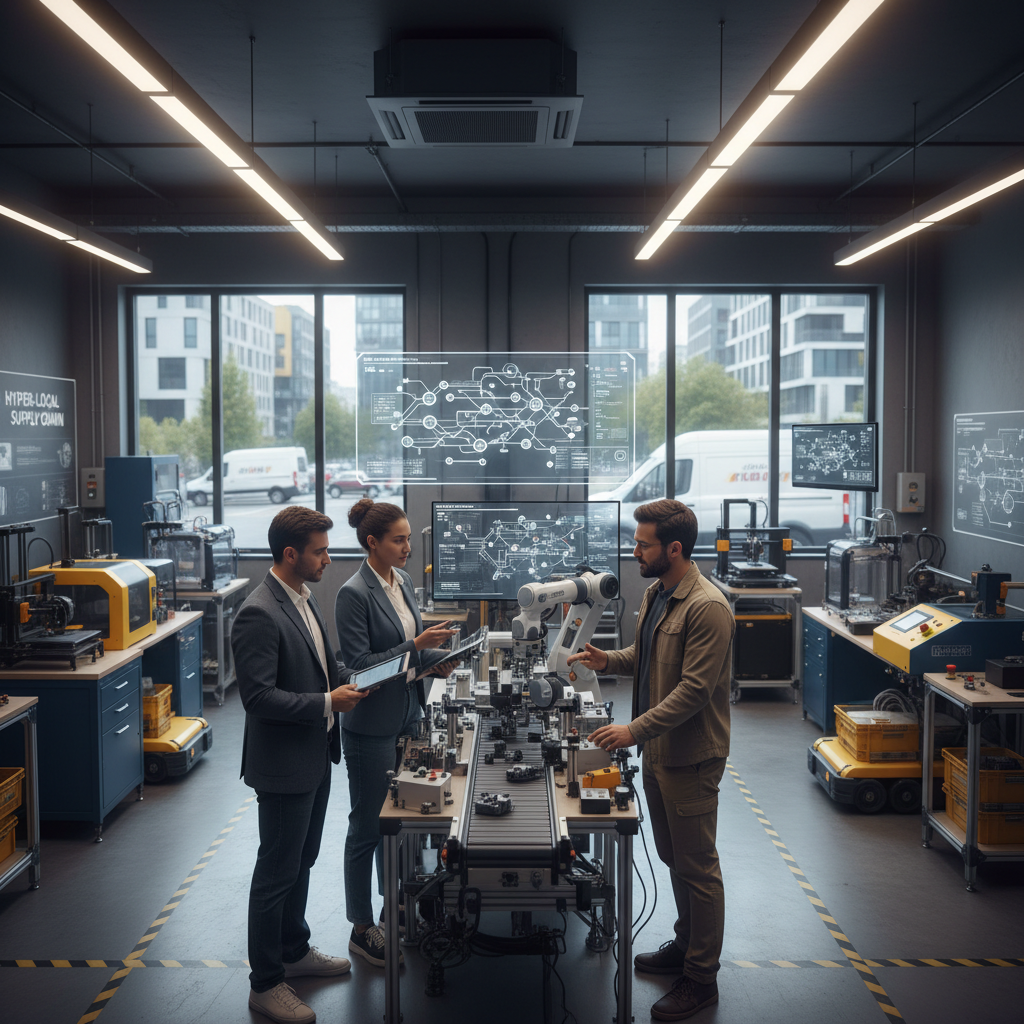
The Event: The confluence of artificial intelligence (AI) with advanced manufacturing technologies is birthing a new industrial paradigm: AI-powered microfactories. These small-scale, highly automated, and flexible production units are fundamentally changing how goods are designed, produced, and distributed, shifting power from centralized mass production to distributed, agile, and localized manufacturing. This phenomenon is not merely an incremental improvement but a structural transformation of the industrial ecosystem.
Why Now: This shift is gaining critical momentum today due to a convergence of compounding pressures. Global supply chains, long optimized for cost efficiency, suffered unprecedented disruptions from the COVID-19 pandemic, exposing their inherent fragility. Geopolitical tensions are escalating, driving calls for increased national self-sufficiency in critical goods. Simultaneously, consumer preferences are evolving, prioritizing customization, sustainability, and rapid delivery over generic, mass-produced items. AI-powered microfactories offer a compelling solution to these multifaceted challenges, enabling immediate and localized responsiveness.
The Stakes: The economic stakes are immense, potentially redirecting billions of dollars in manufacturing investment and trade flows. Traditional manufacturing incumbents, representing trillions in market capitalization, face significant disruption. Early adopters of this model, particularly innovative startups, stand to capture substantial market share by bypassing traditional barriers to entry. Conversely, nations that fail to foster this localized manufacturing capability risk diminished economic resilience, job losses in established sectors, and reduced technological competitiveness. The global manufacturing market, valued in the tens of trillions of dollars annually, is now undergoing a critical strategic realignment.
Key Players: While established industrial giants like Siemens and Dassault Systèmes provide foundational software and automation tools, the true disruptors are often found among innovative manufacturing startups. Companies like Fast Radius (now part of SyBridge Technologies) exemplify the "Manufacturing-as-a-Service" model. Hardware innovators such as Desktop Metal and Markforged are providing the additive manufacturing backbone. On the robotics front, Universal Robots and FANUC offer collaborative and industrial solutions. Crucially, a burgeoning ecosystem of venture-backed startups is applying these technologies to create diverse products, from custom medical implants to bespoke consumer goods, fundamentally reshaping diverse sectors. The narrative of Local Motors, despite its eventual closure, remains an instructive case study in the ambition and challenges of this space.
Bottom Line: AI-powered microfactories herald a new era of distributed manufacturing, fostering unprecedented entrepreneurial agility and supply chain resilience. Decision-makers must strategically invest in this technological convergence, cultivate the requisite talent, and adapt policy frameworks to support localized production. Ignoring this trend risks obsolescence in a rapidly reconfiguring global industrial landscape.
Multi-Dimensional Strategic Analysis
Historical Context & Inflection Point
Manufacturing has undergone several profound transformations throughout history, each driven by technological innovation and societal needs. The First Industrial Revolution, beginning in the late 18th century, introduced mechanization and steam power, moving production from homes to factories. The Second Industrial Revolution in the late 19th and early 20th centuries brought electricity, mass production, and the assembly line, epitomized by Henry Ford's automotive plants. The Third Industrial Revolution, or Digital Revolution, starting in the latter half of the 20th century, integrated electronics, computing, and automation into manufacturing processes. Each phase emphasized economies of scale, pushing for larger, more centralized production facilities to reduce per-unit costs.
For decades, the prevailing manufacturing wisdom was that larger was always better. Global supply chains stretched across continents, leveraging cheapest labor and raw material sources, resulting in highly centralized production hubs. This model, while delivering lower consumer prices for many goods, began to show cracks. Starting in the early 2000s, discussions around "reshoring" and supply chain diversification gained traction, fueled by concerns over intellectual property theft, quality control, and geopolitical stability. However, the economic incentives for cheaper overseas production remained overwhelmingly dominant.
A critical inflection point arrived decisively in 2020. The COVID-19 pandemic exposed the critical fragility of these globally interdependent supply chains with unprecedented severity. Factories shut down, international shipping ground to a halt, and essential goods, from PPE to automotive components, became scarce. Costs for container shipping, which had remained relatively stable for years, skyrocketed by multiples, with the cost of a 40-foot container from Asia to North America often increasing tenfold in months. This forced a global reckoning for businesses and governments alike, underscoring the strategic imperative for resilience over pure cost efficiency.
Previous predictions of localized manufacturing largely failed to materialize on a grand scale because the technological enablers were not mature enough, and the economic pressures were not acute enough to offset the established benefits of global production. Concepts like "lights-out factories" and "flexible manufacturing systems" existed but often required immense capital investment, still favoring large enterprises.
This moment is different. The confluence of advanced AI, mature additive manufacturing, accessible robotics, and pervasive IoT connectivity has created a potent technological stack that makes localized, micro-scale production economically viable and strategically imperative. The economic shocks, geopolitical realignments, and burgeoning demand for customization have provided the necessary market push. This is not merely an enhancement of existing production lines; it represents a fundamental shift towards a decentralized, responsive, and resilient manufacturing infrastructure, offering a transformative opportunity for agile startups and a critical strategic pivot for established companies. The previous assumption that only massive scale could deliver efficiency has been decisively challenged.
Deep Technical & Business Landscape
This new manufacturing paradigm is built on an intricate interplay of cutting-edge hardware and sophisticated AI software, transforming the traditional factory floor into a dynamic, adaptive production hub.
Technical Deep-Dive
At the heart of the AI-powered microfactory lies a robust technical stack designed for flexibility and efficiency. Model Architecture & Capabilities: The core infrastructure typically revolves around modular, reconfigurable workstations equipped with additive manufacturing (e.g., industrial 3D printers for metals via DMLS/SLM or polymers via SLA/FDM/MJF), precision CNC machining (lathes, mills), and highly adaptable robotics, particularly collaborative robots (cobots) from companies like Universal Robots or FANUC. These cobots often feature advanced vision systems and force sensors, allowing them to work safely alongside human operators or autonomously handle intricate assembly tasks, material handling, and quality inspection. The critical capability leap comes from the integration of IoT sensors across all machinery, providing a constant stream of real-time operational data. This data feeds into the central AI system, forming a digital twin of the entire production process.
The "AI Brain": The AI layer is the true differentiator.
- Generative Design (Examples: Autodesk Fusion 360, PTC Creo, Dassault Systèmes SOLIDWORKS Generative Design): These AI algorithms take design parameters and material constraints, then computationally explore millions of design permutations to create optimal structures. These designs often feature complex lattices, organic shapes, and optimized topologies impossible for human designers to conceive using traditional methods. The result is typically parts that are significantly lighter, stronger, and use less material, directly impacting unit economics for high-value components. For instance, a part designed generatively can be 20-40% lighter than its human-designed counterpart while retaining or improving structural integrity.
- Process Optimization: Machine learning models, fed by IoT sensor data, continuously analyze variables like tool wear, material feed rates, temperature, and cycle times. They predict potential failures (predictive maintenance), schedule maintenance proactively, and dynamically adjust parameters to maintain optimal production quality and speed. This ensures maximum uptime and reduces scrap rates. AI algorithms allocate tasks to available machines based on real-time loads and capabilities, drastically improving throughput and responsiveness to changing order pipelines.
- Quality Assurance (Computer Vision): High-resolution cameras and AI-powered computer vision systems perform real-time, in-line defect detection. They can identify microscopic flaws, dimensional inaccuracies, and surface imperfections with far greater speed and consistency than human inspectors. These systems learn from vast datasets of acceptable and defective parts, constantly improving their accuracy, and providing immediate feedback for process adjustments, reducing downstream waste.
- Demand Forecasting & "Smart" Scheduling: AI models analyze historical sales data, seasonal trends, external factors (e.g., economic indicators, social media sentiment), and even local events to forecast demand with high accuracy at a granular, hyper-local level. This insight is then translated into dynamic production schedules, optimizing material procurement (just-in-time inventory), minimizing warehousing costs, and enabling truly on-demand manufacturing for customized orders.
These capabilities reduce lead times from weeks or months to days or even hours for specific products, making truly agile manufacturing possible. Benchmarks show that generative design can reduce material usage by up to 60%, while AI-driven predictive maintenance can decrease unplanned downtime by 20-50%.
Business Strategy
The business landscape surrounding AI microfactories is rapidly evolving, creating new opportunities and challenges for various players.
Player Breakdown:
- Microfactory Pioneers & Implementers: While Local Motors' pioneering efforts with 3D-printed vehicles demonstrated the potential and pitfalls, companies like Fast Radius have successfully executed a "Manufacturing-as-a-Service" (MaaS) model. Fast Radius, now part of SyBridge Technologies, offers on-demand manufacturing using advanced technologies, allowing businesses to access industrial-grade production without the capital expenditure of owning machines. Their value proposition includes rapid prototyping, low-volume production, and custom part manufacturing, all managed through a digital platform. The case of Arrival, aiming for "car factories in a box" for electric vehicles, illustrates the ambition, albeit with significant financial hurdles. Their strategy involved small, modular facilities deployable close to demand.
- Technology Enablers:
- Additive Manufacturing: Companies like Desktop Metal (metal 3D printing for mass production), Velo3D (high-quality metal 3D printing for critical applications), and Markforged (industrial metal and composite 3D printing) are providing the hardware that forms the backbone of flexible production. Their products enable complex geometries and material properties previously unattainable.
- Software: Autodesk (Fusion 360, Netfabb), Dassault Systèmes (SOLIDWORKS, DELMIA), and Siemens (NX, MindSphere) are critical suppliers of CAD, CAM, PLM, and digital twin platforms. These tools are essential for designing, simulating, and managing the entire microfactory workflow from concept to production.
- Robotics: Universal Robots (leading collaborative robots) and FANUC (industrial automation) are supplying the intelligent automation needed for flexible production lines.
- Emerging Startups: This is the most dynamic and disruptive segment. Thousands of venture-backed startups are leveraging microfactory models to bring innovative products to market rapidly. Examples include companies producing custom orthotics and prosthetics on-demand, localized production of specialized drone components, bespoke fashion items, and even personalized nutrition solutions. These startups embody the startup theme, demonstrating unprecedented agility.
Product Positioning & Pricing: Microfactories thrive on customization, rapid iteration, and specialized, high-value products. Their pricing models often reflect this, moving away from purely per-unit cost to value-based pricing for speed, innovation, and personalization. While per-unit costs might be higher than mass production for generic items, the ability to produce goods when and where they are needed, with tailored specifications, commands a premium. This model is ideal for prototyping, low-to-medium volume production, spare parts, and highly customized consumer goods where mass-market economies of scale are not applicable or desirable.
Partnerships & Competitive Advantages: Strategic partnerships are critical. Microfactory operators often partner with material suppliers, logistics providers, and design agencies. Their competitive advantages lie in:
- Speed to Market: Drastically reduced lead times for design, prototyping, and production.
- Customization: Ability to produce highly individualized products on-demand.
- Reduced Inventory & Waste: Just-in-time production minimizes warehousing costs and material waste.
- Supply Chain Resilience: Localized manufacturing reduces dependence on vulnerable global supply chains.
- Lower Capital Expenditure: Compared to building a traditional large-scale factory, microfactories are significantly less capital-intensive, a major benefit for startup entrants.
- Sustainability: Local production reduces transportation emissions and often incorporates more efficient material usage.
This new strategy directly counters the limitations of traditional manufacturing, opening fertile ground for entrepreneurial innovation and challenging established market structures.
Economic & Investment Intelligence
The economic implications of AI-powered microfactories are profound, signaling a reallocation of capital and a redefinition of value creation in the manufacturing sector. Investment is flowing into both the foundational technologies and the application layer, demonstrating strong belief in this paradigm shift.
Funding Rounds, Valuations, Lead Investors: Investments have surged into companies enabling or operating microfactories.
- Additive Manufacturing Hardware: Companies like Desktop Metal have raised hundreds of millions of dollars from investors like Kleiner Perkins, New Enterprise Associates (NEA), and Ford Motor Company, reaching valuations in the billions. Velo3D, another metal 3D printing specialist, went public via a SPAC merger, securing significant growth capital from investors such as Woodside Ventures. Markforged, specializing in composite and metal additive manufacturing, also similarly went public, backed by investors like Porsche Automobil Holding SE. These investments highlight the strategic importance of the underlying hardware technology.
- Software & AI Platforms: Leaders in generative design and manufacturing execution systems often integrate these capabilities into broader software suites. Siemens and Dassault Systèmes, for example, have made significant internal investments to acquire or develop AI-driven design and optimization tools. Smaller, focused AI startups in areas like predictive maintenance or computer vision for manufacturing have secured Series A and B funding rounds ranging from tens to hundreds of millions from specialist deep-tech VCs.
- MaaS Platforms & Microfactory Operators: Fast Radius, before its acquisition by SyBridge Technologies, raised substantial capital from investors like UPS and Drive Capital, underscoring the investor confidence in the "Manufacturing-as-a-Service" model. Valuations for pure-play microfactory startups are highly dependent on their niche, intellectual property, and ability to demonstrate positive unit economics, but many are attracting seed and Series A funding in the multi-million dollar range, often from venture capitalists keenly focused on industrial technology and supply chain innovation. Venture capital firms like Lightspeed Venture Partners, Andreessen Horowitz, and Sequoia Capital are increasingly allocating capital to industrial technology and advanced manufacturing sectors, seeking to capitalize on this reindustrialization trend.
VC Strategy, Public Market Implications: Venture capitalists are particularly attracted to this space for several reasons:
- Disruption Potential: The ability of microfactories to disrupt large, entrenched industries (e.g., automotive, aerospace, medical devices, consumer electronics) with lower capital requirements for startup entrants.
- Scalability: The modular nature of microfactories means they can be replicated and deployed globally, offering a scalable distributed manufacturing network. This is fundamentally different from building another massive centralized factory.
- Resilience & Sustainability: Aligning with ESG investment criteria and providing solutions for global supply chain vulnerabilities.
- IP Creation: Companies developing novel materials, AI algorithms, or robotic processes often generate significant intellectual property.
In the public markets, the emergence of microfactories creates opportunities for investors in automation, advanced materials, and AI software companies. Traditional manufacturing giants may see their market share eroded in certain segments by agile microfactory networks or face pressure to acquire these new capabilities. This could lead to a wave of M&A activity.
M&A Activity, Industry Disruption: M&A activity is expected to accelerate as large incumbents seek to integrate these capabilities. SyBridge Technologies' acquisition of Fast Radius serves as a prime example of consolidation, where an established contract manufacturer integrates a leading MaaS platform to expand its advanced manufacturing offerings. We can anticipate manufacturing conglomerates acquiring specialized AI software firms, robotics companies, or microfactory design consultants. The goal is to either internalize these capabilities or eliminate competitive threats.
The industry disruption will manifest in several ways:
- New Value Chains: Shifting from component sourcing via long global chains to local procurement networks for raw materials and semi-finished goods, potentially revitalizing local economies.
- Democratization of Manufacturing: Lowering the barrier to entry for innovators, allowing startup companies to move from concept to physical product without needing vast capital or long lead times, thereby accelerating product development cycles. This fundamentally changes the competitive landscape by enabling small businesses to compete with large corporations on product innovation, speed, and customization.
- Job Transformation: While some traditional manufacturing jobs may decline, new roles requiring skills in robotics programming, data science, AI model management, and advanced materials engineering will emerge. This emphasizes the need for training and mentoring programs.
- Economic Resilience: Enhanced ability of regions and nations to produce critical goods locally, reducing reliance on single-source global suppliers and foreign geopolitical influences. This shift contributes directly to national security and economic sovereignty.
The investment thesis for AI-powered microfactories is compelling: they represent a crucial element of the Fourth Industrial Revolution, promising both significant economic returns for investors and a more resilient, responsive manufacturing foundation for the global economy.
Geopolitical & Regulatory Deep-Dive
The rise of AI-powered microfactories is not just an economic or technological shift; it has profound geopolitical and regulatory ramifications, influencing national strategies, trade policies, and international competitiveness.
US Policy, EU Regulations, China Strategy: Different global powers are approaching this manufacturing transformation with distinct strategic objectives and regulatory frameworks.
- United States: The US government, driven by "America First" and supply chain resilience initiatives, is actively promoting increased domestic manufacturing. This includes substantial investments through the CHIPS Act (focused on semiconductors but setting a precedent for domestic production support) and efforts to bolster critical supply chains. Policymakers view microfactories as a key enabler for reshoring and "friendshoring" production, reducing reliance on adversarial nations. Incentive programs for advanced manufacturing and regional tech hubs are being established to foster this growth. The regulatory focus in the US is currently on enabling innovation, with less prescriptive regulation compared to other regions, though discussions around AI ethics and automated systems' safety are emerging. This aligns with national security interests by reducing vulnerabilities in key defense and technology sectors.
- European Union: The EU's approach is characterized by a strong emphasis on sustainability, circular economy principles, and robust data governance (e.g., GDPR). AI-powered microfactories align well with the EU's goals for localized production, reduced emissions from transportation, and resource efficiency. The proposed AI Act, focusing on risk-based regulation of AI systems, will impact how AI is designed, developed, and deployed within microfactories, particularly for high-risk applications like medical devices or critical infrastructure components. Funding programs like Horizon Europe and the Digital Europe Programme are channeling investments into advanced manufacturing research and innovation, including distributed factory models. Regional development funds are likely to support the establishment of microfactory networks to revitalize local economies.
- China: China has long pursued a strategy of becoming a global manufacturing powerhouse, leveraging economies of scale. However, facing escalating trade tensions and a desire for technological self-sufficiency (e.g., "Made in China 2025" and "China Standards 2035"), China is rapidly investing in advanced robotics, AI, and domestic industrial software. While still heavily invested in mass production, China recognizes the strategic value of flexible, intelligent manufacturing. State-backed initiatives are likely to promote the development of AI-driven smart factories, including microfactory concepts, to produce high-value goods, reduce reliance on foreign technology, and enhance its export capabilities in specialized, high-margin products. Regulatory frameworks are often more top-down, with significant state control and data mandates but also aggressive support for domestic technology champions.
US-China Competition, Strategic Implications: The race to dominate advanced manufacturing, including AI-powered microfactories, is a crucial front in the broader US-China technological and economic competition.
- Economic Sovereignty: Both nations see localized, AI-driven manufacturing as a pathway to greater economic independence and resilience against supply chain shocks and geopolitical leverage from rivals.
- Technological Leadership: Dominance in AI, robotics, and additive manufacturing translates directly into economic and military advantage. The ability to rapidly prototype and produce advanced components locally is critical for defense industries and critical infrastructure.
- Talent Development: The competition extends to developing the "digital blacksmith" workforce capable of operating and innovating within these factories. Investment in STEM education and vocational training programs emphasizing robotics, AI, and data science is paramount.
- Trade Dynamics: A proliferation of microfactories could lead to a recalibration of global trade patterns. While core raw materials will still be globally sourced, the value-added manufacturing step could become increasingly localized, potentially reducing the volume of finished goods traded internationally. This might lead to new forms of trade agreements focusing on intellectual property and technology transfer rather than purely goods exchange.
Regulatory Timeline: Regulatory frameworks are still evolving alongside the technology.
- Near-Term (1-2 years): Expect increased government funding and incentive programs for localized advanced manufacturing across the US, EU, and other developed nations. AI ethics and safety guidelines, particularly in the EU, will begin to solidify, impacting AI deployments in manufacturing, especially for "high-risk" applications. Data privacy and security regulations for interconnected factories will become more stringent.
- Mid-Term (3-5 years): Standardization bodies (e.g., ISO, NIST) will begin to develop specific standards for microfactory integration, data interoperability, and AI model validation. This will be critical for seamless operation across distributed networks and for ensuring quality control across diverse operations. Policy debates around the impact of automation on labor forces, including potential UBI discussions, will intensify, prompting retraining and mentoring initiatives. Trade policies may begin to incorporate provisions for manufacturing localization and supply chain resilience, possibly through revised tariffs or non-tariff barriers for goods not meeting certain domestic production thresholds.
- Long-Term (5+ years): A more mature global regulatory landscape will emerge, balancing innovation with safety, ethical considerations, and national strategic interests. International cooperation and competition on advanced manufacturing standards will define the geopolitical economic order. The geopolitical landscape of manufacturing will shift from one dominated by a few large production hubs to a more diversified, resilient network of intelligent, localized microfactories.
This geopolitical arena adds another layer of complexity and opportunity for companies and nations navigating the transformative power of AI-powered microfactories.
Future Forecasting & Strategic Implications
The trajectory of AI-powered microfactories suggests a profound restructuring of industries and economies, challenging established models and creating entirely new avenues for growth and innovation.
Near-Term Horizon (6-12 months): Immediate Catalysts
The coming 6-12 months will be characterized by accelerating adoption and clear indicators of market direction in the microfactory space. Several immediate catalysts will drive this growth and offer strategic opportunities for early movers.
Events to Watch:
- Increased Pilot Programs by Large Enterprises: Expect to see more Fortune 500 companies, particularly in automotive, aerospace, and medical devices, announcing pilot programs or small-scale deployments of microfactories for specialized components, spare parts, or localized production for specific markets. These announcements will signal critical internal strategic shifts and validate the technology's readiness for enterprise adoption. For example, an automotive OEM might trial a microfactory for limited-edition vehicle parts or complex assemblies near a major market.
- Significant Venture Capital Funding Rounds for Platform-Centric Startups: Investors will increasingly back startup companies building software platforms that orchestrate networks of microfactories (Manufacturing-as-a-Service orchestration, digital twin providers for distributed production, AI quality control solutions across multiple sites). These platforms are key to scaling the microfactory model beyond individual units.
- Government Initiatives for Reshoring/Localized Production: Expect new or expanded government incentive programs (tax breaks, grants, streamlined permitting) in North America and Europe specifically targeting advanced manufacturing facilities that leverage AI and automation for local production. These will be tied to national security and economic resilience agendas.
- Technological Milestones in Material Science and Robotics: Advances in material science (e.g., new alloys for 3D printing, advanced composites) and more dexterous, intelligent robotics will expand the range of products microfactories can efficiently produce. Watch for new commercialization of innovative materials and robotics capabilities that address current manufacturing limitations.
- Supply Chain Resilience Reports: Major industry and government reports will continue to highlight the vulnerabilities of global supply chains, further strengthening the economic and strategic imperative for distributed manufacturing.
Early Signals of Success:
- Reduced Product Development Cycles: Startups leveraging microfactories will demonstrate significantly faster iteration from design to prototype to market, often going from concept to product in weeks rather than months. This speed provides an incredible competitive edge.
- Hyper-Personalization at Scale: Companies offering customized products (e.g., personalized medical devices, bespoke consumer goods) will see increased market penetration and positive customer feedback regarding product fit and delivery speed.
- Profitability in Niche, Low-Volume Markets: Microfactories will prove their economic viability in producing high-value, low-to-medium volume goods where traditional mass production is inefficient or impossible. This demonstrates the "economy of scope" advantage.
- Local Job Creation in Emerging Tech Fields: Early deployments will show a demand for new types of skilled labor (e.g., AI integration specialists, robotics technicians, digital manufacturing engineers), signifying a shift in workforce requirements. This creates new opportunities for mentoring and vocational training.
First-Mover Advantages & Strategic Plays:
- For Startups: The immediate strategy for startups is to specialize in a niche where customization and speed are paramount, leveraging the microfactory model for asset-light production. Focus on building strong brand identity around personalization and rapid delivery. Attract early investment by demonstrating viable unit economics in specific high-margin categories.
- For Incumbents: Large corporations should embark on strategic partnerships or pilot acquisitions of successful microfactory startups to quickly internalize capabilities. Establish internal R&D hubs or spin-off ventures focused on exploring microfactory applications for long-tail products, spare parts, or localized production in high-demand areas. Invest in upskilling existing workforces in AI, robotics, and digital manufacturing.
The next 12 months will be crucial for validating business models and setting the stage for broader adoption, with a clear emphasis on agility, customization, and supply chain resilience.
Mid-Term Horizon (2-3 years): Industry Restructuring
Over the next 2-3 years, the impact of AI-powered microfactories will move beyond early adoption to trigger significant industry restructuring, reshaping value chains and creating new economic giants while displacing others.
Displaced Industries, New Giants:
- Declining: Traditional contract manufacturers optimized solely for mass-volume, low-cost production in distant geographies will face immense pressure. Industries with long, complex supply chains reliant on single-source suppliers will be increasingly vulnerable. The need for vast, centralized warehouses for finished goods will diminish as production shifts closer to demand. Shipping companies focused purely on transcontinental bulk freight may see a shift in cargo types and routes.
- Rising: A new class of manufacturing service providers ("MaaS 2.0") will emerge, offering platform-based access to distributed microfactory networks. These will be the "AWS of manufacturing," providing on-demand production capacity. Companies specializing in AI for manufacturing optimization, industrial IoT security, and advanced materials will become critical infrastructure providers. Specialized robotics and automation firms that can easily integrate into a modular microfactory setup will see rapid growth. Design agencies focusing on generative design and digital product development will become indispensable.
Value Chain Shifts, Workforce Transformation:
- Supply Chain Reconfiguration: The value chain will become more circular and localized. Instead of linear global chains, expect regional hubs of raw material suppliers, microfactories, and local distribution. Material sourcing will balance cost with proximity and ethical considerations. The emphasis will shift from transporting finished goods over long distances to transporting raw or semi-processed materials over shorter distances, minimizing environmental impact and logistics complexities. This represents a fundamental shift in strategy for procurement and logistics.
- Talent Scarcity & Skill Revitalization: The demand for "digital blacksmiths"—individuals proficient in software, data analytics, robotics maintenance, and advanced manufacturing processes—will intensify. This will lead to a critical skills gap if not addressed proactively. Governments and industries will massively invest in vocational training, apprenticeships, and university programs focused on bridging this gap. The role of mentoring programs, connecting experienced traditional engineers with new digital talent, will be vital to ensure knowledge transfer and accelerate skill development. Traditional factory workers will need significant retraining programs to pivot toward supervisory roles for automated systems, data analysis, and advanced machine operation.
- Decentralized Innovation: The barrier to entry for hardware innovation will be significantly lowered. Startups will be able to iterate and launch new physical products faster and cheaper than ever before, fostering a burst of entrepreneurial activity. This will democratize innovation in physical goods, much like software development has been democratized by cloud computing.
Competitive Positioning, Revenue Inflection:
- Incumbents' Dilemma: Large incumbents will face a classic innovator's dilemma. Their competitive strategy will require them to either acquire promising microfactory startups, invest heavily in internal transformation, or risk losing market share in high-value, customizable segments. Those who embrace the model strategically for niche markets, rapid prototyping, or spare part production will secure new revenue streams.
- Startup Advantage: Startups that master the asset-light, highly flexible microfactory model will gain significant market share in chosen verticals. Their ability to respond to changing consumer demands, offer extreme customization, and minimize inventory risk will lead to substantial revenue growth. Revenue inflection points will occur as these startups secure larger orders and demonstrate scalable, replicable production processes across distributed networks.
- New Revenue Models: The shift towards "product-as-a-service" or "manufacturing-as-a-service" will generate recurring revenue streams, moving away from single-transaction sales. Servitization of manufactured goods, enabled by embedded AI and sensor data, will become more prevalent.
The mid-term will be a period of significant economic upheaval and opportunity, where agile players leveraging AI and distributed manufacturing will redefine industry leadership.
Long-Term Vision (5 years): Civilizational Impact
Looking 5-10 years out, AI-powered microfactories will have reshaped not just industries, but the very fabric of society, the global economic structure, and even human capabilities.
Societal Transformation, Economic Structure:
- Re-localization of Economies: Communities will experience a resurgence of local manufacturing, reducing economic dependence on distant central hubs. This could lead to a revitalization of regional economies, creation of higher-skilled local jobs, and more balanced economic development. Urban areas could see "mini-factories" integrated within residential or commercial zones, reducing commute times and fostering cleaner production. This shift contributes to overall societal resilience.
- Hyper-Customization as the Norm: The ability to produce personalized goods on-demand will become ubiquitous. From custom-fit apparel and personalized nutrition to bespoke furniture and individualized medical implants, consumers will expect products tailored precisely to their needs and preferences, moving beyond mass-market standardization.
- Reduced Environmental Footprint: Localized production significantly cuts transportation emissions. Coupled with AI-optimized material usage and the potential for a circular economy (where products are designed for disassembly and components reused in local microfactories), this model offers a pathway to drastically reduce manufacturing's environmental impact and promote sustainability.
- Democratized Innovation: The low barrier to entry for physical product creation will unleash an explosion of entrepreneurial creativity. Individuals and small teams will be able to prototype, manufacture, and distribute complex products, fostering an era of rapid innovation and specialized product offerings. This fundamentally changes the nature of startup growth.
Geopolitical Order, Human Capability:
- Strategic National Autonomy: Nations will increasingly develop strategic capacity to produce critical goods (e.g., medical supplies, defense components, essential technologies) within their borders, significantly reducing geopolitical vulnerabilities and trade-related leverage. This will enhance national security and self-reliance, potentially reshaping global power dynamics.
- Redefined Global Trade: While certain raw materials will remain globally traded, the trade of finished goods will become more regionalized. This could lead to new types of trade agreements focused on technology sharing, intellectual property protection, and harmonized manufacturing standards rather than solely on goods tariffs. The traditional balance of trade will be reevaluated.
- Augmented Human Capabilities: AI in manufacturing will not replace human ingenuity but augment it. Designers, engineers, and technicians will leverage AI tools for generative design, complex simulations, and real-time operational insights, allowing them to focus on higher-level problem-solving and creative tasks. This shift will require a greater emphasis on advanced education and lifelong learning. The role of humans will move from repetitive manual labor to overseeing, managing, and innovating with intelligent systems, requiring continuous mentoring and skill upgrades.
- Ethical Dimensions: The deployment of autonomous AI in manufacturing will necessitate robust ethical frameworks and regulatory oversight to ensure safety, accountability, and fair labor practices. Debates around data ownership, algorithmic bias in design, and the societal impact of enhanced automation will be central to policy discussions.
The long-term vision paints a picture of a more resilient, localized, and innovative global economy, driven by intelligent, distributed manufacturing systems. It represents a profound shift in how humanity creates, consumes, and interacts with the physical world.
Executive Conclusion & Strategic Takeaways
The rise of AI-powered microfactories is not a transient trend but a foundational shift in the global manufacturing paradigm, fundamentally altering the competitive landscape and offering unprecedented opportunities for innovation and resilience. Our confidence level in this transformation reaching mainstream adoption within five years is high, evidenced by technological readiness, escalating geopolitical pressures, and evolving consumer demands.
Bottom Line Assessment: AI-powered microfactories are poised to democratize manufacturing, decentralize supply chains, and empower a new wave of entrepreneurial activity. This model offers compelling solutions to the vulnerabilities exposed by recent global events and aligns perfectly with the increasing demand for customized, rapidly delivered, and sustainably produced goods. Ignoring this shift is a strategic dereliction for any entity involved in physical goods production or distribution.
Key Insights Summary:
- Resilience > Efficiency: The primary driver for microfactory adoption is the strategic imperative for resilient, localized supply chains over purely cost-driven global efficiency.
- AI as the Enabler: Artificial intelligence, spanning generative design, process optimization, and predictive maintenance, transforms small-scale operations into intelligent, flexible, and efficient production units.
- Startup Empowerment: AI microfactories significantly lower the barrier to entry for hardware startup companies, enabling asset-light business models and accelerating product-to-market cycles. This represents a paradigm shift from traditional manufacturing.
- Strategic & Geopolitical Imperative: Governments globally recognize microfactories as critical for economic sovereignty, national security, and bolstering local economies.
- Transformative Skill Set: The demand for a new "digital blacksmith" workforce, proficient in robotics, AI, and data, necessitates urgent investment in education and mentoring programs.
- New Value Sourcing: Microfactories thrive in high-value, customized, and low-to-medium volume production, creating new revenue streams and competitive advantages for agile players.
- Industry Restructuring Ahead: Expect significant M&A activity, the emergence of "Manufacturing-as-a-Service" giants, and a re-evaluation of existing manufacturing incumbents' strategy.
The Big Question: In a world increasingly defined by both unprecedented global connectivity and escalating geopolitical friction, can humanity successfully leverage distributed, intelligent manufacturing to simultaneously drive innovation, enhance national autonomy, and cultivate a truly sustainable, localized global economy without succumbing to technological protectionism and fragmented standards?