Executive Summary / Opening Intelligence
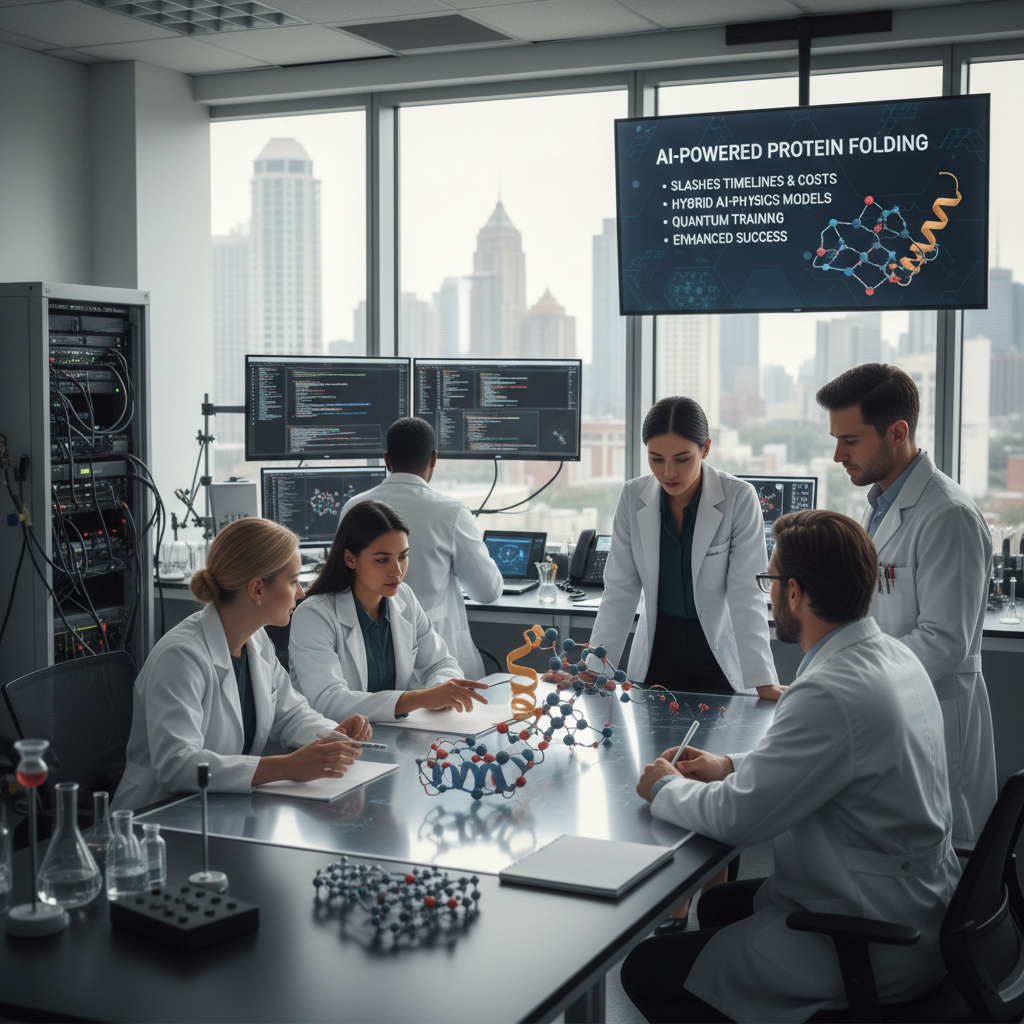
The Event: The pharmaceutical industry is undergoing a seismic shift driven by AI-powered protein folding simulations, accelerating drug discovery timelines from a decade to mere years, reducing costs dramatically, and significantly boosting clinical success rates. Breakthroughs like AlphaFold, alongside advanced hybrid AI-physics models trained on quantum datasets, are fundamentally reshaping the entire drug development pipeline. This isn't merely an incremental improvement; it's a foundational re-engineering of how novel therapeutics are conceived, designed, and validated.
Why Now: This moment is critical due to the maturity of AI models achieving near-experimental accuracy in protein structure prediction, coupled with growing computational power and the accumulation of vast biological datasets. The convergence of these factors enables the transition from theoretical AI advantages to practical, deployable solutions that are already yielding tangible results in clinical trials. The urgency is amplified by global health crises and the perpetual need for faster, more effective, and more affordable medicines.
The Stakes: The financial implications are staggering. Traditional drug development costs exceed $2 billion per drug. AI-powered methodologies are projected to cut these expenses by up to 70%, translating to savings of over $1.4 billion per successful drug. The market for AI in drug discovery, valued at $878.5 million in 2021, is projected to reach $5.7 billion by 2030, growing at a CAGR of 23.1%. Furthermore, enhanced success rates in Phase I trials (80-90% for AI-designed drugs versus 40-65% for traditional) present a massive opportunity to de-risk investments and improve ROI across the biopharmaceutical sector. Failure to adopt these technologies risks competitive obsolescence and forfeiture of substantial market share.
Key Players: Leading this transformation are DeepMind (AlphaFold), Schrödinger, Insilico Medicine, Recursion Pharmaceuticals, Exscientia, and emerging specialized firms like Atomic AI and Generate Biomedicines. Cloud providers like Amazon Web Services (AWS SageMaker) are crucial infrastructure enablers. Regulatory bodies like the FDA are also key, as their validation, such as the 2023 Orphan Drug Designation for an AI-conceived molecule, signals accelerated market acceptance. Researchers at institutions such as the University of Washington (Rose Lab) continue to push the boundaries of de novo protein design.
Bottom Line: AI-driven protein folding is not just another tool; it is the new imperative for drug discovery. For CEOs, VCs, and policymakers, understanding and strategically investing in these capabilities is paramount. It promises not only unprecedented efficiency and cost reduction but also the potential for therapeutics previously unimaginable, fundamentally altering the competitive landscape and delivering a new era of medical innovation.
Multi-Dimensional Strategic Analysis
Historical Context & Inflection Point
The quest to understand protein structure has haunted molecular biology for over half a century. Proteins, the workhorses of life, execute nearly every cellular function, and their three-dimensional shape dictates their activity. The "protein folding problem," the challenge of predicting a protein's 3D structure from its linear amino acid sequence, was famously posed by Christian Anfinsen in 1972, who posited that the primary sequence contains all necessary information for folding. For decades, experimental methods like X-ray crystallography and Nuclear Magnetic Resonance (NMR) spectroscopy were the gold standard. These techniques, while highly accurate, are notoriously time-consuming, expensive, and often fail for many proteins, severely limiting the pace of drug discovery. A single protein structure determination could take years, costing hundreds of thousands of dollars.
Early computational attempts largely relied on physics-based simulations, such as molecular dynamics (MD), which approximate the interaction forces between atoms over time. While theoretically powerful, these methods suffered from immense computational cost, limiting simulations to nanosecond timescales and small protein fragments, far removed from the biologically relevant milliseconds or longer timescales for full protein folding events. Failed predictions often stemmed from insufficient computational power and the sheer complexity of the energy landscapes involved.
The first major inflection point arrived incrementally with advancements in computational capacity and algorithm development throughout the 1990s and 2000s, leading to specialized force fields and sampling techniques for MD simulations. However, the true paradigm shift commenced more recently. The biennial Critical Assessment of protein Structure Prediction (CASP) competition, initiated in 1994, served as a crucial benchmark. For decades, progress was incremental.
Timeline:
- 1972: Christian Anfinsen articulates the protein folding problem, suggesting sequence determines structure.
- 1994: CASP (Critical Assessment of protein Structure Prediction) competition launched, standardizing evaluation.
- 2006-2010: Development of Rosetta suite for de novo protein design, showing early computational design potential.
- 2018: DeepMind's AlphaFold 1.0 shows significant improvement at CASP13, hinting at AI's potential but still far from perfect.
- 2020: DeepMind's AlphaFold 2.0 (AF2) achieves near-experimental accuracy at CASP14, surpassing decades of research and marking the definitive inflection point. Its performance was so superior that it fundamentally "solved" the classic protein folding problem for single proteins.
- July 2021: DeepMind releases AlphaFold Protein Structure Database, containing structures for over 350,000 proteins, including all 20,000 human proteins predicted with high accuracy. This instantly democratized structural biology.
- 2021 (continued): AlphaFold2 tops Science's annual scientific breakthroughs list.
- Early 2020: First AI-designed drug molecule enters human clinical trials, proving tangible impact.
- 2022: Researchers complete an end-to-end AI-driven drug discovery workflow from target to Phase I.
- Feb 2023: FDA grants first Orphan Drug Designation to an AI-conceived molecule, validating regulatory acceptance.
- Current: Public databases now host over 200 million protein structures, primarily AI-predicted.
Why THIS moment matters is the shift from predictive capability to generative power. AlphaFold's success opened the floodgates not just for structure prediction, but for leveraging these structures to design entirely new proteins and protein-targeting molecules. The unprecedented accuracy and speed of AI-driven prediction have turned a fundamental bottleneck into a high-throughput pipeline, dramatically compressing the target identification, lead generation, and optimization phases of drug discovery. This foundational change allows for rapid exploration of molecular design space that was previously computationally intractable or experimentally impossible, moving beyond merely predicting what exists to designing what could exist.
Deep Technical & Business Landscape
Technical Deep-Dive
The recent leaps in protein folding simulations stem from a sophisticated hybrid approach that synergistically combines deep learning with physics-based principles, moving beyond classical generative AI focused solely on sequence or simple molecular properties. Historically, pure physics-based simulations, like all-atom molecular dynamics (MD), are computationally prohibitive for long timescales or large systems. Conversely, early machine learning models lacked the intrinsic understanding of physical interactions. The breakthrough in tools like AlphaFold and its successors lies in their ability to learn the complex energy landscape of protein folding by being trained on vast empirical datasets of known protein structures and sequences.
At the core of AlphaFold2 (AF2) is its transformer-based neural network architecture, specifically adapted for graph-like data inherent to protein structures. This network predicts inter-residue distances and orientations from an input amino acid sequence and multiple sequence alignments (MSAs). The key innovation here is its "EvoFormer" module, which jointly processes information from MSAs to capture evolutionary covariation, and a "Structure Module" that iteratively refines 3D coordinates based on these predictions. This iterative refinement process, essentially a form of self-correction guided by implicit biophysical rules learned from data, is what gives AF2 its remarkable accuracy. Unlike older methods, it doesn't explicitly run an MD simulation; instead, it learns the outcome of folding by discovering patterns from millions of solved protein structures.
Crucially, the next generation of these models integrates quantum mechanics. While direct quantum simulations of entire proteins are currently unfeasible, quantum chemistry calculations provide highly accurate data for bond energies, non-covalent interactions, and transition states for smaller molecular systems. Hybrid models leverage high-level quantum calculations to parameterize or validate force fields used in classical MD or to train specific modules within the AI architecture. For instance, new models are being trained on datasets like SAIR, which contains over 1 million unique protein-ligand pairs and 5.2 million 3D structures, often refined or curated using quantum-informed methodologies. Boltz-1x, for example, is a next-generation tool for biomolecular complex prediction that achieved 97% pass rate on PoseBusters checks, an established computational tool for evaluating biophysical plausibility, indicative of its robust physical grounding. This means the AI doesn't just guess; it's guided by fundamental quantum-level truth about atomic interactions, significantly enhancing accuracy for binding affinity prediction and drug-target interactions, which are critical for potency and specificity.
Capability leaps include accurate prediction of not just single protein structures but also multi-protein complexes (e.g., AlphaFold-Multimer) and protein-ligand interactions. Limitations still exist, particularly for intrinsically disordered proteins, highly flexible regions, and the accurate prediction of dynamics (how a protein moves). While AI predicts a static minimum energy state, biological function often depends on dynamic conformational changes. However, ongoing research is integrating AI with more sophisticated sampling techniques to address these dynamic challenges.
Business Strategy
The business landscape is bifurcated between established pharmaceutical giants adopting AI and a burgeoning ecosystem of "AI-first" biotech companies.
Player Breakdown with Specifics:
- DeepMind/Google (Alphabet): Developer of AlphaFold. Their strategy is largely foundational, providing core technology as open-source or through partnerships, positioning Google Cloud as a critical infrastructure provider for AI-driven biological research (e.g., AWS SageMaker offers AlphaFold/OpenFold integration). They aim to be the indispensable backbone.
- Schrödinger: A long-standing computational chemistry leader, they have pivoted aggressively into AI. Their platform integrates physics-based simulations with machine learning to accelerate drug discovery from target validation to lead optimization. They offer both software licenses and drug discovery services, and have multiple compounds in early clinical development, often in partnership with large pharma. Their value proposition is the seamless integration of predictive power across the entire discovery workflow.
- Insilico Medicine: A pure-play AI-first drug discovery company. They use generative AI, reinforcement learning, and deep learning for target identification, novel molecule generation, and clinical trial prediction. They famously took the first AI-designed drug (INS018_055, for Idiopathic Pulmonary Fibrosis) from target identification to Phase I clinical trials in an unprecedented 18 months. Their strategy is disruptive, aiming to de-risk and speed up internal pipelines and potentially out-license compounds.
- Exscientia: Another AI-first company focused on designing novel small molecule drugs. They leverage proprietary AI platforms to optimize drug candidates for multiple parameters simultaneously (potency, selectivity, ADMET). Their partnerships with companies like Sumitomo Dainippon Pharma led to the first AI-designed IMMUNEMODULATOR to reach Phase I in just 12 months. Their emphasis is on multi-parameter optimization (MPO).
- Recursion Pharmaceuticals: Building one of the largest biological and chemical datasets through robotic experimentation and AI analysis. Their "phenomic" approach focuses on identifying disease mechanisms and therapeutic interventions by observing cellular changes at scale. They combine high-throughput biology with AI to map biology and find new drug candidates. Their partnership with NVIDIA underscores their commitment to computational scale.
- Generate Biomedicines: A leader in generative AI for protein design. They aim to design de novo proteins with specific functions and structures. This goes beyond predicting existing structures to creating novel therapeutic proteins, antibodies, enzymes, and vaccines. Their platform represents a significant leap towards engineering biology.
- Atomic AI: Focuses on RNA-targeting drugs, using AI to predict RNA structures and design small molecules that bind to them. This opens up entirely new therapeutic modalities beyond traditional protein targets.
Product Positioning, Pricing, and Partnerships:
Many AI drug discovery companies adopt hybrid business models:
- Software-as-a-Service (SaaS): Licensing AI platforms and computational chemistry tools (e.g., Schrödinger's enterprise platform, which can cost millions annually for large pharma).
- Partnerships/Collaborations: Entering into risk-sharing R&D agreements with large pharmaceutical companies, often involving upfront payments, research funding, milestone payments, and future royalties on successful drugs. This is common for AI-first biotechs (e.g., Insilico, Exscientia with major pharma).
- Internal Pipeline Development: Developing their own drug candidates using their AI platforms, aiming for lucrative out-licensing deals or even bringing drugs to market independently. This represents higher risk but also higher reward.
Competitive Advantages:
- Data Scarcity & Quality: Companies with proprietary, high-quality biological and chemical datasets (like Recursion) have a significant advantage for training robust AI models.
- Algorithmic Superiority: Advanced, proprietary AI architectures (beyond just AlphaFold's core technology) that handle complex multi-parameter optimization, predict binding kinetics, or design novel molecules offer differentiation.
- Integrated Platforms: Offering end-to-end solutions, from target ID to lead optimization and even clinical trial design, streamlines the process for pharma clients.
- Speed & Cost Reduction: The demonstrable ability to compress timelines and reduce R&D expenditure is a powerful selling point. AI-first companies claim to reduce timelines by 50-75% and costs by up to 70%.
- Talent: A critical bottleneck; companies that can attract and retain top AI/ML engineers and computational biologists have a strong edge.
The competitive landscape is intensifying, with traditional pharma scrambling to acquire AI capabilities through M&A or strategic partnerships, and AI-native biotechs racing to demonstrate clinical validation. The ultimate winners will likely be those who can most effectively bridge the gap between AI predictions and experimental validation, consistently delivering higher-quality, faster-to-market drug candidates.
Economic & Investment Intelligence
The economic ripple effect of AI in drug discovery is profound, creating a burgeoning market attracting significant investment and reshaping venture capital strategies. The market for AI in drug discovery, estimated at $878.5 million in 2021, is projected to reach $5.7 billion by 2030, marking a robust CAGR of 23.1%. This growth trajectory is fueled by the compelling value proposition: drastically reduced costs, compressed timelines, and improved success rates.
Funding Rounds, Valuations, and Lead Investors: The sector has seen a surge in venture capital funding, with numerous companies achieving unicorn status (>$1 billion valuation).
- Insilico Medicine: Raised over $95 million in a Series D in 2021, backed by mega-rounds from investors like Warburg Pincus, Qiming Venture Partners, and B Capital Group. Valuation in its last round exceeded $1 billion. This funding enabled the advancement of its AI-designed IPF drug into human trials.
- Recursion Pharmaceuticals: Went public via a SPAC merger in 2021, valuing the company at approximately $2.9 billion. Prior to that, it raised significant rounds, including a $210 million Series D led by Leaps by Bayer. Investors like Mubadala, Tilerank, and familiar biotech funds are prominent.
- Exscientia: Also went public in 2021, raising $304 million in its IPO and previously securing significant private funding, including a $100 million Series C. Investors include Novo Holdings and SoftBank Vision Fund 2.
- Generate Biomedicines: Raised a massive $370 million Series C in 2022, led by Flagship Pioneering (its founding firm), bringing its total funding to over $700 million. This highlights investor confidence in generative AI for de novo protein design.
- Atomic AI: Recently secured $35 million Series A in 2023, showcasing continued early-stage investment in specialized AI approaches beyond traditional protein targets. Investors include 8VC and Playground Global.
- Schrödinger: Publicly traded on NASDAQ since 2020, its market capitalization often fluctuates around $2-3 billion. Notable investors include Bill Gates and D. E. Shaw Research. Their consistent revenue from software licenses makes them a more mature investment.
The common thread among lead investors is a mix of traditional biotech VCs, deep tech funds, and corporate venture arms (e.g., Leaps by Bayer). They are drawn by the potential for outsized returns on de-risked and accelerated drug assets.
VC Strategy and Public Market Implications: VC strategy has shifted from cautious optimism to aggressive investment in AI-first drug discovery. Early-stage funding focuses on companies with novel AI methodologies, robust data generation capabilities, and strong scientific teams. Later-stage funding targets companies that have demonstrated preclinical proof-of-concept, secured significant partnerships, or advanced assets into clinical trials. The IPOs of Recursion and Exscientia demonstrated appetite for public market investment in the sector, though market volatility has kept some private. Public market investors are keenly watching for clinical validation and revenue generation from successful partnerships or drug candidates. The long lead times for drug development mean that these companies are often valued on the promise of their platforms and pipeline potential rather than immediate profitability.
M&A Activity and Industry Disruption: M&A activity is expected to increase significantly. Large pharmaceutical companies face intense pressure to replenish their pipelines and reduce R&D costs. Acquiring AI-first biotechs offers a fast track to integrating cutting-edge capabilities and proprietary datasets. For example, major pharma might acquire a company with a strong target identification platform or a generative AI engine for small molecule design. This creates an exit strategy for successful AI biotechs and a mechanism for industry consolidation.
This technology directly disrupts the traditional CRO (Contract Research Organization) model by automating and accelerating many early-stage discovery functions. It also places immense pressure on traditional big pharma R&D departments to adopt AI or risk falling behind. Early movers and aggressive adopters of AI stand to capture significant market share and reduce their overall R&D spend, while late adopters face declining margins and a weaker pipeline. The competition is no longer just about who has the best scientists, but who has the superior computational intelligence.
Geopolitical & Regulatory Deep-Dive
The rise of AI in drug discovery introduces complex geopolitical and regulatory considerations, particularly concerning innovation, data security, and ethical deployment.
US Policy: The US government, through agencies like NIH, NSF, and DARPA, has historically funded foundational AI research and biomedical science. Current policy emphasizes accelerating drug development, preparing for pandemics, and maintaining global leadership in biotechnology. The FDA's recent Orphan Drug Designation for an AI-conceived molecule (February 2023) signals regulatory acceptance and a willingness to adapt to novel drug development pathways. This proactive stance provides a clear framework for AI-driven drugs to enter clinical trials and eventually reach market. The US also focuses on intellectual property (IP) protection for AI-generated discoveries, though the extent of patentability for purely AI-designed molecules or algorithms is still an evolving legal domain. US export controls on advanced AI hardware and software could indirectly impact global access to powerful AI drug discovery tools, primarily targeting geopolitical rivals.
EU Regulations: The European Union is implementing comprehensive AI regulations, prominently the AI Act. This landmark legislation categorizes AI systems based on risk level, with "high-risk" systems (which could include AI used in drug discovery if it affects health data or critical infrastructure) facing stringent requirements. These include human oversight, robust cybersecurity, data governance, transparency, and conformity assessments. While the intent is to foster trust in AI, the compliance burden could potentially slow down innovation for smaller AI biotechs operating in the EU. The EU also prioritizes data privacy through GDPR, impacting how large datasets (especially patient health data) can be collected, shared, and used to train AI models for drug discovery. The European Medicines Agency (EMA) is working on guidelines for AI in medicines, mirroring the FDA's proactive engagement.
China Strategy: China has an ambitious national AI strategy aiming for global leadership by 2030, with significant investment in biotechnology and healthcare AI. The "Made in China 2025" and subsequent plans explicitly target pharma and biotech as strategic industries. Chinese companies like Insilico Medicine are at the forefront of AI drug discovery, leveraging substantial government funding and a vast domestic data ecosystem. China's approach often balances innovation with national control, potentially leading to rapid adoption but also concerns regarding data access, intellectual property, and ethical oversight standards that may differ from Western norms. The competition between US and Chinese firms in this space is strategic, as leadership in AI drug discovery could yield significant economic and health security advantages.
US-China Competition, Strategic Implications: The US-China rivalry extends fiercely into AI drug discovery. Both nations recognize that this technology represents a critical frontier for economic competitiveness, public health, and national security.
- Economic Implications: Whichever nation's companies consistently deliver novel, affordable drugs faster will gain immense economic leverage, market share, and scientific prestige. It's a race for intellectual property and commercial dominance in a multi-trillion dollar industry.
- Health Security Implications: The ability to rapidly identify targets, design vaccines, and develop therapeutics in response to future pandemics or biothreats will be a critical national capability. Reliance on foreign AI drug discovery platforms could be seen as a strategic vulnerability.
- Ethical Norms & Data Governance: Differences in regulatory frameworks and ethical considerations (e.g., data privacy, algorithmic bias, gene editing standards) could lead to diverging innovation pathways. US concerns over Chinese access to sensitive health data for AI training are significant and could lead to restrictions on cross-border data flows or collaborations.
- Talent War: Both nations are in a fierce competition to attract and retain the best AI scientists and computational biologists. Immigration policies and educational investments are crucial strategic levers.
Regulatory Timeline:
- 2020-2022: Initial discussions and white papers from FDA, EMA, and other bodies on guiding principles for AI in drug development. First AI-designed drug enters human trials.
- 2023: FDA grants first Orphan Drug Designation to an AI-conceived molecule, a significant milestone for regulatory acceptance of AI's role in concept and design. EU AI Act progresses through legislative stages.
- 2024-2025: Expected finalization and implementation of the EU AI Act. Increased specific guidance from regulatory bodies on "AI/ML-enabled medical devices" or "AI-driven drug development platforms," focusing on validation, bias mitigation, and transparency. Pressure mounts for harmonized international standards.
- 2025+: Potential for accelerated approval pathways for AI-driven drugs that demonstrate superior safety or efficacy, or address unmet medical needs. Ethical debates intensify around AI's role in de novo drug creation and potential for unintended consequences.
The evolving regulatory landscape underscores the imperative for companies to integrate "AI ethics by design" and robust validation protocols from the outset. Policymakers must strike a delicate balance: fostering innovation while safeguarding public health, ensuring data integrity, and navigating geopolitical competition.
Future Forecasting & Strategic Implications
Near-Term Horizon (6-12 months): Immediate Catalysts
The next 6-12 months will be characterized by a rapid escalation in the deployment and validation of AI-powered protein folding and drug design capabilities. Several immediate catalysts will drive this acceleration.
Events to Watch:
- Clinical Trial Readouts: Crucial early-stage (Phase I/II) clinical trial readouts for AI-designed or AI-accelerated drug candidates. Positive results will be a potent validation, attracting further investment and accelerating regulatory discussions. Key drugs to watch include Insilico Medicine's IPF compound (INS018_055) and Exscientia's oncology candidates. Any indication of superior efficacy, reduced side effects, or faster time-to-clinic will directly fuel market momentum.
- Major Partnerships & Acquisitions: Expect significant partnership announcements between large pharmaceutical companies and leading AI biotechs. These will feature substantial upfront payments and milestone structures, indicating pharma's commitment to internalizing or outsourcing AI expertise. Strategic acquisitions of smaller AI companies with specialized platforms (e.g., RNA folding, complex design) by larger players will also surge, aiming to capture unique IP and talent. For instance, a major pharma acquiring Atomic AI would signal a direct entry into the RNA therapeutics space.
- Next-Generation AI Model Releases: Continuous releases of refined AI models, building on AlphaFold-like architectures. These will likely focus on improved accuracy for protein-protein interactions (e.g., more stable AlphaFold-Multimer successors), more accurate prediction of protein dynamics, and highly accurate ligand binding affinity prediction. Expect more integration of quantum mechanical principles to enhance force fields used in hybrid models.
- Expansion of Public Data Resources: Further expansion of open-access protein structure databases, driven by AI predictions. The existing 200 million predicted structures will likely grow to billions, making structural information ubiquitous and democratizing access for diverse research groups.
- Regulatory Guidance Updates: Continued refinement of regulatory guidelines from bodies like the FDA and EMA specifically addressing the validation and approval processes for AI-discovered drugs and AI-powered drug discovery platforms. Clarity here will de-risk investment and accelerate submission pipelines.
Early Signals:
- Increased Publication Volume: A surge in peer-reviewed publications detailing new AI architectures, novel protein designs, and innovative applications of AI in lead optimization.
- Talent Scarcity: Even more intense competition for computational biologists, machine learning engineers, and medicinal chemists with AI expertise. Salary inflation in these roles will be a clear indicator.
- Cloud Infrastructure Investment: Hyperscale cloud providers (AWS, Azure, Google Cloud) will heavily market and invest in specialized AI compute (e.g., more powerful GPUs, custom AI chips) and platform tools tailored for molecular simulation and deep learning in drug discovery.
- Benchmarking Performance: New benchmarks will emerge to rigorously test combined AI-physics models beyond static structure prediction, focusing on accurate dynamic simulations, binding kinetics, and multi-target optimization.
First-Mover Advantages, Strategic Plays: First movers are already solidifying their positions by establishing robust data pipelines, training proprietary models, and developing internal drug candidates. Companies like Insilico Medicine have demonstrated the power of being first-to-clinic with an AI-designed drug. The strategic play for non-AI-native pharma is to either acquire existing AI capabilities or aggressively invest in building internal AI R&D centers, fostering deep collaborations between computational and experimental scientists. For VCs, identifying the next "AlphaFold" equivalent in specific niches (e.g., protein-drug design, cell line optimization, organoid modeling) offers disproportionate returns. Early licensing of AI-enabled design platforms, even for exploratory research, will become a competitive necessity.
Mid-Term Horizon (2-3 years): Industry Restructuring
Over the next 2-3 years, the profound impact of AI in protein folding and drug design will lead to significant restructuring across the pharmaceutical and biotechnology industries.
Displaced Industries, New Giants:
- CROs (Contract Research Organizations): Traditional CROs specializing in early-stage discovery (e.g., hit identification, lead optimization, ADMET prediction) will face severe disruption. AI platforms can automate and accelerate many of these functions more cost-effectively. CROs that don't rapidly adopt AI or pivot to more complex experimental validation services will struggle.
- Specialized Experimental Labs: Labs solely focused on routine crystallography or NMR for established protein targets will see reduced demand, as AI provides structures in hours. They will need to pivot to solving challenging, novel, or dynamic structures that AI still struggles with.
- New Giants: AI-first biotechs like Insilico Medicine, Recursion Pharmaceuticals, Exscientia, and Generate Biomedicines have the potential to become major pharmaceutical players themselves, holding significant IP on drug candidates and even bringing their own drugs to market, circumventing traditional pharma pipelines. Their valuation will skyrocket as clinical validation grows. Large tech companies (Google, Microsoft, Amazon) providing the foundational AI infrastructure could also become significant indirectly.
Value Chain Shifts, Workforce Transformation:
- Value Chain Concentration: The immense value will shift upstream to the "design phase" of drug discovery. Companies that can design the most effective, safe, and easily manufacturable molecules from scratch using AI will capture a disproportionate share of the R&D value.
- Reduced Discovery Phase Cost: The cost of hit identification and lead optimization will plummet, making it feasible to pursue vastly more drug targets and molecular modalities. The bottleneck shifts from molecular design to effective clinical development.
- Redefined Roles:
- Medicinal Chemists: Their role will evolve from manual synthesis and iterative optimization to "AI whisperers" who guide AI design algorithms, interpret AI outputs, and focus on highly synthetic-challenging compounds or strategic modifications.
- Structural Biologists: Will focus on complex, dynamic systems, validating AI predictions, and pushing experimental boundaries.
- Computational Biologists/ML Engineers: Will become the core of drug discovery teams, developing, training, and maintaining advanced AI models. Demand will remain exceptionally high.
- Wet Lab Scientists: Will shift towards validating AI-generated hypotheses, running highly automated experiments, and refining biochemical assays.
- Workforce Retraining: Mass retraining initiatives will be necessary for existing pharmaceutical R&D personnel to acquire AI literacy and computational skills. Universities will rapidly adapt curricula to produce "hybrid" scientists fluent in both biology and AI.
Competitive Positioning, Revenue Inflection:
- Pharma's Dilemma: Large pharmaceutical companies will have to decide whether to build their own AI capabilities, buy AI-first companies, or partner extensively. A hybrid approach involving strategic acquisitions for critical IP and partnerships for accelerating specific pipelines is likely. Those that resist or move too slowly will see their pipelines dwindle and market share erode.
- AI Biotech Revenue Growth: AI biotechs will experience significant revenue inflection points from lucrative licensing deals, milestone payments from partnerships, and potentially successful drug sales or exits. Their valuation basis will shift from platform potential to tangible clinical assets.
- Niche Specialization: Emergence of highly specialized AI companies focusing on specific therapeutic areas (e.g., rare diseases), molecular classes (e.g., peptides, oligonucleotides), or specific parts of the drug discovery workflow (e.g., toxicity prediction, manufacturability assessment).
- Data Aggregation: Companies that can securely and ethically aggregate and leverage vast, diverse, and high-quality "omics" data (genomics, proteomics, metabolomics) synchronized with clinical outcomes will gain an insurmountable competitive advantage.
The industry will consolidate around AI-enabled platforms, leading to a leaner, faster, and more efficient drug development ecosystem. The ability to iterate on molecular design at an unprecedented pace will redefine R&D productivity metrics and investor expectations.
Long-Term Vision (5 years): Civilizational Impact
Looking 5 years out, the societal and civilizational impact of AI-powered protein folding and drug design will be transformative, extending far beyond the pharmaceutical industry.
Societal Transformation, Economic Structure:
- Personalized Medicine at Scale: The ability to rapidly design highly specific therapeutics will accelerate true personalized medicine. Drugs can be tailored to an individual's genetic profile, protein variants, and disease characteristics. This moves beyond 'one-size-fits-all' to 'precision medicine as the norm.'
- Eradication of 'Undruggable' Targets: Many diseases have remained intractable because their protein targets were deemed 'undruggable' by conventional methods. AI's generative power could unlock entirely new therapeutic modalities, potentially leading to cures or highly effective treatments for presently incurable diseases (e.g., specific cancers, neurodegenerative disorders, orphan diseases).
- Global Health Equity: Drastically reduced drug development costs could lead to more affordable medications globally, particularly for diseases prevalent in lower-income countries. This could significantly improve global health equity, although ethical debates around AI IP and drug pricing will persist.
- Economic Rebalancing: Nations that invest heavily in AI drug discovery will become global pharmaceutical powerhouses, shifting economic influence. The intellectual capital and technological infrastructure required will further concentrate economic power in advanced economies or regions committed to leading in AI.
- Longevity and Quality of Life: A continuous stream of novel, targeted therapeutics will dramatically improve human healthspan, extending healthy life expectancies and enhancing overall quality of life by mitigating chronic diseases and age-related conditions.
Geopolitical Order, Human Capability:
- Biosecurity & Pandemic Preparedness: AI-powered platforms will fundamentally alter biosecurity. The ability to rapidly identify pathogen proteins, predict their structures, and de novo design vaccines or antiviral compounds in record time will be a critical national defense capability against future pandemics or bioterrorism. Nations with superior AI drug discovery will have a strategic advantage in health crises.
- Strategic Resource: AI drug discovery capabilities will be seen as a strategic national resource, akin to advanced computing or space technology. Geopolitical competition will intensify around access to talent, data, and foundational AI models.
- Ethical Frameworks: The ability to design life-modifying proteins or highly potent drugs will necessitate robust international ethical frameworks and governance. Debates around designer drugs, genetic engineering implications, and the potential for misuse (e.g., dual-use research) will be central. International cooperation will be crucial for establishing common norms to prevent unintended global health disparities or even weaponization.
- Redefining Human Capability: AI accelerates scientific discovery beyond human intuitive capacity. It allows scientists to explore a molecular design space far too vast and complex for human perception alone. This collaboration between human ingenuity and artificial intelligence will redefine the boundaries of human capability in medicine and biological engineering, pushing humanity into an era of designed biology. Future advances will likely merge AI drug design with automated robotic "foundries" for rapid synthesis and testing, creating a virtuous cycle of discovery and validation that operates at superhuman speeds.
The outcome will be a fundamentally healthier, more resilient, but also more complex and ethically challenging human civilization. The decisions made today regarding ethical AI development, open science, and equitable access will profoundly shape this future.
Executive Conclusion & Strategic Takeaways
Bottom Line Assessment: The revolution driven by AI-powered protein folding and advanced simulation is not speculative; it's a present reality fundamentally reshaping drug discovery with high confidence. The convergence of algorithmic breakthroughs, computational power, and massive datasets has created an unprecedented opportunity to accelerate therapeutic development, drastically reduce costs, and enhance clinical success rates. The financial and health dividends are immense, marking this as perhaps the most significant transformation in the pharmaceutical industry since the advent of biotechnology.
Key Insights Summary:
- Accelerated Timelines: AI compresses drug development from over a decade to 3-6 years, directly impacting market entry and cost recovery.
- Massive Cost Reduction: Savings of up to 70% per drug ($1.4 billion+) are achievable by de-risking early-stage R&D.
- Improved Success Rates: AI-designed drugs boast 80-90% success in Phase I trials, significantly de-risking clinical development investments.
- Hybrid AI-Physics Imperative: The most potent models integrate deep learning with quantum-informed physics, moving beyond classical generative AI for superior accuracy and novelty.
- Industry Restructuring: Traditional CROs and in-house pharma R&D face disruption; new AI-first biotechs are poised to become major players.
- Geopolitical Race: Leadership in AI drug discovery is a strategic national imperative, influencing economic power, health security, and biodefense.
- Ethical and Regulatory Challenges: Rapid progress necessitates proactive ethical frameworks and adaptable regulatory guidance for equitable access and responsible innovation.
The Big Question: Will humanity collectively manage the ethical and geopolitical implications of unprecedented AI-driven biological design with the same speed and ingenuity that it harnesses the technology for medical advancement, or will the acceleration create new divides and unforeseen risks?