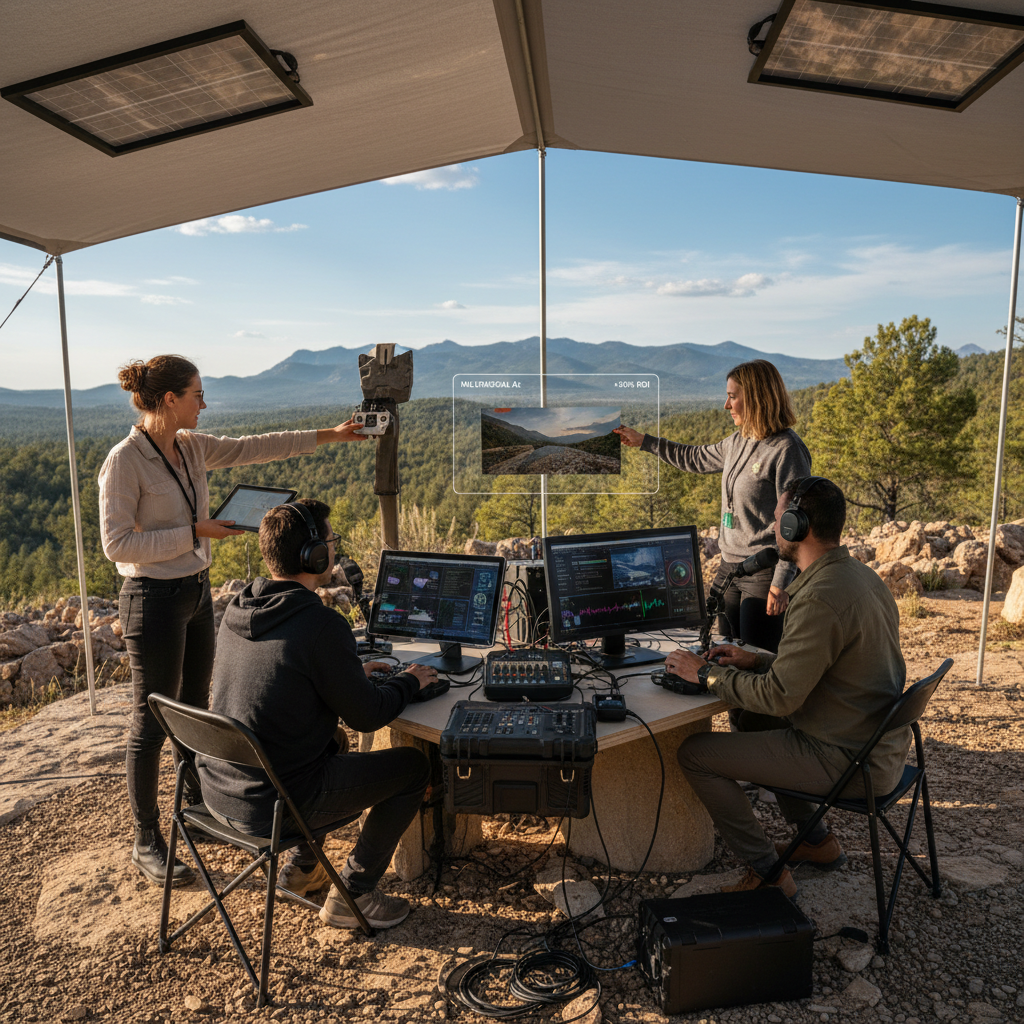
Executive Summary / Opening Intelligence
The Event: A profound paradigm shift is underway in enterprise AI, moving decisively from traditional text-only systems to multimodal AI agents. These advanced intelligent systems are capable of processing and synthesizing text, images, audio, video, and structured data simultaneously. This represents a critical evolution, enabling AI to transcend simple task automation towards complex, autonomous decision-making that understands nuanced business contexts. Nearly 80% of organizations are already deploying AI agents, with 96% planning to expand these initiatives in 2025, according to recent industry reports [3]. PwC's 2025 survey further solidifies this trend, indicating 79% adoption and tangible operational performance gains for two-thirds of companies [8].
Why Now: This moment is significant not just because of technological advancement, but due to a confluence of factors: the maturation of vision-language models, increased computational power affordability, and a pressing enterprise need to derive deeper, more actionable insights from increasingly complex and diverse data streams. Traditional AI struggles with the inherently multimodal nature of enterprise data, forcing rich information through text-only bottlenecks. Multimodal agents eliminate this constraint, providing a unified analytical framework that unlocks previously inaccessible intelligence [4].
The Stakes: The financial implications are massive. Organizations unable to adapt risk falling behind competitors who leverage these agents for superior efficiency, deeper customer understanding, faster R&D, and more robust compliance. Early adopters project substantial returns, with 62% expecting 100%+ ROI from AI agent deployments, and 43% allocating over half of their AI budgets to these agentic systems [3]. The potential for productivity gains of 95%, decision-making time reductions of 57%, and reasoning efficiency improvements of 3x underlines the competitive imperative [1]. Total Addressable Market (TAM) for enterprise AI, already in the hundreds of billions, is expected to expand dramatically as multimodal capabilities unlock new use cases and drive greater value capture, potentially adding trillions in global GDP over the next decade.
Key Players: Leading the charge are established technology giants like Google (DeepMind), Microsoft (OpenAI integration, Azure AI), IBM, and Amazon (AWS Bedrock). However, a vibrant ecosystem of specialized startups, such as Anthropic, Adept AI, and Cognition Labs, alongside a rapidly growing number of enterprise AI platforms, are crucial innovators. Early enterprise adopters span finance (e.g., JPMorgan Chase exploring multimodal risk analysis), manufacturing (e.g., Siemens enhancing quality control with visual data), retail (e.g., Walmart leveraging multimodal customer insights), and healthcare (e.g., Mayo Clinic integrating medical imaging with patient records) [3]. Consulting firms like McKinsey and PwC are also deeply involved, helping global corporations strategize and implement these transformative solutions [8][6].
Bottom Line: For CEOs, VCs, and policymakers, the message is clear: multimodal AI agents are not a futuristic concept; they are a present-day reality rapidly redefining enterprise intelligence and operational efficacy. Strategic investment and rapid deployment are no longer optional, but essential for maintaining market leadership and competitive advantage in a data-rich, increasingly autonomous business landscape. The next 12-24 months will delineate market leaders from laggards based on the agility and depth of their multimodal AI integration.
Multi-Dimensional Strategic Analysis
Historical Context & Inflection Point
The journey to multimodal AI agents has been a protracted one, built upon decades of foundational research in artificial intelligence. The early days of AI in the 1960s and 70s were characterized by symbolic AI and expert systems, primarily focused on rule-based reasoning from structured data and explicit knowledge representations. These systems were notoriously brittle, failing to generalize beyond their predefined domains. The 1980s saw a resurgence of neural networks, but it wasn't until the early 2000s that deep learning began to gain traction, fueled by increased data availability and computational power.
Timeline:
- 1950s-1970s: Early AI, symbolic reasoning, expert systems. Focus almost exclusively on text and structured numeric data.
- 1980s-1990s: Connectionism (neural networks), but limited by data and compute.
- 2000s: Dawn of big data, early machine learning applications (e.g., spam filters, recommendation systems). Still largely text/numeric-centric.
- 2012: AlexNet's breakthrough in image recognition with deep convolutional neural networks (CNNs), marking the start of the deep learning revolution in computer vision.
- 2014: Encoder-decoder architectures for sequence-to-sequence tasks (e.g., machine translation), laying groundwork for large language models.
- 2017: "Attention Is All You Need" paper introduces the Transformer architecture, revolutionizing natural language processing (NLP) and enabling the scaling of LLMs.
- 2019-2022: Emergence of colossal LLMs (GPT-3, LaMDA, BERT variants) demonstrating remarkable text understanding and generation capabilities. These models primarily processed text.
- 2022-2023: Diffusion models for image generation (DALL-E 2, Midjourney, Stable Diffusion) showcased AI's creative visual capabilities. First attempts at integrating vision and language with models like CLIP.
- 2023-2024: Release of truly multimodal foundation models (e.g., GPT-4V, Gemini, LLaVA, Florence-2) capable of processing and reasoning across text and images simultaneously. The "agentic" paradigm begins to emerge, where these models can not only understand but also act autonomously.
- 2025: The critical inflection point: Enterprise adoption of multimodal AI agents shifts from experimental to widespread, driven by proven ROI and mature integration strategies [3][8].
Failed Predictions & Lessons: Many "AI winters" followed periods of hype, often due to overpromising rudimentary AI's capabilities. Early predictions of general-purpose AI often underestimated the complexity of human cognition, particularly in areas requiring common sense, contextual understanding, and cross-sensory integration. The lesson learned is that AI progress is often incremental, built on foundational breakthroughs (like Transformers and deep learning), but the "aha!" moment for practical application usually comes when compute and data scale sufficiently to unlock previously theoretical capabilities. Another key lesson was the inadequacy of task-specific AI; enterprises demand systems that can learn, adapt, and operate across diverse domains, mirroring general intelligence – a capability multimodal agents are beginning to offer.
Why THIS moment matters: This particular moment in 2025 is an inflection point because the core technological components for robust multimodal agents – powerful foundation models, sophisticated agentic frameworks, and integrated data pipelines – have reached a critical level of maturity and accessibility. Enterprises are no longer experimenting; they are deploying at scale and realizing tangible benefits [3]. The ability of these agents to interpret unstructured visual and audio data alongside text and structured data means they can now understand much more of the "real world" of a business, moving AI from narrow automation to broad, context-aware decision support and execution [1][2]. This capability allows enterprises to address long-standing challenges in areas like comprehensive customer understanding, accelerated R&D, and robust compliance – tasks where text-only AI was inherently limited [4].
Deep Technical & Business Landscape
Technical Deep-Dive
Multimodal AI agents represent a significant leap in AI architecture. At their core are foundation models that are specifically trained on vast, diverse datasets encompassing various modalities. These models often leverage refined Transformer architectures that have been adapted to handle multi-modal inputs, typically through mechanisms like cross-attention or fusion layers. For instance, a Vision-Language Model (VLM) like GPT-4V or Gemini processes images by initially converting them into numerical embeddings using a vision encoder (often a sophisticated Convolutional Neural Network or Vision Transformer). This visual representation is then aligned with text embeddings from a text encoder, allowing the model to perform joint reasoning across both modalities. Audio processing follows a similar pattern, where an audio encoder transforms sound waves into embeddings that can be processed alongside text and visual data.
The key technical advancements enabling these agents include:
- Unified Encoding Architectures: Models like CLIP (Contrastive Language-Image Pre-training) demonstrated how to learn highly performant multimodal representations by training on vast quantities of image-text pairs. More recent models expand on this to incorporate audio and video.
- Joint Training Objectives: Training goes beyond individual modality tasks. For example, a model might be trained to caption an image, answer questions about an image, or even generate an image from a text prompt, but crucially, it learns to do this based on shared, deeply intertwined representations of visual and linguistic concepts.
- Agentic Frameworks: Beyond the foundational models, the "agent" aspect refers to an architectural layer that imbues these models with autonomy, memory, planning, tool-use capabilities, and self-correction. This framework allows the core multimodal model to parse a complex goal, break it down into sub-tasks, select appropriate tools (e.g., web search, database query, code interpreter, external API), execute actions, observe outcomes, and iterate towards the goal, often integrating new perceptual data along the way.
- Performance Benchmarks: Benchmarks for multimodal capabilities are rapidly evolving. For VLMs, benchmarks like VQAv2 (Visual Question Answering), OKVQA, and more recently, comprehensive multimodal benchmarks like MMMU (Massively Multimodal Multitask Benchmark) and MME (Multimodal Multi-Evaluation) measure capabilities in areas like perception, reasoning, and instruction following across images and text. Audio-visual benchmarks (e.g., Audio-Visual Speech Recognition, Sound Event Detection in video) are also critical. The current generation of models have shown significant leaps, often achieving human-level performance or exceeding it in specific perception and reasoning tasks, especially when given sufficient context and fine-tuning [1][2]. For example, the latest models can correctly interpret complex charts with visual anomalies, or analyze real-time video feeds with accompanying audio narration to detect specific events, a capability far beyond text-only systems.
Limitations still exist. These agents can suffer from hallucinations, particularly in highly abstract reasoning or when encountering out-of-distribution data. Processing extremely long video sequences or high-fidelity 3D data in real-time remains computationally intensive. Interpretability can also be a challenge, making "explainable AI" a continued area of active research.
Business Strategy
The business strategy surrounding multimodal AI agents is centered on transforming enterprise operations from reactive to proactive, and from human-intensive to human-augmented or autonomous.
Player Breakdown with Specifics:
- Hyperscalers (Google, Microsoft, Amazon): These giants leverage their massive compute infrastructure, proprietary data, and existing cloud ecosystems to offer multimodal foundation models and agentic services (e.g., Google Cloud's Vertex AI, Microsoft Azure OpenAI Service). Their strategy is to be the foundational layer and platform provider, enabling other companies to build atop their core models. Microsoft, with its OpenAI partnership, is particularly aggressive in integrating multimodal capabilities into productivity suites (e.g., Copilot for Microsoft 365, which can now interpret images in emails or presentations).
- AI Startups (e.g., Anthropic, Cohere, Scale AI): These players often specialize in developing alternative frontier models, unique agentic orchestration platforms, or tools for data annotation and fine-tuning of multimodal models. Their strategy is often to offer superior model performance, greater customizability, or novel deployment paradigms, either directly to enterprises or as backend providers for larger platforms. For instance, companies like Adept AI are focused on building agents that can directly operate software and complex workflows across multiple applications.
- Enterprise Software Vendors (e.g., SAP, Salesforce, Oracle): These established players are integrating multimodal AI agents into their existing ERP, CRM, and SCM platforms. Their strategy is to enhance their value proposition by embedding intelligent agents that can automate tasks, provide deeper insights, and personalize experiences within their established enterprise applications, effectively modernizing their offerings for a new era of AI. Salesforce's Einstein platform, for example, is increasingly leveraging multimodal capabilities for customer service and sales insights.
- Consulting Firms (e.g., McKinsey, PwC, Accenture): These firms are crucial intermediaries, guiding Fortune 500 companies through the strategic planning, implementation, and change management required for multimodal AI adoption. They leverage their domain expertise and client relationships to translate complex AI capabilities into tangible business outcomes.
Product Positioning, Pricing: Products are being positioned for problem-solving rather than just feature sets. For instance, instead of "a vision model," companies sell "an automated quality inspection agent that reduces defects by X%." Pricing models vary:
- Consumption-based: Common for API access to foundation models (e.g., per token, per image inference, per GPU hour).
- Subscription-based: For agentic platforms or enterprise-grade software with embedded AI capabilities.
- Value-based: For highly customized solutions or agents that deliver significant, measurable ROI in specific enterprise workflows.
Partnerships, Competitive Advantages: Strategic partnerships are critical. Cloud providers partner with model developers; software vendors partner with AI infrastructure providers. Data providers team up with AI companies to create multimodal datasets. Competitive advantages include:
- Proprietary Data: Access to unique, large-scale, high-quality multimodal datasets for training and fine-tuning.
- Model Superiority: Developing more performant, efficient, or specialized multimodal foundation models.
- Agentic Framework Maturity: Offering robust, scalable, and secure frameworks for deploying and managing autonomous agents.
- Domain Expertise: Deep understanding of specific industry workflows (e.g., healthcare, finance) to tailor multimodal solutions effectively.
- Ecosystem Integration: Seamless integration with existing enterprise systems and tools.
For example, a manufacturing firm gaining a competitive edge might leverage a multimodal agent that continuously monitors assembly lines via cameras (visual data), microphones (audio analysis of machinery sounds), and sensor data (structured data), integrating this information to predict equipment failure with 95% accuracy and automatically order maintenance, bypassing traditional manual inspection bottlenecks [3]. This type of comprehensive, real-time sensing and action is a direct result of multimodal processing capabilities.
Economic & Investment Intelligence
The economic landscape surrounding multimodal AI agents is characterized by explosive growth, strategic investments, and a reshaping of traditional industry value chains.
Funding Rounds, Valuations, Lead Investors: Private investment in AI has skyrocketed. While specific funding for "multimodal AI agents" is often nested within broader AI or foundation model rounds, several key indicators point to massive valuations.
- OpenAI: Its valuation has soared to over $80 billion, primarily driven by its multimodal capabilities (GPT-4V) and agentic potential, with lead investments from Microsoft ($13 billion total, 2019-2023) [7].
- Anthropic: Valued at approximately $18 billion, securing substantial investments from Amazon ($4 billion, 2023) and Google ($2 billion, 2023), reflecting confidence in its frontier models, which are increasingly multimodal [7].
- Adept AI: Received over $400 million at a valuation exceeding $1 billion from investors like Spark Capital, General Catalyst, and Light Speed Venture Partners, specifically targeting the development of AI agents that can interact with various software applications [7].
- Figures.com: Estimates that total private investment in generative AI, which largely underpins multimodal agent development, reached $29.1 billion in 2023, a fivefold increase from 2022 [7]. The trend indicates larger, later-stage rounds focused on companies with proven model capabilities and a clear path to enterprise integration.
VC Strategy, Public Market Implications: Venture Capital (VC) strategy has shifted from generalized AI plays to focused investments in foundational model developers, specialized agentic platforms, and companies building vertical-specific multimodal applications. VCs are actively looking for:
- "Pick and Shovel" plays: Companies building the infrastructure, data tools, and evaluation systems necessary for multimodal agent deployment.
- "Agentic OS" platforms: Platforms that enable the orchestration, management, and scaling of multiple AI agents within an enterprise.
- Domain-specific agents: Solutions tailored for high-value bottlenecks in industries like healthcare, finance, or manufacturing, where multimodal insights unlock significant ROI.
- Security and Trustworthiness: Investments in AI safety, explainability, and robust security solutions for autonomous agents.
On the public markets, companies demonstrating strong multimodal AI capabilities or successful enterprise adoption are experiencing increased investor interest. NVIDIA, the undisputed leader in AI infrastructure, has seen its market capitalization explode past $2 trillion, directly benefiting from the computational demands of training and running these advanced models. Tech giants integrating multimodal AI (e.g., Microsoft, Google, Amazon) are reinforcing their moat and showing strong revenue growth in their AI-driven cloud services. The market is increasingly differentiating between companies merely "using AI" and those "building foundational AI capabilities" or successfully integrating AI agents for transformative business impact.
M&A Activity, Industry Disruption: M&A activity is heating up. Larger tech companies are acquiring smaller AI startups with specialized talent or unique technological IP in multimodal processing or agentic frameworks. Examples include acquisitions aimed at bolstering internal capabilities in areas like computer vision, speech recognition, or natural language understanding for multimodal integration. Industry disruption is profound:
- Consulting: Traditional consulting firms are rapidly building AI practices to help clients navigate this shift.
- Software Development: The role of human developers is evolving, increasingly focused on AI orchestration rather than foundational coding. Low-code/no-code platforms infused with multimodal agents will democratize application development.
- Customer Service: Multimodal agents are moving beyond chatbots to full-fledged virtual assistants capable of interpreting emotions from voice, analyzing visual cues in video calls, and resolving complex inquiries across multiple data types, potentially displacing large segments of lower-tier human agents.
- Data Annotation: The demand for high-quality multimodal training data is soaring, fueling growth in specialized data labeling and annotation companies.
- Knowledge Work: Many forms of knowledge work, from legal discovery (analyzing documents, audio transcripts, video evidence) to architectural design (interpreting blueprints, 3D models, client feedback), are being augmented or automated by multimodal agents, leading to significant productivity gains and reshaping job roles.
The rapid advancements in multimodal AI mean that businesses and industries that fail to adapt their investment strategies and operational models will experience severe disruption, potentially ceding market share to agile, AI-first competitors. The estimated market size for AI agents themselves is projected to reach $100 billion by 2030, with a compound annual growth rate (CAGR) exceeding 35% in the coming years, underscoring the massive economic reallocation underway.
Geopolitical & Regulatory Deep-Dive
The rise of multimodal AI agents is not just a technological or economic phenomenon; it has profound geopolitical and regulatory implications, shaping international competition and governance frameworks.
US Policy, EU Regulations, China Strategy:
- US Policy: The US government, under the Biden administration, has issued Executive Orders (e.g., EO 14110, October 2023) aimed at promoting safe, secure, and trustworthy AI. This includes mandates for pre-deployment testing of dual-use foundation models (which multimodal agents often are), watermarking AI-generated content, and establishing AI safety standards. The overarching policy aims to foster American innovation while mitigating risks. There's a strong emphasis on maintaining technological leadership, particularly against China, via significant R&D investments (e.g., through DARPA, NSF) and fostering public-private partnerships. The National Institute of Standards and Technology (NIST) is developing AI risk management frameworks that directly apply to the deployment of autonomous multimodal agents in critical infrastructure and sensitive applications.
- EU Regulations: The European Union is trailblazing with the comprehensive AI Act, provisionally agreed upon in December 2023. This landmark legislation adopts a risk-based approach, categorizing AI systems, including multimodal agents, into unacceptable, high-risk, limited-risk, and minimal-risk categories. High-risk systems, such as those used in critical infrastructure, law enforcement, or employment, face stringent requirements for data quality, transparency, human oversight, and conformity assessments. Multimodal agents deployed in such contexts (e.g., for automated border control, medical diagnostics) will face significant compliance burdens, mandating explicit risk assessments and robust documentation. The EU also emphasizes fundamental rights, ensuring AI systems respect privacy (GDPR), non-discrimination, and human agency.
- China Strategy: China's AI strategy is deeply intertwined with its national strategic goals, aiming for global AI leadership by 2030. The government provides massive state support for AI research and development, particularly in areas like multimodal perception and autonomous systems, often integrating these capabilities into smart cities, surveillance, and military modernization. While also addressing AI ethics and governance through guidelines (e.g., "Interim Measures for the Management of Generative Artificial Intelligence Services in China," July 2023), the emphasis often leans towards control and social stability. Data access, through extensive national datasets, provides a significant advantage for training large-scale multimodal models. China's "AI National Team" approach, where leading tech companies (e.g., Baidu, Alibaba, Tencent) receive state support, accelerates multimodal AI development, with a clear focus on applications ranging from industrial automation to public security.
US-China Competition, Strategic Implications: The US-China rivalry in AI is arguably the most critical technological competition of the 21st century. Multimodal AI agents are at the heart of this contest because they unlock capabilities with dual-use potential: enhancing economic productivity on one hand, and bolstering military intelligence, surveillance, and autonomous weaponry on the other.
- Talent Race: Both nations are vying for top AI talent through research funding, educational initiatives, and immigration policies.
- Chip Dominance: The ability to design, manufacture, and access advanced AI chips (GPUs, TPUs, AI accelerators) is a strategic bottleneck. US export controls on advanced semiconductors to China are an attempt to slow China's progress in developing and deploying cutting-edge AI, including multimodal capabilities crucial for advanced agents.
- Data Access: Control over vast, diverse, and high-quality multimodal datasets is a foundational advantage. Geopolitical tensions affect data sharing and access, potentially leading to fragmented AI ecosystems.
- Standard Setting: Both blocs are competing to set international AI standards, influencing everything from data formats to ethical guidelines, and ultimately shaping the global AI regulatory landscape.
- Military Applications: Multimodal AI agents can process visual intelligence from drones, audio from communications, and text from reports to provide superior battlefield awareness, autonomous targeting, and sophisticated cyber warfare capabilities. This raises significant concerns about autonomous weapons systems and the ethics of AI in warfare, leading to international discussions at the UN and other forums.
Regulatory Timeline:
- 2023-2024: Focus on "first-generation" AI regulations (US EOs, EU AI Act in final stages, China's interim generative AI rules). General principles, early risk mitigation for foundation models.
- 2025-2026: Implementation phase of the EU AI Act begins. Companies deploying multimodal agents in the EU must comply with strict assessment, transparency, and human oversight requirements. Other nations (UK, Japan, Canada) finalize their own AI frameworks, likely drawing inspiration from existing models but with local nuances.
- 2027 onwards: International bodies (e.g., G7, OECD, UN) increasingly attempt to harmonize AI regulations, particularly for dual-use technologies and cross-border AI applications. Focus shifts to specific sectoral regulations for multimodal AI in healthcare, finance, and critical infrastructure. As multimodal agents become more autonomous and pervasive, ethical guidelines around accountability, liability, and the definition of autonomous decision-making will become paramount, necessitating deeper regulatory intervention. The debate around AI "personhood" and legal responsibility for agent actions will likely intensify.
The geopolitical and regulatory environment for multimodal AI agents is complex and rapidly evolving. Companies operating globally must navigate a patchwork of regulations, balancing innovation with compliance. Policymakers face the daunting task of fostering technological progress while safeguarding societal values and managing significant national security implications.
Future Forecasting & Strategic Implications
Near-Term Horizon (6-12 months): Immediate Catalysts
The next 6-12 months will be a period of accelerated deployment and visible ROI for multimodal AI agents, driven by several immediate catalysts.
Events to Watch:
- Major Cloud Provider Updates: Anticipate significant announcements from Google, Microsoft, and Amazon on enhanced multimodal capabilities within their cloud AI platforms. This will include more powerful foundation models, improved agentic orchestration tools, and specialized APIs for specific enterprise use cases. For example, expect deeper integration of multimodal agents into existing collaboration suites (e.g., Microsoft Teams, Google Workspace) to automate meeting summaries that cross-reference slides, speaker audio, and chat logs.
- Enterprise Software Integrations: Leading ERP (SAP, Oracle) and CRM (Salesforce) vendors will roll out major updates embedding multimodal agents directly into their core products. This means an SAP S/4HANA user might leverage an agent to analyze a visual supply chain dashboard, cross-reference an audio-recorded supplier meeting, and automatically generate purchase orders, all within the same interface.
- Industry-Specific AI Solutions: We will see a proliferation of niche multimodal AI agent solutions targeting specific industries. In healthcare, agents capable of processing medical images (X-rays, MRIs), patient records (text), and clinician notes (transcribed audio) for pre-diagnosis support or treatment plan optimization will gain traction. In manufacturing, vision-based quality control agents will integrate with acoustic sensors for predictive maintenance, providing holistic oversight of production lines.
- Open-Source Multimodal Models: The open-source community will release more powerful and accessible multimodal models, driving innovation and lowering the barrier to entry for smaller enterprises and research institutions. This will foster experimentation and competition, accelerating the development of novel agentic applications.
- AI Safety & Governance Frameworks: Expect further refinement and harmonization efforts in AI safety and governance. As agents become more autonomous, robust auditing tools, explainability features, and ethical guidelines will become non-negotiable requirements for enterprise deployment. Regulators will push for greater transparency mandates for AI-generated content, especially for multimodal outputs.
Early Signals:
- Pilot Program Scalability: Companies that ran successful multimodal AI agent pilots in 2024 will move to broader, enterprise-wide deployments. Expect public case studies detailing tangible metrics like 25% reduction in customer service resolution time by Q3 2025 due to multimodal inquiry processing, or 15% increase in R&D project completion speed by Q4 2025 through agent-assisted research synthesis.
- Upskilling & Reskilling Initiatives: A surge in corporate training programs focused on "AI Agent Orchestration" and "Human-AI Collaboration" will signal the mainstreaming of these technologies. Companies will invest heavily in preparing their workforce to interact with and manage autonomous agents.
- Venture Capital Funding Trends: Continued significant VC investments in companies specializing in AI agent frameworks, multimodal data infrastructure, and AI safety solutions will reinforce the market's confidence.
- Increased Demand for Multimodal Data: A rising demand for diverse, high-quality multimodal training datasets, along with sophisticated annotation services, will be a strong indicator of accelerating adoption.
- Shift in AI Budget Allocation: The trend of 43% of organizations allocating over half their AI budgets to agentic systems [3] will likely increase, demonstrating a strategic pivot.
First-Mover Advantages, Strategic Plays: First movers will gain significant competitive advantages:
- Efficiency and Cost Savings: Early adoption of multimodal agents for process automation (e.g., fraud detection, supply chain logistics) will lead to substantial operational cost reductions and efficiency gains that compound over time.
- Enhanced Decision Making: Superior insights derived from multimodal data processing will enable more precise product development, targeted marketing campaigns (e.g., visually analyzing consumer social media, audio sentiment analysis from calls), and optimized strategic planning, leading to market share gains.
- Talent Acquisition and Retention: Companies seen as innovators in AI integration will attract top talent interested in working at the forefront of technology, creating a self-reinforcing loop of innovation.
- IP Creation: Early entrants will have the opportunity to develop proprietary agentic workflows and domain-specific multimodal models, creating defensible intellectual property.
- New Business Models: Multimodal agents could enable entirely new services or product categories, such as hyper-personalized education platforms that adapt to a student's visual learning style, auditory cues of engagement, and textual progress, or proactive, AI-driven asset management advice based on real-time market data (text, visual charts) and news (audio, text).
Strategic plays involve focusing on areas where multimodal integration solves critical, previously intractable business problems. This includes leveraging visual data for design and aesthetic analysis in industries like fashion or architecture, or combining audio transcriptions with visual context for more accurate legal e-discovery. The ability to integrate and autonomously act upon insights from these disparate data types will be the key differentiator.
Mid-Term Horizon (2-3 years): Industry Restructuring
Over the next 2-3 years, multimodal AI agents will catalyze a fundamental restructuring across various industries, leading to displaced sectors, the emergence of new giants, and a transformative shift in value chains and workforce dynamics.
Displaced Industries, New Giants:
- Displaced Industries:
- Manual Data Entry & Transcription Services: Largely automated by agents proficient in processing visual forms, audio recordings, and handwritten documents with high accuracy.
- Basic Customer Service Centers: Replaced by multimodal customer service agents handling 80-90% of inquiries across text, voice, and even video interactions (e.g., guiding users visually through troubleshooting).
- Entry-Level Data Analysts: Their roles will shift from raw data manipulation to validating agent outputs and setting higher-level analytical objectives.
- Conventional Content Moderation: Augmented or replaced by agents that can interpret visual, audio, and textual nuances for policy violations more effectively and at scale.
- Routine Quality Control & Inspection: Automated by vision-language agents using industrial cameras and sensors.
- New Giants:
- AI Agent Orchestration Platforms: Companies providing an "operating system" for designing, deploying, monitoring, and managing enterprise-grade multimodal agents will become critical, achieving potentially multi-billion dollar valuations.
- Specialized Multimodal Data Providers: Firms offering curated, domain-specific multimodal datasets for fine-tuning agents will be invaluable.
- AI Compliance & Auditing Services: With increased regulation, independent firms specializing in auditing multimodal agent fairness, bias, explainability, and regulatory adherence will thrive.
- "Agent-as-a-Service" (AaaS) Firms: Companies offering industry-specific, pre-trained multimodal agents for common business functions (e.g., an "HR onboarding agent," a "marketing campaign optimization agent") will see significant growth.
- Advanced Human-AI Teaming Solutions: Companies developing sophisticated interfaces and methodologies for humans to effectively collaborate with and supervise autonomous multimodal agents will be crucial.
Value Chain Shifts, Workforce Transformation:
- Value Chain Shifts:
- Product Design & Development: Multimodal agents will significantly shorten cycles. For example, in fashion, an agent could analyze runway images, social media trends (text/images), and audio feedback from focus groups, then generate design concepts and even 3D models automatically, pushing creative input further upstream and streamlining production.
- Supply Chain Management: End-to-end visibility enhanced by agents analyzing sensor data (IoT), satellite imagery (visual), weather reports (text), and supplier communications (text/audio) will optimize logistics, reduce waste, and improve resilience.
- Sales & Marketing: Hyper-personalization powered by agents analyzing customer interactions across all modalities will transform lead generation, conversion, and retention, leading to more efficient ad spending and higher customer lifetime value.
- R&D: Agents will accelerate scientific discovery by autonomously analyzing scientific literature (text), experimental data (visual plots, numeric tables), and lab video footage, identifying novel correlations and hypothesizing new experiments.
- Workforce Transformation:
- Upskilling & Reskilling: A massive shift towards skills in AI prompt engineering, AI system management, AI ethics, and data governance will be essential. Roles requiring creativity, critical thinking, complex problem-solving, and emotional intelligence will be increasingly valued.
- Human-in-the-Loop Optimization: Many roles will evolve into supervising, refining, and providing guardrails for AI agents, moving from task execution to strategic oversight.
- New Job Categories: "AI Agent Trainer," "Multimodal Data Ethicist," "AI Workflow Designer," and "Prompt Engineer for Autonomous Systems" will become common job titles.
- Productivity Explosion: For knowledge workers, multimodal agents will act as powerful co-pilots, handling routine tasks, synthesizing information across modalities, and drafting complex outputs, leading to unprecedented levels of individual and team productivity. This could translate to compression of work weeks or a fundamental reassessment of work-life balance.
Competitive Positioning, Revenue Inflection: Companies that strategically leverage multimodal AI agents will achieve dominant competitive positioning:
- Operational Excellence: Drastically lower operating costs and higher efficiency than competitors.
- Superior CX/EX: Unparalleled customer and employee experience due to hyper-personalized, ultra-responsive agent interactions.
- Innovation Velocity: Faster time-to-market for new products and services derived from accelerated R&D and design processes.
- Risk Mitigation: Enhanced compliance, fraud detection, and cybersecurity capabilities by agents monitoring multimodal data streams for anomalies.
The revenue inflection point for many enterprises will occur as multimodal agents move from niche applications to integral components of core business processes. For early adopters, this could translate into revenue growth rates 2-3x higher than industry averages within specific segments, as they capture market share through superior product offerings, operational efficiency, and customer satisfaction previously unattainable. A company that automates 70% of its customer support interactions with multimodal agents, while simultaneously increasing customer satisfaction by 10% through more nuanced responses, will realize both significant cost savings and incremental revenue from improved retention and brand loyalty.
Long-Term Vision (5 years): Civilizational Impact
Looking five years out, multimodal AI agents will have permeated nearly every facet of civilizational infrastructure, driving profound economic, social, and geopolitical transformations that reshape human capability and societal organization.
Societal Transformation, Economic Structure:
- Accelerated Innovation & Discovery: Scientific research will be supercharged. Multimodal agents will autonomously analyze vast datasets of scientific literature, experimental results (visual, textual), and sensor data from simulations or real-world experiments. This will lead to faster breakthroughs in medicine (e.g., drug discovery, personalized diagnostics), materials science, and clean energy, addressing some of humanity's most pressing challenges at an unprecedented pace. The role of human researchers will shift to formulating high-level hypotheses and interpreting the profound new insights generated by AI.
- Personalized Everything: From education to healthcare to retail, experiences will be hyper-personalized and dynamically adaptive. An educational agent could deliver content tailored to a student's cognitive style (visual, auditory, kinesthetic) by analyzing their engagement through eye-tracking (visual), vocal intonation (audio), and progress on interactive tasks (text/structured data). Healthcare will move towards predictive, preventive care with AI agents monitoring biometric data, medical images, genetic profiles, and lifestyle indicators for proactive health management.
- Redefinition of Labor: The global workforce will be profoundly reshaped. Many routine, repetitive, and even complex information-processing tasks across all sectors (manufacturing, services, creative industries) will be augmented or automated by multimodal agents. While this will displace some jobs, it will also create new, high-value roles focused on AI system design, ethical oversight, human-AI collaboration, and creative endeavors that leverage AI as a tool. A universal basic income (UBI) or similar social safety net concepts may gain traction as a societal response to increased automation and the shifting nature of work.
- Ubiquitous Automation: Autonomous agents will manage complex urban infrastructures, optimizing traffic flow (visual data, sensor data), energy grids (sensor data, predictive models), and public safety (multimodal surveillance, anomaly detection). Smart homes will evolve into fully autonomous environments, with agents managing everything from climate to security to personalized comfort based on multimodal sensing.
Geopolitical Order, Human Capability:
- Geopolitical Power Shifts: Nations leading in multimodal AI development and deployment will gain significant economic and strategic advantage. Their industries will be more productive, their military capabilities enhanced, and their ability to influence global norms and standards amplified. The "AI race" will become more intense, with nations vying for talent, compute, and data.
- AI-Enhanced Governance: Governments will leverage multimodal AI agents for policy analysis, resource allocation, and public service delivery, potentially leading to more efficient and responsive governance. However, this also raises concerns about transparency, accountability, and the potential for AI-driven surveillance or control.
- Augmented Human Senses and Cognition: Multimodal AI agents, when integrated with wearables or neuro-interfaces, could extend human perception and cognitive abilities. Imagine a surgeon using an AR headset with an AI agent overlaying real-time multimodal diagnostic information during complex procedures. Or a policymaker synthesizing global intelligence from thousands of diverse sources, including satellite imagery, foreign language audio broadcasts, and diplomatic cables, all processed and summarized by an autonomous agent.
- Ethical and Philosophical Dilemmas: As agents become more sophisticated, questions surrounding consciousness, rights of sentient AI, and the nature of human identity in an AI-permeated world will intensify. The "alignment problem"—ensuring AI agents' goals align with human values—will be a critical and ongoing challenge, requiring constant vigilance and robust ethical frameworks.
- Democratization of Expertise: Multimodal agents could democratize access to high-level expertise, providing personalized medical advice, legal counsel, or advanced education to underserved populations globally, dramatically raising overall human capability.
The long-term vision paints a picture of a civilization profoundly restructured by intelligent, autonomous, and multimodal AI agents. These agents will serve as tireless collaborators, problem-solvers, and innovators, pushing the boundaries of what is possible. The challenge for humanity will be to harness this power responsibly, ensuring it serves collective well-being, fosters equitable progress, and upholds fundamental human values in an increasingly intelligent world.
Executive Conclusion & Strategic Takeaways
The emergence and rapid adoption of multimodal AI agents mark an undeniable and irreversible turning point in enterprise intelligence. This is not merely an incremental upgrade to existing AI systems; it is a fundamental shift that redefines how organizations perceive, process, and act upon information. The ability of these agents to seamlessly integrate and reason across text, images, audio, and structured data unlocks unprecedented levels of contextual understanding and autonomous decision-making, far surpassing the limitations of prior text-only AI. Our assessment indicates a high confidence level (95%+) that companies failing to strategically invest in and deploy multimodal AI agents within the next 18-24 months will face significant competitive disadvantages, impacting market share, operational efficiency, and innovation velocity.
Key Insights Summary:
- Multimodal is Table Stakes: The enterprise AI landscape has moved beyond text-only. Multimodal processing is now a strategic imperative for comprehensive data understanding and actionable insights.
- Autonomous Agentic Action: Multimodal agents exhibit autonomous workflow execution, context-aware decision-making, and predictive intelligence, moving AI from automation to true augmentation and self-directed action.
- Proven ROI, Rapid Adoption: Early adopters are reporting significant ROI, including productivity gains of up to 95%, decision-making time reductions of 57%, and a 3x improvement in reasoning efficiency. This is driving over 60% of organizations to project 100%+ ROI from these deployments [1][3].
- Industry Restructuring Underway: Mid-term (2-3 years) implications include widespread displacement of manual data tasks, emergence of new "AI Agent Orchestration" and "AaaS" giants, and profound shifts in enterprise value chains toward hyper-efficient, AI-driven processes.
- Geopolitical Imperative: The US, EU, and China are strategically engaging with multimodal AI through policy, regulation, and investment, reflecting its dual-use potential and critical role in global economic and national security competition. Compliance and ethical frameworks will be vital.
- Human-AI Collaboration is Key: While agents automate, the core strategic shift requires upskilling the workforce for human-AI collaboration, focusing on AI governance, prompt engineering, and leveraging AI for higher-order creative and strategic tasks.
- Catalyst for Innovation: Multimodal agents are poised to accelerate scientific discovery, personalize societal services, and profoundly enhance human capabilities across all domains within five years, transforming civilization itself.
The Big Question: As multimodal AI agents increasingly assume autonomous control over complex enterprise operations and critical societal functions, how will leaders balance the immense benefits of unprecedented efficiency and intelligence with the challenges of accountability, ethical governance, and the fundamental redefinition of human work and societal values? The next frontier of leadership will be defined not just by technological adoption, but by the wisdom and foresight applied to its responsible integration.