Executive Summary / Opening Intelligence
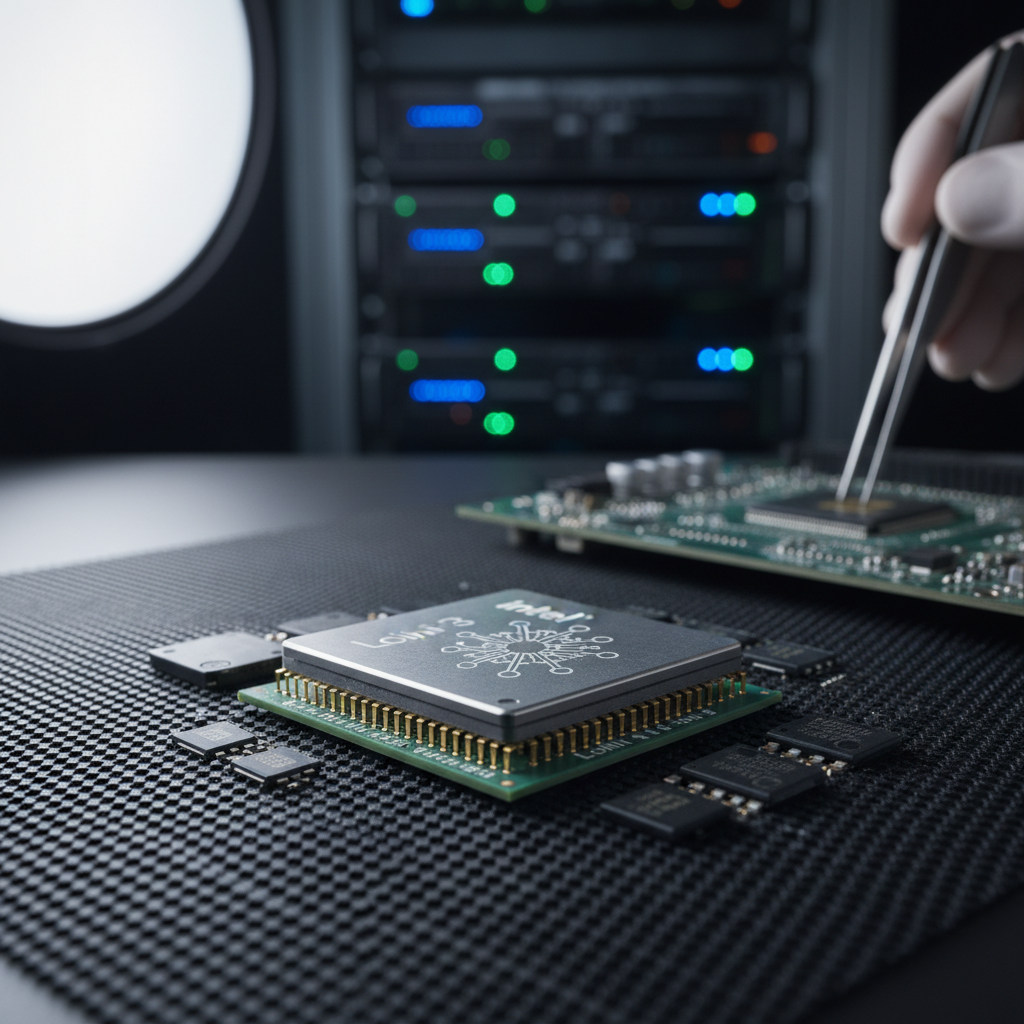
The Event: Intel's Loihi 3, a third-generation neuromorphic chip optimized on a 4nm process, is projected to fundamentally disrupt the artificial intelligence (AI) infrastructure landscape by 2026. This chip, boasting 8 million digital neurons and 64 billion synapses with a peak power consumption of just 1.2 Watts, promises unprecedented energy efficiency for AI inference tasks. Key analyses suggest Loihi 3 can achieve an eightfold density increase over its predecessors and handle computationally intensive tasks that currently burden GPUs with hundreds of watts, all while consuming significantly less power. This technological leap enables revolutionary capabilities, such as extending the autonomous operation of robots like the ANYmal D Neuro to 72 hours, representing a ninefold energy gain over GPU-driven models. The implications extend far beyond robotics, signaling a paradigm shift in data center economics and pervasive edge AI.
Why Now: The timing of Loihi 3's projected 2026 impact is critical because the existing GPU-centric AI infrastructure is reaching unsustainable limits in terms of power consumption, cooling requirements, and total cost of ownership (TCO). As large language models (LLMs) and complex AI applications proliferate, the energy footprint of AI data centers is skyrocketing, posing significant financial and environmental challenges. Loihi 3 arrives precisely when the industry desperately needs a breakthrough in energy efficiency, offering a viable, scalable alternative to the power-hungry general-purpose compute paradigm. Furthermore, the geopolitical competition in semiconductor technology and AI supremacy intensifies, making innovations that promise both performance and efficiency strategically vital.
The Stakes: The financial stakes are enormous. The global AI chip market is projected to exceed $100 billion by 2025, with data center AI expenditure accounting for a significant portion. A shift towards neuromorphic architectures like Loihi 3 could reallocate billions in capital expenditure (CapEx) and operational expenditure (OpEx) away from traditional GPU clusters and associated cooling infrastructure. Data centers could see a reduction in power consumption by orders of magnitude for specific AI inference workloads, potentially saving enterprises hundreds of millions to billions of dollars annually in electricity costs alone. For instance, if Loihi 3 can replace a 300W GPU task with 1.2W, the energy savings for a hyperscale data center running millions of inference operations daily are staggering. This also translates into significant environmental impact, potentially offsetting gigawatts of new power plant construction.
Key Players: Intel, a long-standing semiconductor giant, is the progenitor of the Loihi series, positioning itself to recapture leadership in specific AI hardware segments. Other significant players include research institutions like Sandia National Laboratories, which are deploying and experimenting with neuromorphic systems. In the broader ecosystem, robotics companies such as ANYbotics (producer of the ANYmal robot), telecommunications firms like Ericsson (exploring edge AI applications), and numerous AI/ML startups developing sparse coding and spiking neural network (SNN) algorithms will be directly impacted or enable future adoption. NVIDIA, the current GPU powerhouse, and competing neuromorphic developers like BrainChip (Akida) and IBM (TrueNorth) represent the incumbent and alternative challengers, respectively, in this evolving landscape.
Bottom Line: For decision-makers, Loihi 3 represents a fundamental inflection point. Its projected 2026 arrival signals a profound disruption to the conventional wisdom of AI infrastructure design. CEOs must strategize for a future where specific AI workloads, particularly inference at the edge and in data centers, are radically more efficient. VCs need to identify and invest in companies leveraging or developing applications for this new architecture. Policymakers must consider the geopolitical ramifications of energy-efficient AI, particularly concerning semiconductor supply chains and national technological sovereignty. The era of unchecked power consumption for AI is nearing its end for critical applications, with neuromorphic computing paving the way for sustainable and economically viable AI at scale.
Multi-Dimensional Strategic Analysis
Historical Context & Inflection Point
The concept of neuromorphic computing, inspired by the biological brain's structure and function, dates back decades. Early theoretical work on neural networks emerged in the 1940s and 1950s. However, the practical realization of brain-inspired hardware began to gain traction in the late 1980s and 1990s with projects like Carver Mead's silicon retina. For much of the 21st century, neuromorphic research remained largely academic, a niche pursuit overshadowed by the rapid advancements and commercial success of traditional von Neumann architectures, particularly Graphics Processing Units (GPUs), which proved exceptionally well-suited for the parallel processing demands of deep learning.
Timeline with specific dates:
- 1980s: Carver Mead coins "neuromorphic engineering," pioneering early silicon implementations of neural networks.
- 2009: IBM launches the Almaden Research Center's Cognitive Computing project, leading to the development of TrueNorth.
- 2014: IBM reveals the TrueNorth chip, a significant early neuromorphic processor with 1 million digital neurons. While innovative, its proprietary ecosystem and specific design often limited broader adoption.
- November 2017: Intel formally announces Loihi 1, its first neuromorphic research chip. Built on a 14nm process, it featured 128 neuromorphic cores, 130,000 neurons, and 130 million synapses. Loihi 1 was distinguished by its focus on asynchronous spiking neural networks (SNNs) and on-chip learning capabilities. Early benchmarks demonstrated a 5000x improvement in energy-delay product for specific tasks like sparse coding compared to conventional solutions.
- 2020-2022: Intel continues to refine the Loihi architecture with Loihi 2, leveraging the Intel 4 process node. This generation significantly scaled up the design, leading to the development of Loihi 2-based systems like "Hala Point."
- ~2024: Intel officially announces Hala Point, a large-scale neuromorphic system built with 1,152 Loihi 2 processors. Hala Point supports 1.15 billion neurons and 128 billion synapses across 140,544 cores. It demonstrates peak power consumption of 2,600W and achieves 20 petaops efficiency, touted as 100x less energy and 50x faster than CPUs/GPUs for specific inference and optimization tasks. This system showcased the potential for substantial energy benefits within a relatively compact form factor.
- January 21, 2026 (Projected): Based on industry analysis, Intel's Loihi 3 is projected to emerge. Fabricated on a 4nm process, it will miniaturize and further optimize the architecture significantly, featuring 8 million digital neurons and 64 billion synapses. Crucially, Loihi 3 targets a peak power consumption of 1.2 Watts for highly complex tasks, including those currently handled by hundreds-of-watts GPUs. This leap in efficiency includes the implementation of 32-bit graded spikes, allowing for more complex multi-dimensional processing and a powerful bridge between traditional deep neural networks (DNNs) and SNNs.
Failed predictions & lessons: Historically, neuromorphic computing has been a "future technology" for decades, often failing to cross the chasm from research to widespread commercial adoption. Many early predictions of neuromorphic dominance were premature. The primary lesson learned is that raw computational power, even if inefficient, often trumps efficiency in the initial phase of a technological revolution, especially when a dominant programming paradigm (like backpropagation for DNNs) emerges. GPUs became the de facto standard because they scaled well with the demands of deep learning, even if their power efficiency was suboptimal. The failure was not in the concept of neuromorphic computing itself but in the market's readiness and the lack of mature software ecosystems and compelling applications that could fully leverage the unique advantages of SNNs. Furthermore, the sheer difficulty of programming SNNs and integrating them into existing AI workflows has been a significant barrier.
Why THIS moment matters: This specific moment, marked by the advent of Loihi 3 in 2026, is fundamentally different. Several convergence factors create a true inflection point:
- AI Scaling Crisis: The current trajectory of AI, particularly large language models, is economically and environmentally unsustainable with GPU-based architectures. Power consumption for AI data centers is becoming a critical bottleneck, making efficiency not just a "nice-to-have" but a strategic imperative.
- Technological Maturity: Loihi 3 represents the culmination of over a decade of dedicated research and development from a major semiconductor player, Intel. The move to a 4nm process node signifies a mature, production-ready design capable of mass manufacturing and integration.
- Application Readiness: The increasing sophistication of edge AI, robotics, and real-time processing demands low-latency, low-power solutions. Loihi 3 directly addresses these needs, enabling applications like extended robot autonomy previously impossible with GPU constraints.
- DNN-SNN Bridging: The inclusion of 32-bit graded spikes in Loihi 3 indicates a strategic effort to bridge the gap between existing DNN models and SNNs, fostering easier migration and hybrid approaches. This addresses a key historical barrier to adoption.
- Geopolitical Imperative: Energy independence and technological self-sufficiency are paramount. A breakthrough in AI efficiency can reduce reliance on specific energy grids or foreign-sourced high-power components, offering strategic advantages to nations that embrace it. This is not just a hardware story; it's a foundational shift for national technological strategy.
The cumulative effect of these factors positions 2026 not as another false dawn for neuromorphic computing, but as the year it begins its profound commercial and strategic impact, moving from theoretical promise to practical deployment in critical AI infrastructure.
Deep Technical & Business Landscape
Technical Deep-Dive: Intel's Loihi 3 represents a significant evolutionary leap in neuromorphic chip design, far exceeding the capabilities of its predecessors in terms of density, process node, and core architectural features. Built on an advanced 4nm process technology, Loihi 3 integrates 8 million digital neurons and 64 billion synapses within a single chip. This density is an eightfold increase over earlier generations, signifying a mature design ready for high-volume, performance-critical applications.
The fundamental operation of Loihi 3, like all neuromorphic processors, is based on the spiking neural network (SNN) paradigm, which mimics the event-driven, asynchronous communication found in biological brains. Unlike traditional deep neural networks (DNNs) that process continuous numerical values, SNNs communicate through discrete "spikes" or pulses. This event-driven nature is the bedrock of Loihi's unparalleled energy efficiency. When a neuron is silent, it consumes virtually no power, a stark contrast to traditional processors where all transistors continuously draw current regardless of utility.
Loihi 3's architecture is characterized by highly interconnected, massively parallel cores, each comprising a cluster of neurons and synapses implemented directly in hardware. This on-chip memory and compute integration minimizes data movement, a major bottleneck and power sink in von Neumann architectures. A crucial innovation in Loihi 3 is the introduction of 32-bit graded spikes. Previous SNNs often relied on binary spikes, limiting the expressiveness and precision of information flow. The 32-bit graded spikes allow for multi-dimensional information encoding, significantly enhancing the chip's ability to handle complex, continuous-valued inputs and outputs. This bridges a critical gap between the high-precision requirements of many DNN tasks and the inherent sparse, event-driven nature of SNNs. It enables Loihi 3 to effectively process information streams that might otherwise require conversion layers or more complex asynchronous coding schemes, thus accelerating adoption for a wider range of AI workloads.
Benchmarks for Loihi 3-equivalent tasks highlight its radical efficiency. For inference workloads that typically require hundreds of watts on a GPU, Loihi 3 is projected to operate at a peak power of just 1.2 Watts. This translates to orders of magnitude improvement in energy efficiency for specific AI tasks, particularly those involving real-time processing, continuous learning, and optimization where spike sparsity can be maximally exploited. For example, the ninefold energy gain demonstrated in robotic applications (72-hour operation of ANYmal D Neuro versus prior GPU limits) underscores the practical impact. The asynchronous design, combined with tightly integrated memory and compute, facilitates ultra-low-latency processing for event-driven data, making it ideal for sensory processing and adaptive control.
Business Strategy: The emergence of Intel's Loihi 3 in 2026 will compel major shifts in AI business strategies across the technology landscape.
Player breakdown with specifics:
- Intel: Intel's strategy is to establish neuromorphic computing as a viable, energy-efficient alternative to GPUs for specific AI workloads, particularly inference, edge computing, and real-time adaptive AI. By developing the Loihi series, Intel aims to diversify its AI hardware portfolio beyond CPUs and GPUs, targeting market segments where power efficiency and low latency are paramount. The continued investment underscores Intel's long-term vision to remain a dominant force in silicon innovation. Their approach involves fostering an open research community around Loihi, exemplified by the Neuromorphic Research Community (INRC), to drive application development and demonstrate practical real-world impact. Their deployment with partners like Sandia Labs and collaborations on robotics show an ecosystem-building strategy for Loihi.
- NVIDIA: As the dominant player in GPU-based AI, NVIDIA's strategy will likely involve a dual approach. They will continue to innovate with next-generation GPUs, focusing on increased throughput for training and large-scale inference, potentially integrating more specialized inference engines and sparse computation capabilities within their architectures. Concurrently, NVIDIA may explore or acquire companies in the neuromorphic space if the market shift accelerates rapidly, or at minimum, they will monitor the progress of SNNs closely to assess potential threats to their market share in specific inference domains.
- Other Neuromorphic Developers (e.g., BrainChip, IBM): Companies like BrainChip with their Akida neuromorphic processor and IBM with TrueNorth have been pioneers. Their strategies will center on leveraging their existing IP and smaller, more agile R&D to carve out niche markets, potentially focusing on specific edge AI applications where they can offer compelling energy efficiency gains. The competitive landscape will push them to further differentiate their offerings and potentially seek partnerships with larger system integrators or cloud providers.
- Cloud Providers (e.g., AWS, Microsoft Azure, Google Cloud): Hyperscalers stand to gain tremendously from Loihi 3. Their strategies will focus on integrating neuromorphic accelerators into their data centers to offer specialized, highly energy-efficient AI inference services. This would reduce their TCO, improve sustainability metrics, and allow them to offer new classes of latency-sensitive or power-constrained workloads. Expect initial pilots in 2025-2026, followed by broader deployment if performance and integration prove seamless.
- Robotics & IoT Companies: For firms like ANYbotics, Loihi 3 is a game changer. Their business strategies will pivot to leverage the extended autonomy and real-time adaptive capabilities offered by neuromorphic chips. This enables the deployment of more sophisticated, energy-independent robots and intelligent edge devices, opening up new product lines and service models.
Product positioning, pricing: Loihi 3 will likely be positioned as a premium, specialized accelerator for AI inference workloads where power efficiency, real-time performance, and continuous learning are critical. Its target markets include embedded AI for robotics, autonomous vehicles, telecommunications infrastructure (e.g., 5G/6G base stations for edge processing), industrial automation, and highly efficient data center inference racks. Pricing will initially reflect its advanced technology and niche value proposition, likely in the upper tier for specialized accelerators. However, as manufacturing scales and the software ecosystem matures, cost-effectiveness driven by its dramatic power savings will become its primary selling point over the lifecycle. Intel may offer consumption-based pricing models via cloud partners or direct licensing for integration into custom ASICs for larger customers.
Partnerships, competitive advantages: Intel's competitive advantage with Loihi 3 stems from its deep semiconductor fabrication expertise, aggressive investment in neuromorphic architecture, and a strategic focus on building an open, research-driven ecosystem. Key partnerships with academic institutions, government labs (like Sandia), and industry players (e.g., Ericsson for telecom applications) are crucial for driving adoption and developing new applications. The ability to bridge the gap between DNNs and SNNs will be a significant competitive differentiator, easing the transition for developers already familiar with deep learning frameworks. The primary competitive advantage is the orders-of-magnitude energy efficiency for relevant workloads, translating directly into lower operational costs and enabling entirely new product categories at the edge where thermal and power budgets are extremely constrained. The established trust and scale of Intel's manufacturing and supply chain also lend credibility and reliability to Loihi 3's projected rollout.
Economic & Investment Intelligence
The projected arrival of Intel's Loihi 3 in 2026 fundamentally reshapes the economic and investment landscape of the AI sector, driving significant capital reallocation and creating both opportunities and challenges for various market participants.
Funding rounds, valuations, lead investors: Initial development of neuromorphic chips like Loihi has been largely self-funded by large corporations like Intel and IBM as R&D initiatives, rather than through traditional VC funding rounds. However, as Loihi 3 nears commercialization, the ecosystem around it will attract substantial investment. We can anticipate significant funding rounds for:
- Neuromorphic software start-ups: Companies developing SNN compilers, specialized development kits, tools for translating DNNs to SNNs, and application-specific SNN models. These will be highly attractive to VCs focusing on AI infrastructure and developer tools. Valuations could quickly reach hundreds of millions to billions as the underlying hardware scales. Lead investors will likely include a mix of traditional enterprise software VCs (e.g., Andreessen Horowitz, Sequoia Capital) and potentially corporate venture arms like Intel Capital.
- Edge AI hardware integrators: Companies building systems incorporating Loihi 3 for specific industrial, robotics, or telecom applications. These firms, specializing in bringing neuromorphic capabilities to market-specific solutions, will see increased investment.
- Specialized AI services providers: Consultancies and service providers focused on helping companies port their existing AI workloads to neuromorphic architectures or develop new SNN-native applications.
Valuations for companies directly leveraging or accelerating the adoption of Loihi 3 are expected to surge, driven by the anticipated market shift and the potential for disruptive energy savings.
VC strategy, public market implications: VC Strategy: Venture capital firms will be aggressively scouting for early-stage companies that are either:
- Enabling technologies: Developing core software, tools, or critical components that interface with Loihi 3.
- Application specialists: Creating highly differentiated solutions in identified sweet spots for neuromorphic computing (e.g., ultra-low-power embedded AI, active inference for autonomous systems, sophisticated real-time sensor fusion).
- Data center optimization: Developing AI techniques or platforms that leverage neuromorphic chips to radically reduce data center operating costs. VCs will prioritize teams with deep expertise in SNNs, real-time systems, and efficient algorithm design. They will likely favor investments in firms that demonstrate clear pathways to revenue generation by 2027-2028, coinciding with broader Loihi 3 availability and adoption.
Public Market Implications:
- Intel: Loihi 3's success could significantly boost Intel's stock price by 2026-2027, signaling its ability to innovate and compete effectively in critical future AI hardware segments beyond its traditional CPU dominance. It represents a potent diversification and a strong answer to NVIDIA's AI supremacy.
- NVIDIA: While NVIDIA remains dominant in AI training, a widespread shift to neuromorphic inference for specific workloads could temper its growth trajectory in the long term, particularly for power-sensitive inference services. Their public market valuation might experience pressure if they do not adequately address this emerging competition, potentially leading them to invest heavily in SNN research or strategic acquisitions.
- Cloud Providers: Hyperscale cloud providers who successfully integrate Loihi 3 into their offerings could see a boost in their enterprise value, as they will offer more cost-effective and environmentally friendly AI services, attracting new customers and workloads.
- Utilities/Energy Sector: The dramatic reduction in power consumption for AI could lead to a downward revision of future electricity demand forecasts for data centers, potentially impacting long-term investment strategies in the energy sector.
M&A activity, industry disruption: The introduction of Loihi 3 will catalyze significant M&A activity:
- Acquisitions by Intel: Intel may acquire specialized SNN software companies or application-specific firms to strengthen its ecosystem and accelerate adoption, particularly for nascent but promising use cases.
- Acquisitions by Cloud Providers: Large cloud providers could acquire startups that have developed proprietary software stacks or unique services leveraging neuromorphic chips to secure early competitive advantages.
- Consolidation in Neuromorphic Startups: Smaller neuromorphic chip developers might become attractive acquisition targets for larger semiconductor firms or systems integrators looking to quickly enter the SNN market or diversify their portfolios, especially if their IP complements Loihi 3 or offers alternative approaches.
Industry Disruption:
- Data Center Economics: The most immediate disruption will be to data center economics. A 100x or even 10x reduction in energy consumption for inference tasks will drastically lower operational costs (OpEx) for hyperscalers and large enterprises. This could also delay or reduce the need for constructing new power-intensive data centers and associated cooling infrastructure, impacting CapEx projections for the industry.
- Semiconductor Geopolitics: A major breakthrough in energy-efficient AI hardware can shift the balance of power. Nations with domestic neuromorphic manufacturing capabilities gain a strategic edge in developing AI applications with lower resource footprints, fostering energy independence in their digital infrastructure.
- Edge Computing Explosion: The ultra-low power consumption of Loihi 3 will unlock new capabilities at the very edge of the network. This will fuel an explosion of sophisticated, always-on AI in devices ranging from smart sensors and industrial IoT to advanced robotics and drones, previously limited by power budgets and thermal constraints.
- Shift in AI Talent Demand: There will be an increased demand for engineers and researchers proficient in SNNs, sparse coding, and event-driven architectures. Universities and corporate training programs will need to adapt their curricula.
- New Business Models: Companies can explore new AI-as-a-service models where the cost of inference is dramatically lower, making sophisticated AI accessible to a wider range of businesses. This could democratize AI further and spur innovation in specialized domains. The overall economic implication is a move towards more sustainable, pervasive, and economically viable AI at scale.
Geopolitical & Regulatory Deep-Dive
The rise of neuromorphic computing, particularly with the projected commercialization of Intel's Loihi 3 in 2026, has profound geopolitical and regulatory ramifications that extend beyond mere technological advancement. This shift impacts national competitiveness, cybersecurity, ethical AI development, and the global semiconductor supply chain.
US policy, EU regulations, China strategy:
US Policy: The United States, through agencies like DARPA and the National Science Foundation, has extensively funded neuromorphic research for decades, recognizing its strategic importance for defense, intelligence, and economic competitiveness. With Loihi 3, US policy will likely focus on:
- Accelerating adoption: Encouraging federal agencies, particularly those involved in defense and critical infrastructure, to adopt energy-efficient neuromorphic solutions to reduce operational costs and enhance cybersecurity.
- Maintaining technological leadership: Continued funding for advanced semiconductor R&D and manufacturing incentives (e.g., CHIPS Act provisions) to ensure US firms like Intel maintain a lead in neuromorphic chip production.
- Export controls: Potential use of export controls on advanced neuromorphic chips, similar to those imposed on high-end GPUs and manufacturing equipment, to prevent adversaries from acquiring this critical energy-efficient AI capability. This would be geared towards strategic denial.
- Ethical AI considerations: As neuro-inspired AI becomes more sophisticated, US policymakers will also grapple with ethical guidelines for systems capable of continuous learning and potentially more autonomous decision-making.
EU Regulations: The European Union, with its strong emphasis on privacy, data governance, and the ethical use of AI, will approach neuromorphic chips with a distinct regulatory lens:
- AI Act: The EU AI Act, expected to be fully implemented by 2026, provides a risk-based framework. Neuromorphic chips, especially in high-risk applications like autonomous systems and critical infrastructure, will be subject to stringent conformity assessments, transparency requirements, and human oversight provisions. Their continuous learning capabilities might necessitate specific provisions related to model drift and explainability.
- Energy Efficiency & Sustainability: The dramatic energy efficiency of Loihi 3 aligns perfectly with the EU's Green Deal objectives. Regulations promoting energy-efficient computing for data centers and edge devices could indirectly favor neuromorphic architectures as a means to achieve sustainability targets. This could manifest as tax incentives or subsidies for deploying such infrastructure where TCO benefits also include environmental impact reduction.
- Data Protection (GDPR): While less direct, event-driven, always-on edge AI powered by neuromorphic chips could generate vast amounts of real-time data. Compliance with GDPR's principles of data minimization, purpose limitation, and data subject rights will be crucial for any company deploying Loihi 3-enabled solutions within the EU.
China Strategy: China views AI and semiconductor independence as core to its national strategy. While it has invested heavily in traditional AI hardware, the advent of power-efficient neuromorphic chips presents both a challenge and an opportunity:
- Accelerated R&D: China will likely intensify its research and development efforts in neuromorphic computing, aiming to develop domestic alternatives to Intel's Loihi series, potentially through institutions like the Chinese Academy of Sciences and companies like Alibaba and Huawei.
- Strategic acquisition/reverse engineering: There might be increased efforts to acquire neuromorphic expertise or to reverse-engineer advanced chips if direct access is restricted for security reasons.
- Application focus: China's strategy will heavily focus on using neuromorphic chips for its vast smart city initiatives, surveillance infrastructure, industrial automation, and military applications, where the combination of low power, real-time processing, and edge intelligence is highly advantageous. The energy efficiency will help manage the power demands of its expanding digital infrastructure.
US-China competition, strategic implications: Loihi 3 significantly intensifies the US-China competition in advanced computing. The ability to field energy-efficient AI systems has profound strategic implications:
- AI Supremacy: Energy efficiency directly impacts the scalability and cost of deploying advanced AI. A nation that can run sophisticated AI models at a fraction of the power cost gains a significant advantage in developing and deploying large-scale AI for national security, economic growth, and scientific discovery. If the US can widely deploy Loihi 3, it could reduce its overall energy consumption for AI significantly, allowing for more compute per dollar of energy.
- Supply Chain Resilience: The 4nm process technology for Loihi 3 highlights the ongoing geopolitical focus on advanced manufacturing capabilities. Control over the production of these cutting-edge chips becomes a strategic asset. Any disruption to supply chains could hobble a nation's AI capabilities.
- Military Applications: Neuromorphic chips' low power, real-time processing, and always-on capabilities are ideal for autonomous drones, intelligent sensors, robotic warfare, and secure edge computing in contested environments. The country that can deploy these more effectively and efficiently stands to gain a tactical and strategic military edge.
- Cybersecurity: The inherent resistance of some neuromorphic architectures to certain types of adversarial attacks, coupled with their ability to perform anomaly detection in real-time with very low power, could revolutionize cybersecurity at the edge, making critical infrastructure and military systems more resilient. However, new vulnerabilities specific to SNNs will also emerge and require active mitigation.
Regulatory timeline:
- 2023-2025: Foundational AI regulations (e.g., EU AI Act negotiations and provisional agreements) are being finalized. Export controls on advanced semiconductors (US) are already in effect and likely to be refined. National strategies for AI and quantum computing are continually updated.
- 2026: Loihi 3's projected commercial release. This event will trigger more specific policy discussions globally. Regulators will begin to assess how existing AI frameworks apply to neuromorphic systems, particularly their learning capabilities and potential for "black box" behavior. Discussions on data center energy efficiency mandates will intensify.
- 2027-2028: Anticipate the emergence of more neuromorphic-specific regulations or amendments to existing AI acts, focusing on aspects like model explainability, bias mitigation in continuously learning systems, and the energy efficiency of AI infrastructure. International standardization bodies (e.g., ISO, IEEE) will begin work on benchmarks and safety standards for neuromorphic AI. Expect increased scrutiny on the dual-use nature of this technology.
The geopolitical stage for AI is rapidly evolving, and neuromorphic computing, particularly with the leap represented by Loihi 3, is set to be a central act. Nations failing to strategically engage with this technology risk falling behind in the global AI race and facing increased vulnerabilities in their critical digital infrastructure.
Future Forecasting & Strategic Implications
Near-Term Horizon (6-12 months): Immediate Catalysts
The 6-12 month period following Loihi 3's projected 2026 release will be characterized by a flurry of strategic positioning, early adoption, and critical evaluation. This immediate horizon is about proving the commercial viability and scaling the initial impact of this disruptive technology.
Events to watch, early signals:
- Intel Developer Conference Announcements (Q2/Q3 2026): Look for detailed technical roadmaps, developer kits, and specific application demonstrations for Loihi 3. Intel will likely showcase new software tools and SNN frameworks that simplify development, targeting the existing DNN developer base. Metrics to watch: Number of registered developers, downloads of SNN-specific SDKs, and initial performance benchmarks against GPUs for specific inference tasks.
- Hyperscale Cloud Provider Pilots (Q3-Q4 2026): Major cloud providers (e.g., AWS, Azure, Google Cloud) will announce pilot programs or preview services offering Loihi 3-based inference acceleration. These will likely focus on high-volume, low-latency applications like real-time anomaly detection, personalized recommendations, or streaming sensory data processing. Early signals will be the availability of dedicated neuromorphic instances or specialized API endpoints.
- Partnership Announcements (Throughout 2026): Expect significant partnership announcements between Intel and robotics companies, telecom providers, and industrial IoT firms. These will detail specific deployments of Loihi 3-enabled systems, showcasing practical energy savings and new capabilities (e.g., a specific robotic platform achieving N times battery life, or a 5G base station reducing processing power by X%).
- Academic and Research Community Engagement (Continuous): The Neuromorphic Research Community (INRC) will see a surge in activity, with new papers demonstrating innovative algorithms and applications leveraging Loihi 3's advanced features (e.g., graded spikes, on-chip learning). The number of SNN-related publications and open-source contributions will be a key indicator of ecosystem health.
- Competitor Responses (Q4 2026 - Q1 2027): NVIDIA, IBM, and other neuromorphic startups will publicly announce their counter-strategies or next-generation offerings. This could include new GPU architectures with enhanced sparsity acceleration, hybrid architectures, or new neuromorphic chip announcements, signaling intensified competition.
First-mover advantages, strategic plays: Companies that strategically embrace Loihi 3 early can secure substantial first-mover advantages:
- Reduced TCO in Data Centers: Enterprises operating large AI inference workloads can dramatically cut their electricity bills and cooling costs almost immediately. Early adopters who transition significant portions of their inference infrastructure will gain a strong competitive edge in operational efficiency. For instance, a financial institution implementing fraud detection with Loihi 3 could process more transactions faster while cutting energy costs by 90% per operation compared to GPU-based systems.
- Enhanced Edge Product Capabilities: Robotics, autonomous vehicle, and advanced sensor companies can launch new generations of products with unprecedented capabilities. Imagine smart cameras with years of battery life, or autonomous drones performing complex navigation and decision-making for extended missions without external power. These products will differentiate dramatically in the market.
- Talent Acquisition and Retention: Companies investing early in neuromorphic technologies will attract top-tier AI engineering talent eager to work on cutting-edge, energy-efficient solutions, establishing themselves as innovation leaders.
- IP Development: Early engagement with Loihi 3 allows companies to develop proprietary SNN algorithms, applications, and integration methods, establishing valuable intellectual property in a nascent but rapidly growing field. This could include specialized SNN models for specific industry verticals, offering unique performance or efficiency guarantees.
- Standard Setting: Participation in early consortia and industry groups focused on neuromorphic computing can help shape future standards and best practices, giving first movers an influential voice in the ecosystem's direction.
Strategic plays for large corporations include forming dedicated neuromorphic R&D divisions, piloting internal projects to port existing DNN inference workloads, and strategic investments or acquisitions of SNN-focused startups. For startups, the key is to build highly optimized vertical solutions that immediately demonstrate compelling ROI or enable completely new use cases previously constrained by power or latency.
Mid-Term Horizon (2-3 years): Industry Restructuring
The 2-3 year horizon following Loihi 3's launch (2028-2029) will witness substantial industry restructuring as the energy efficiency benefits of neuromorphic computing become widely acknowledged and integrated.
Displaced industries, new giants:
- Displaced Industries:
- Traditional GPU-centric AI inference providers: Companies heavily invested solely in GPU-based inference for real-time edge or cost-sensitive data center applications will face significant competitive pressure. Their TCO model will be at a disadvantage, potentially leading to consolidation or a forced pivot.
- Power/Cooling Infrastructure Providers: While never fully "displaced," the growth of new data center construction specifically for AI that relies on massive power and cooling might decelerate. Innovation will shift to ultra-efficient cooling for compact, high-density neuromorphic clusters.
- Legacy Edge AI Hardware Vendors: Companies providing less efficient, older-generation edge AI accelerators will find their market share eroded by Loihi 3-powered devices offering superior performance per watt.
- New Giants:
- Neuromorphic Software & Services: A new tier of companies specializing in SNN development platforms, model optimization, and deployment services will emerge, becoming critical enablers for the broader adoption of neuromorphic AI. These could include companies building next-generation MLOps platforms specifically for SNNs.
- Specialized Edge AI Systems Integrators: Firms adept at embedding Loihi 3 into complex hardware systems for autonomous robotics, industrial control, and telecommunications will consolidate and grow. Their expertise in low-power design, real-time operating systems, and sensor fusion will be highly valued.
- Hybrid AI Cloud Providers: Cloud providers offering seamless integration of both traditional DNN inference (perhaps on optimized GPUs) and SNN inference (on Loihi 3 clusters) will gain significant market share, allowing customers to choose the most efficient hardware for their specific workload.
Value chain shifts, workforce transformation:
- Value Chain Shifts:
- From Power to Algorithms: The value proposition will shift from simply providing raw computational power (Watts, FLOPS) to delivering energy-efficient algorithmic solutions. The cost per inference operation, normalized by energy consumption, will become a primary metric.
- Silicon to Software: While silicon remains crucial, the complexity of SNNs and their unique programming paradigms will elevate the importance of software and algorithm development in the value chain. Expertise in translating DNNs to SNNs, or creating SNN-native applications, will command a premium.
- Edge-Centric Design: The emphasis on edge computing will push hardware and software design closer to the data source, driving innovation in ruggedized, low-power, and resilient systems.
- Workforce Transformation:
- Upskilling in SNNs: There will be a massive demand for engineers proficient in spiking neural networks, neuromorphic architectures, and event-driven programming. Existing AI/ML engineers will need to re-skill.
- Interdisciplinary Talent: The field will increasingly require individuals with expertise spanning neuroscience, computer architecture, real-time embedded systems, and traditional AI.
- AI Energy Efficiency Experts: A new role of "AI energy efficiency architect" or "neuromorphic solutions engineer" will emerge, focused on optimizing AI deployments for minimal power consumption and maximum TCO reduction.
Competitive positioning, revenue inflection:
- Intel: Intel's competitive position will be significantly bolstered, reclaiming leadership in specific, high-growth AI segments. Loihi 3 will drive substantial revenue inflection in its AI accelerator division, attracting new enterprise and government clients seeking energy-efficient solutions.
- NVIDIA: NVIDIA will either need to adapt its GPU offerings with significantly improved power efficiency for inference, acquire neuromorphic startups, or develop its own SNN hardware. Their revenue growth may continue from training, but they risk losing significant inference market share if they do not strategically respond.
- Startups: Agile startups leveraging Loihi 3 to solve niche but high-value problems (e.g., real-time medical diagnostics on wearables, adaptive learning systems for personalized education) will see rapid revenue growth and potential for successful exits.
- Overall Industry: The overall AI chip market will continue its rapid expansion, but the distribution of revenue will shift. Neuromorphic chips' share will grow from negligible to a substantial percentage of the inference market, especially for edge and power-constrained data center applications, within this 2-3 year timeframe. This period marks the point where neuromorphic computing moves from a "nice-to-have" to a "must-have" for specific, high-value AI applications.
Long-Term Vision (5 years): Civilizational Impact
By the 5-year mark (2031), the societal, economic, and geopolitical transformations initiated by neuromorphic computing, spearheaded by technologies like Loihi 3, will be deeply ingrained, shaping the very fabric of human interaction with technology.
Societal transformation, economic structure:
- Pervasive, Invisible AI: The ultra-low power consumption of neuromorphic chips will enable AI to be truly pervasive and invisible. Every smart device, sensor, and appliance will possess sophisticated, always-on intelligence without requiring constant charging or cloud connectivity. This leads to homes, cities, and workplaces that are truly "smart" and context-aware, making proactive decisions to improve efficiency, safety, and comfort.
- Radical Energy Efficiency: AI's energy footprint will have been significantly reined in. Data centers that once consumed the output of small nuclear power plants for inference will operate at a fraction of that, contributing significantly to global sustainability goals. This opens up AI deployment in regions with limited power infrastructure, democratizing access to advanced AI capabilities globally.
- Personalization & Adaptive Learning: Neuromorphic chips, with their continuous on-chip learning capabilities, will power hyper-personalized experiences. Education systems will feature truly adaptive tutors, healthcare will see real-time, personalized diagnostics from wearables, and personalized robots will learn and adapt to individual human needs in real-time. This personalization will be far more sophisticated and responsive than current AI.
- Economic Shift to "Intelligence-as-a-Utility": The cost of AI inference will drop so dramatically for suitable workloads that it becomes a utility, akin to electricity or internet access. This lowers the barrier to entry for innovators, spurring economic growth in new sectors driven by hyper-efficient AI services. New business models will revolve around selling "intelligence cycles" or "adaptive learning capacity" rather than raw compute.
- Enhanced Human-Robot Interaction: Robots powered by neuromorphic chips will exhibit more fluid, adaptive, and 'intuitive' behaviors, engaging in richer, more natural human-robot interaction. This fosters greater public acceptance and integration of robots into daily life, from industrial co-bots to sophisticated home assistants.
Geopolitical order, human capability:
- Redefined Geopolitical Power: Nations capable of designing, manufacturing, and deploying large-scale neuromorphic AI will hold a considerable geopolitical advantage. This extends beyond military applications to economic influence, scientific leadership, and humanitarian aid, enabling more efficient resource allocation and crisis response. The energy independence offered by efficient AI systems will reduce reliance on traditional energy sources for national computing infrastructure, strengthening national security.
- Strategic Resource Management: Countries leveraging neuromorphic AI can optimize their resource management (water, energy, agriculture) with unprecedented precision and real-time adaptability, leading to greater national resilience and reduced environmental strain.
- Augmentation of Human Capability: Neuromorphic chips in wearables and prosthetics will lead to significant augmentation of human capabilities. Brain-computer interfaces (BCIs) will become more seamless, enabling faster, more intuitive control of external devices or aiding individuals with disabilities in profound ways, by mirroring the brain's own energy efficiency.
- Ethical AI Governance: The widespread deployment of continuously learning, adaptive AI will necessitate robust and continually evolving ethical AI governance frameworks. International cooperation on standards for explainability, accountability, and safety for neuromorphic systems will be paramount to prevent misuse and ensure equitable development. This will become a critical area of international policy debate.
- Democratization of Advanced AI: By drastically reducing the cost and energy barrier, neuromorphic chips can democratize access to advanced AI capabilities globally, especially in developing nations, leading to unprecedented innovation and societal uplift.
The long-term vision paints a picture of a world where AI is not just powerful, but also exquisitely efficient, seamlessly integrated into our environment, and instrumental in addressing some of humanity's most pressing challenges, while simultaneously reshaping economic and geopolitical power dynamics.
Executive Conclusion & Strategic Takeaways
Bottom Line Assessment: The advent of Intel's Loihi 3, projected for 2026, represents a high-confidence, near-inevitable paradigm shift for a substantial subset of AI infrastructure, particularly for inference at the edge and in data centers where energy efficiency is paramount. This is not merely an incremental improvement but a fundamental architectural disruption with orders-of-magnitude impact on power consumption and subsequently, total cost of ownership. The evidence from its predecessors and the 4nm process technology indicate a mature, scalable solution. While the complete displacement of GPUs for all AI workloads is highly unlikely, Loihi 3 will carve out and dominate critical performance-per-watt segments, forcing a strategic re-evaluation across all stakeholders.
Key Insights Summary:
- Energy Efficiency Redefines AI Economics: Loihi 3's 1.2W peak power for tasks requiring hundreds of watts on GPUs will dramatically reduce AI inference OpEx and TCO, making large-scale AI applications more sustainable and economically viable.
- Edge AI Unleashed: The ultra-low power consumption enables unprecedented autonomy and intelligence for edge devices, robotics, and IoT, opening new markets and product innovation previously constrained by power budgets.
- Strategic Counter to GPU Dominance: Intel positions Loihi 3 as a credible alternative to GPU-centric solutions for specific AI workloads, intensifying competition and reshaping the semiconductor landscape.
- SNN Ecosystem Maturation: The 32-bit graded spikes and Intel's developer focus are accelerating the bridging of DNNs and SNNs, fostering a more robust and accessible development ecosystem.
- Geopolitical Ramifications: Energy-efficient AI hardware will be a critical asset in the US-China tech rivalry, influencing national AI strategies, supply chain resilience, and military capabilities.
- Data Center Transformation: Hyperscale cloud providers must integrate neuromorphic accelerators for competitive advantage, leading to a hybrid architecture future and significant CapEx/OpEx re-evaluation.
- Workforce Reskilling Imperative: Demand for SNN-proficient engineers will surge, necessitating urgent upskilling and new educational pathways.
The Big Question: In a future where artificial intelligence is ubiquitous and carbon footprints are rigorously scrutinized, can geopolitical rivals collaborate sufficiently on ethical governance and standardization to ensure that the widespread deployment of highly autonomous, continuously learning neuromorphic AI truly serves collective human progress, rather than exacerbating existing disparities and power imbalances?