Executive Summary / Opening Intelligence
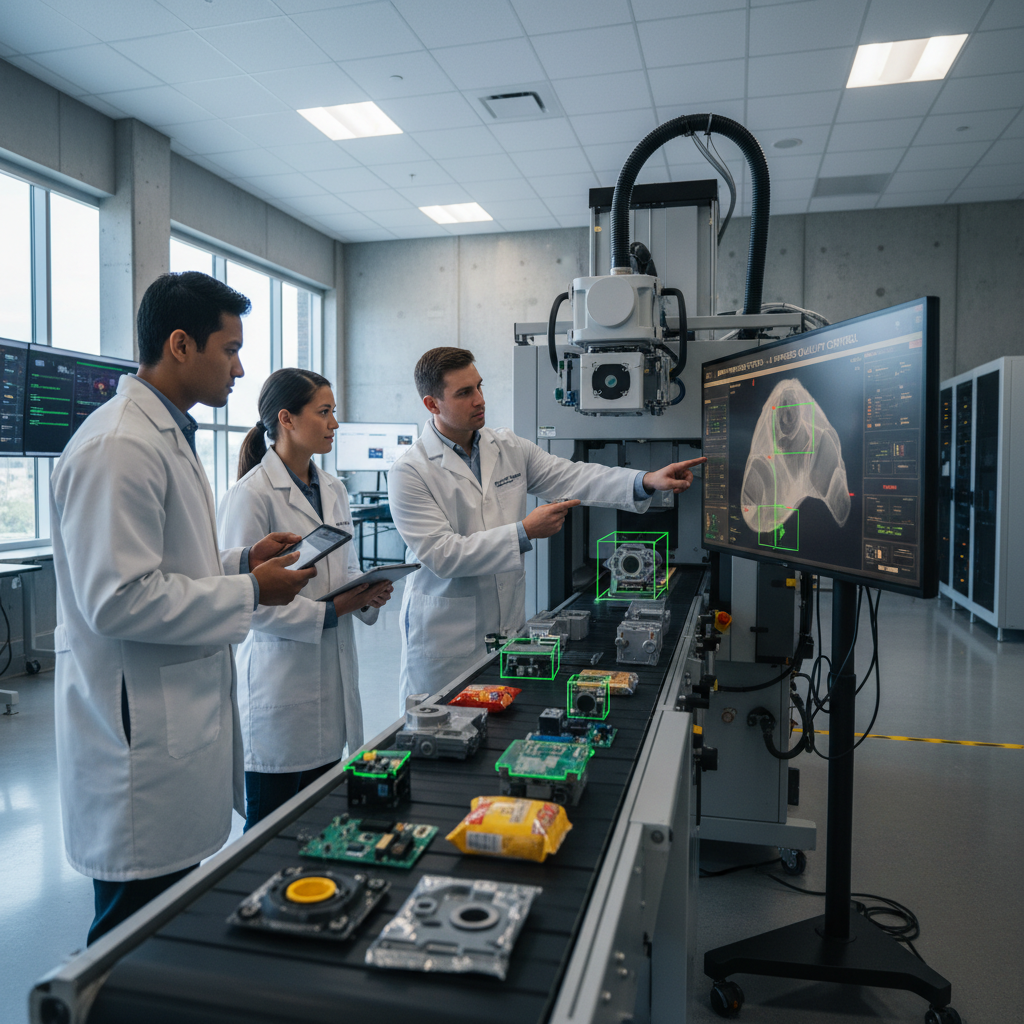
The Event: Purdue University researchers have unveiled RAPTOR (Rapid Automated Product and defect Testing with Optical Radiography), a groundbreaking AI-powered X-ray system designed for ultra-high-precision industrial defect detection. This innovation marries advanced 3D X-ray tomography with sophisticated deep learning algorithms to identify microscopic flaws and adversarial tampering in critical components, notably semiconductor chips. RAPTOR's 97.6% accuracy, even under worst-case scenarios, represents a significant leap beyond traditional inspection methods, which it outperforms by substantial margins, such as 40.6% over Hausdorff distance methods and 37.3% over Procrustes analysis. (Source: HarrisonAIx Blog, November 2025; Amiko Consulting, October 2025)
Why Now: The timing for RAPTOR's emergence is critical. The global industrial landscape, particularly the semiconductor sector, faces unprecedented challenges. Miniaturization in electronics pushes physical inspection limits, while the proliferation of sophisticated supply chain attacks and counterfeit components—a market segment estimated at $75 billion within the $500 billion semiconductor industry—escalates risks to national security, critical infrastructure, and consumer safety. RAPTOR directly addresses these vulnerabilities by offering a non-destructive, automated, and highly accurate verification solution. Its development coincides with a global push for robust supply chain resilience and enhanced quality assurance in high-stakes manufacturing.
The Stakes: The financial and strategic stakes are immense. For the semiconductor industry alone, the $75 billion counterfeit chip market poses not only direct revenue losses but also incalculable damages from system failures, intellectual property theft, and erosion of consumer trust. Beyond semiconductors, industries like automotive, aerospace, medical devices, and defense rely on components free from micro-defects or tampering. A single faulty component in an autonomous vehicle, a medical implant, or an F-35 fighter jet can lead to catastrophic failures, litigation, and significant financial repercussions often running into billions of dollars. RAPTOR's prophylactic capabilities offer a pathway to mitigate these risks, potentially saving billions in recall costs, warranty claims, and liability.
Key Players: The core innovation originates from Purdue University, with researchers leveraging advanced imaging facilities such as the Advanced Photon Source at Argonne National Laboratory. Key figures like Alexander Kildishev, a distinguished professor at Purdue, have publicly lauded RAPTOR's potential. The system's impact will directly involve major semiconductor manufacturers (e.g., TSMC, Intel, Samsung), defense contractors, automotive OEMs (e.g., Tesla, Toyota, Mercedes-Benz), medical device companies (e.g., Medtronic, Johnson & Johnson), and federal regulatory bodies (e.g., NIST, Department of Defense). The interplay between academic research, national lab infrastructure, and industry adoption is paramount.
Bottom Line: RAPTOR is not merely an incremental improvement; it is a foundational technology poised to redefine industrial quality control and security. For Fortune 500 CEOs, this translates to a tangible reduction in operational risk, enhanced product reliability, and a fortified defense against increasingly sophisticated supply chain threats. For VCs, it signals a ripe investment opportunity in automated inspection and supply chain integrity solutions, projecting significant market penetration and value creation. For policymakers, RAPTOR represents a vital instrument for safeguarding critical national infrastructure, bolstering domestic manufacturing capabilities, and ensuring technological sovereignty in an era of complex global supply chains.
Multi-Dimensional Strategic Analysis
Historical Context & Inflection Point
The quest for flawless components is as old as industrial manufacturing itself. From early visual inspections to sophisticated optical and ultrasonic testing, each technological generation has sought to peer deeper into material structures, identify imperfections, and ensure product reliability. However, this journey has been marked by persistent challenges.
Timeline with Specific Dates:
- Early 20th Century: Manual visual inspection and simple mechanical gauging dominate quality control for mass-produced goods (e.g., Ford Model T production lines).
- 1940s-1950s: Emergence of rudimentary X-ray radiography for non-destructive testing in aerospace and defense industry during WWII and Cold War. Focused on detecting gross structural flaws.
- 1970s-1980s: Ultrasonic testing (UT) and eddy current testing (ECT) gain prominence, offering improved non-destructive evaluation for internal defects in metals.
- 1990s: Computer-aided inspection (CAI) systems begin integrating digital image processing, allowing for more precise analysis of inspection data.
- Early 2000s: Miniaturization in electronics and rise of surface-mount technology (SMT) necessitate higher resolution X-ray systems (e.g., micro-CT) to inspect solder joints and internal chip structures. Software for feature detection is largely rule-based and template-matching.
- 2010s: Introduction of machine learning into industrial inspection, primarily for surface defect detection using standard cameras. Difficulty in handling complex 3D internal structures and subtle variances remains. Adversarial tampering and sophisticated counterfeiting become a growing concern, especially in high-value electronics and critical infrastructure components.
- Mid-2020s: Breakthroughs in deep learning, particularly convolutional neural networks (CNNs) and attention mechanisms, combined with increased computational power, enable new levels of image analysis. This sets the stage for RAPTOR.
- October-November 2025: Purdue University, leveraging resources from Advanced Photon Source at Argonne National Laboratory, announces RAPTOR, demonstrating a 97.6% accuracy in detecting micro-defects and tampering in semiconductor chips with integrated AI and 3D X-ray tomography. (Source: Purdue University Newsroom, October 2025; HarrisonAIx Blog, November 2025)
Failed Predictions & Lessons: Historically, there was a belief that increasingly higher resolution imaging alone would solve all inspection problems. This proved insufficient. As components shrunk and became more complex, simply seeing defects was not enough; interpreting variations, distinguishing benign anomalies from critical flaws, and identifying subtle, intentional tampering required cognitive capabilities that traditional algorithms lacked. Early attempts at "smart" inspection often relied on hard-coded rules and statistical models, which struggled with the inherent variability of real-world manufacturing and the adaptive nature of adversaries. The lesson learned is that robust defect detection demands not just data, but intelligent data interpretation, a domain where advanced AI excels. Dependence on human inspectors, even with advanced tools, also introduced inconsistencies and slowed down high-volume production. The rise of sophisticated nation-state actors and organized crime in the counterfeit market revealed a critical gap: conventional methods were largely reactive, designed for accidental defects, not malicious intent.
Why THIS Moment Matters: This moment is an inflection point because RAPTOR transcends the limitations of past approaches by integrating two high-fidelity technologies: 3D X-ray tomography for unparalleled volumetric data acquisition and deep learning with attention mechanisms for intelligent, robust pattern recognition. Rather than relying on human interpretation or simplistic rule sets, RAPTOR learns to identify anomalies that signal true defects or tampering, operating with super-human consistency and speed. This capability is arriving precisely when global supply chains are under unprecedented scrutiny for integrity, security, and resilience. The ability to non-destructively, rapidly, and accurately verify the authenticity and quality of internal structures in components like semiconductor chips is no longer a luxury, but a strategic imperative. It marks the transition from purely physical, reactive quality control to intelligent, proactive quality assurance and supply chain security.
Deep Technical & Business Landscape
Technical Deep-Dive RAPTOR's technical prowess stems from a synergistic combination of cutting-edge hardware and advanced AI. At its core, the system employs 3D X-ray tomography to generate comprehensive three-dimensional images of a product's internal microstructure. Unlike traditional 2D X-ray imaging, which provides a shadowgram, tomography reconstructs cross-sectional slices, revealing the exact location, size, and geometry of internal features and potential defects. This high-resolution volumetric data, often acquired via synchrotron radiation sources like the Advanced Photon Source at Argonne National Laboratory, is critical for identifying microscopic anomalies, such as micro-cracks, voids, delaminations, or alterations indicative of tampering. (Source: Purdue University Newsroom, October 2025)
The subsequent, and arguably more revolutionary, step involves feeding this complex 3D image data into deep learning algorithms, specifically deep convolutional neural networks (CNNs) enhanced with attention mechanisms. CNNs are adept at feature extraction from image data, learning hierarchical representations of patterns. In RAPTOR's context, they are trained on vast datasets of both pristine and defective/tampered components. Attention mechanisms, a more recent advancement in neural networks, allow the model to dynamically weigh the importance of different regions or features within the 3D volume, focusing computational resources and analytical power on areas most likely to contain anomalies. This attention-guided focus significantly improves the model's ability to discern subtle, critical defects from benign manufacturing variations or noise. The model's capacity to distinguish between natural degradation and adversarial tampering is a testament to this architectural sophistication. With a demonstrated 97.6% accuracy in detecting tampering and defects under worst-case scenario conditions, RAPTOR significantly outperforms antecedent methods: 40.6% better than Hausdorff distance methods, 37.3% better than Procrustes analysis, and 6.4% better than Average Hausdorff distance techniques. This performance validates the robust learning inherent in its AI architecture. (Source: HarrisonAIx Blog, November 2025; Amiko Consulting, October 2025)
Capability Leaps, Limitations: The immediate capability leap is the transition from labor-intensive, often destructive, and error-prone inspection to a non-destructive, automated, and highly accurate process. RAPTOR can detect defects invisible to optical methods and often too subtle for conventional X-ray or ultrasonic inspection. Its ability to detect sophisticated counterfeiting and tampering, a problem actively exploited by state-sponsored actors and criminal enterprises, is a major advance. However, several limitations exist. Primarily, the system currently functions as a proof of concept, often relying on high-end synchrotron X-ray facilities. Miniaturizing and making this technology economically viable for widespread, in-line factory adoption is a significant engineering challenge. Training these deep learning models requires massive datasets of both good and bad components, which can be difficult and costly to acquire for niche components or new designs. The computational demands for real-time 3D reconstruction and AI inference are substantial, requiring specialized hardware. Furthermore, while highly accurate, no AI system is 100% infallible; understanding and managing its false positive and false negative rates in diverse industrial settings will be crucial for deployment.
Business Strategy The business landscape around industrial inspection is bifurcated. On one side are established giants providing traditional NDT (Non-Destructive Testing) solutions, and on the other, an emerging cohort of AI-first inspection startups.
Player Breakdown with Specifics:
- Established NDT Giants (e.g., GE Inspection Technologies, Olympus, Zeiss): These companies possess deep market penetration, extensive client relationships, and vast portfolios of X-ray, ultrasonic, eddy current, and visual inspection systems. Their dominant strategy will likely involve integrating AI capabilities into existing hardware platforms via partnerships or acquisitions. They have the distribution channels and service networks necessary for industrial deployment. However, their legacy systems may struggle to incorporate true 3D AI-driven analysis at RAPTOR's level of sophistication.
- AI-First Inspection Startups (e.g., Isra Vision, Inspekto, emerging players in stealth): These agile firms specialize in applying computer vision and machine learning to quality control. Their strength lies in software innovation and rapid iteration. They often target niche applications initially, then scale. Strategic moves would include developing proprietary AI models that can be licensed or offered as a service, potentially partnering with hardware manufacturers for data acquisition. Their weakness is often the lack of industrial-grade hardware expertise and established sales channels.
- Purdue University / RAPTOR Team: As the progenitor of RAPTOR, Purdue's immediate strategy will involve technology transfer and commercialization. This could manifest as licensing the core AI software to existing NDT providers, forming a spin-off company to develop and market complete RAPTOR systems, or engaging in joint ventures with semiconductor equipment manufacturers. The focus will be on converting the proof of concept into a robust, manufacturable product, potentially collaborating with chip-packaging researchers for broader application. (Source: HarrisonAIx Blog, November 2025)
Product Positioning, Pricing: RAPTOR's initial product positioning will likely be in the high-value, high-precision segments where the costs of failure are immense and where existing inspection methods fall short. This includes advanced semiconductor manufacturing, aerospace components, critical medical implants, and defense systems.
- Initial Positioning: Premium, specialized solution for critical defect detection and anti-counterfeiting. Emphasize unparalleled accuracy, non-destructive nature, and automated efficiency.
- Pricing Model: Given the high value it delivers (preventing $75 billion in counterfeit losses, avoiding catastrophic failures), pricing will likely be premium. This could involve direct sales of integrated hardware/software systems (multi-million dollar installations), a subscription-based model for AI software updates and support, or a per-unit inspection fee for service bureaus leveraging the technology. For advanced photon source usage, there are already established access fees and specialized service charges that inform initial cost structures.
Partnerships, Competitive Advantages: Strategic partnerships are critical for RAPTOR's market penetration. Collaborations with semiconductor fabrication equipment manufacturers (e.g., ASML, Applied Materials) to integrate RAPTOR into existing production lines would be a game-changer. Partnerships with defense contractors and medical device OEMs are also natural fits, providing access to regulated markets and high-value use cases.
Competitive Advantages:
- Superior Accuracy: 97.6% accuracy under worst-case scenarios, significantly outperforming traditional methods (e.g., 40.6% better than Hausdorff methods).
- Tampering Detection: Unique ability to detect both quality defects and malicious modifications, addressing a critical security gap in global supply chains.
- Non-Destructive & Automated: Reduces waste, saves time, and removes human subjectivity from the inspection process.
- 3D Volumetric Analysis: Leverages 3D X-ray tomography for comprehensive internal structural analysis, beyond surface-level inspection.
- AI-Powered Intelligence: Adaptable, learning algorithms that can evolve with new defect types and tampering techniques, offering future-proof capabilities.
- Purdue's Academic Credibility: Backed by a leading research institution, lending scientific rigor and trust to the technology.
Economic & Investment Intelligence
RAPTOR arrives in a macro-economic climate ripe for investment in automation, quality assurance, and supply chain resilience. The imperative to onshore manufacturing, coupled with the rising complexity of advanced components, is driving unprecedented demand for intelligent inspection systems.
Funding Rounds, Valuations, Lead Investors: While RAPTOR itself is a university-developed proof of concept, its commercialization path will inevitably involve significant funding. A spin-off company commercializing RAPTOR would likely undergo several funding rounds:
- Seed Round ($5M-$15M): Early-stage venture capitalists (VCs) and university-affiliated funds (e.g., Purdue Research Foundation, local tech incubators) would provide initial capital for team building, further R&D, and development of a market-ready prototype. Lead investors would likely be those with a deep understanding of hardware-software integration, deep tech, and industrial automation.
- Series A ($20M-$50M): Growth-stage VCs with a focus on deep tech, enterprise software, and manufacturing technologies. This round would finance scaling the engineering team, developing robust industrial hardware, and initial market entry. Investors like Lightspeed Venture Partners, Andreessen Horowitz (a16z), or Kleiner Perkins, given their history in AI and enterprise, would be strong candidates. Valuation could reach $80M-$200M based on technology readiness level and market traction.
- Series B and beyond ($100M+): Later-stage VCs, private equity, or strategic investments from large industrial automation players (e.g., Siemens, Rockwell Automation) or semiconductor equipment suppliers (e.g., Applied Materials, KLA Corporation). These rounds would fund global expansion, deeper market penetration, and development of a broader product portfolio. A successful Series B could push valuation past $500M-$1B, particularly if early pilots show significant ROI for customers.
VC Strategy, Public Market Implications: VC strategy will be to identify early-stage companies with proprietary AI models and robust hardware integration capabilities. The market for industrial AI and automation is projected to grow significantly. The global industrial quality control market size was valued at $3.78 billion in 2022 and is expected to reach $7.78 billion by 2030, growing at a CAGR of 9.4%. AI-driven inspection is a key driver of this growth. (Source: Grand View Research, 2023).
For the public markets, companies successfully deploying RAPTOR-like technology will command premium valuations. Investors will look for recurrent revenue models (Software-as-a-Service for AI, maintenance contracts), high-profit margins associated with intellectual property, and demonstrable impact on customer bottom lines. The ability to disrupt a multi-billion dollar counterfeit market and enhance critical infrastructure security will be highly attractive to institutional investors. Publicly traded companies leveraging or acquiring RAPTOR technology could see a significant boost in share price, especially those in the defense, semiconductor, and medical device sectors.
M&A Activity, Industry Disruption: M&A activity is expected to be vigorous. Established NDT companies, desperate to integrate advanced AI capabilities, will be prime acquirers for promising startups in this space. Semiconductor equipment manufacturers will look to acquire or partner with RAPTOR-like entities to offer integrated quality control solutions directly within their fab lines. Cybersecurity firms might also express interest, as counterfeit detection is a form of physical layer security.
Industry Disruption:
- Semiconductor Manufacturing: RAPTOR could fundamentally alter the economics of chip production. Reduced yield loss due to early defect detection and enhanced security against counterfeits could save billions. It could enable the widespread adoption of advanced packaging techniques by providing reliable inspection.
- Aerospace & Defense: For critical components where "zero defects" is the mandate, RAPTOR's accuracy will be invaluable. It could open the door for more complex additive manufacturing (3D printing) by ensuring internal consistency and preventing latent failures.
- Medical Devices: Life-critical implants and instruments require absolute reliability. RAPTOR can ensure material integrity and detect minute flaws, potentially reducing recalls and improving patient outcomes.
- Automotive: With the rise of autonomous vehicles and electric vehicle battery technology, detecting micro-cracks or anomalies in propulsion systems and ADAS components is paramount for safety.
- Insurance Industry: Reduced product failure rates due to improved inspection could lead to lower insurance premiums for manufacturers and greater confidence for underwriters.
The disruption won't be solely technological but also operational, shifting from reactive failure analysis to proactive quality assurance, leading to greater capital efficiency and significant long-term savings across high-tech manufacturing sectors. The $75 billion counterfeit chip market, in particular, stands to be significantly disrupted, with a portion of that value recaptured by legitimate manufacturers and their inspection partners.
Geopolitical & Regulatory Deep-Dive
The advent of RAPTOR-like technology carries profound geopolitical and regulatory ramifications, particularly concerning critical supply chains and national security. The capability to detect internal defects and malicious tampering in sensitive components becomes an instrument of national power and economic resilience.
US Policy, EU Regulations, China Strategy:
- US Policy: The US government, through initiatives like the CHIPS and Science Act ($52.7 billion in funding, enacted August 2022) and ongoing efforts by NIST (National Institute of Standards and Technology) and the Department of Defense, is intensely focused on securing semiconductor supply chains and bolstering domestic advanced manufacturing. RAPTOR directly aligns with these objectives. US policy will likely encourage the adoption of such technologies through funding, grants, and potentially mandating their use for critical defense and infrastructure procurements. The Department of Commerce could include RAPTOR-class technology in export control lists, recognizing its strategic importance as a dual-use technology capable of enhancing national security while boosting economic competitiveness. (Source: White House, CHIPS Act Fact Sheet, August 2022)
- EU Regulations: The EU's semiconductor strategy, embodied in the European Chips Act (€43 billion mobilized, enacted September 2023), also prioritizes supply chain resilience and advanced manufacturing. European regulatory bodies, already stringent on product safety and quality (e.g., CE marking, Medical Device Regulation MDR EU 2017/745), will likely view RAPTOR as a key enabler for enhanced compliance and consumer protection. Data privacy regulations (GDPR) could influence how inspection data is handled, though direct component inspection typically falls outside personal data scope. The EU may also explore incentives for European companies to adopt or develop similar technologies to bolster their industrial base. (Source: European Commission, European Chips Act, September 2023)
- China Strategy: China's "Made in China 2025" initiative has long emphasized self-sufficiency and leadership in advanced manufacturing, including semiconductors. Facing significant export controls from the US, China is aggressively investing in domestic technological capabilities. They would view RAPTOR, or an equivalent domestic system, as crucial for improving the quality of their indigenous production and for counter-espionage against potential foreign tampering in imported components. China's regulatory approach is often state-driven, with integration into national industrial standards and potentially coercive adoption across supply chains. The drive for domestic alternatives will be strong, leveraging their own synchrotron facilities (e.g., Shanghai Synchrotron Radiation Facility).
US-China Competition, Strategic Implications: The US-China technological competition is a defining aspect of modern geopolitics. RAPTOR, by virtue of its ability to detect tampering and ensure component integrity, becomes a critical tool in this strategic rivalry.
- Supply Chain Integrity: For the US, deploying RAPTOR ensures that critical components used by its military, government, and key industries are free from malicious backdoors or vulnerabilities inserted by adversaries. This is a direct countermeasure to hardware-level supply chain attacks.
- Economic Security: By improving quality control and combating counterfeits, RAPTOR enhances the competitiveness of legitimate manufacturers, securing intellectual property, and preventing economic espionage.
- Technological Sovereignty: The nation that masters and controls advanced inspection technologies like RAPTOR gains a strategic advantage in developing and securing future generations of high-tech products. This contributes to national technological sovereignty.
- Export Control: The US might restrict the export of RAPTOR-like systems or related AI models to China, viewing them as strategic assets. This could further intensify China's efforts to develop its own counterparts, leading to an "AI inspection arms race."
- Standard Setting: Both blocs will jockey to set international standards for advanced component inspection and anti-tampering measures, using their technological leads (or domestically developed equivalents) as leverage.
Regulatory Timeline: Immediate regulatory action on RAPTOR specifically is unlikely, as the technology is nascent. However, a regulatory timeline for incorporating advanced automated inspection into industry standards and government procurement could look like this:
- 2026-2027: Initial pilots of RAPTOR in critical sectors (e.g., defense, aerospace). Development of best practices and reference architectures. NIST begins workshops and establishes working groups for "AI in NDT and Supply Chain Security."
- 2028-2029: Government agencies (e.g., DoD, NSA) begin issuing non-binding guidelines for trusted supply chain verification that explicitly mention AI-powered non-destructive inspection. Industry consortia (e.g., SEMI for semiconductors) start drafting standards for advanced inspection protocols incorporating AI.
- 2030-2032: Formal inclusion of AI-driven 3D inspection techniques into national and international standards for high-assurance components (e.g., ISO, ASTM). Potential for mandatory adoption for certain critical categories of components (e.g., those used in nuclear power, aviation safety, classified systems). Export controls on such technologies become more formalized and granular.
The regulatory environment will evolve from voluntary guidance to mandatory standards as RAPTOR-like technology matures and its benefits in enhancing security and reliability become undeniable. This evolution will be heavily influenced by geopolitical tensions and the ongoing competition for technological supremacy.
Future Forecasting & Strategic Implications
RAPTOR represents a pivotal step in the convergence of physical and digital security, heralding an era where the integrity of a product's internal microstructure is as verifiable as its cryptographic signatures. Its implications extend far beyond factory floors, touching economic structures, geopolitical power dynamics, and the very nature of human interaction with technology.
Near-Term Horizon (6-12 months): Immediate Catalysts
In the immediate 6-12 month horizon, the industrial landscape will begin reacting to the demonstration of RAPTOR's capabilities. This period will be characterized by intense validation efforts, strategic jockeying, and early mover plays.
Events to Watch:
- Pilot Program Announcements (Q1-Q2 2026): Purdue University or its commercialization partner will announce official pilot programs with major semiconductor manufacturers, aerospace primes, or defense contractors. These pilots will transition RAPTOR from a lab-based proof of concept to an industrial testing environment. The specifics of these partnerships (e.g., initial investment, scope, evaluation metrics) will signal market readiness.
- Competitive Responses (Q2-Q3 2026): Rival NDT companies and AI startups will announce accelerated R&D efforts or new product roadmaps that aim to duplicate or surpass RAPTOR’s capabilities. These announcements might include partnerships with other national labs or academic institutions, or large internal investments in AI-driven 3D imaging. We might see a flurry of strategic acquisitions of smaller AI vision companies by established players.
- Investor Interest Surge (Ongoing 2026): Following the initial waves of media attention, venture capital firms will actively scout for investment opportunities in automated inspection, AI in manufacturing, and supply chain security. This will lead to a new round of funding for promising startups in this space, even if they are not directly related to RAPTOR’s specific technology. Metrics like "AI-enhanced X-ray" will become buzzwords in pitch decks.
- Governmental Inquiries & Workshops (Q3-Q4 2026): Government bodies, particularly the Department of Defense (DoD), Department of Energy (DoE), and National Institute of Standards and Technology (NIST) in the US, as well as their counterparts in Europe and Asia, will convene workshops and issue Requests for Information (RFIs) regarding advanced component authentication technologies. These will aim to understand how such systems can be integrated into national defense and critical infrastructure supply chains.
First-Mover Advantages, Strategic Plays: Companies that embrace RAPTOR-like technology early will gain significant strategic advantages:
- Enhanced Product Reliability & Brand Reputation: First movers will be able to guarantee a higher level of product integrity, reducing recalls, warranty claims, and liability exposure. This will be a potent marketing tool in highly competitive and safety-critical industries. For instance, a major automotive OEM adopting RAPTOR for powertrain components could tout "zero-defect internal inspection" as a differentiator for their electric vehicle lineup, appealing directly to safety-conscious consumers (estimated EV market size $1.7 trillion by 2029 globally).
- Early Counter-Counterfeit Defense: Companies that can reliably detect counterfeit components early in their supply chain will minimize financial losses and protect their brand image from sub-standard unauthorized reproductions. This could also give them leverage in prosecuting counterfeiters.
- Supply Chain Optimization: Early adopters can streamline their quality control processes, reducing bottleneck times associated with manual, destructive, or less efficient inspection methods. This speeds up time to market and reduces operational costs.
- Leadership in Standards Development: Firms actively participating in RAPTOR's early deployment will be instrumental in shaping future industry standards for advanced inspection, positioning themselves as thought leaders and potentially influencing future regulatory requirements in their favor.
- Government Contract Preference: Companies demonstrating superior supply chain security and component integrity through AI-powered inspection will likely gain preferential treatment for government contracts, especially in defense and aerospace sectors where compliance with strict standards is non-negotiable.
Mid-Term Horizon (2-3 years): Industry Restructuring
Over the next 2-3 years, RAPTOR’s impact will begin to fundamentally restructure manufacturing industries, displacing old practices and birthing new market leaders.
Displaced Industries, New Giants:
- Displaced Industries/Practices: Traditional, fully manual visual inspection services will face significant decline, particularly for micro-components. Less sophisticated automated optical inspection (AOI) systems that lack 3D volumetric analysis and advanced AI will become commoditized or obsolete. Legacy destructive testing methods, used for statistical sampling, will be largely replaced by non-destructive, 100% inspection capabilities, saving material and time. Companies heavily invested in these older technologies without a clear AI integration strategy will struggle.
- New Giants/Market Leaders: Companies that successfully integrate AI-driven 3D inspection into their core manufacturing processes and product design stages will emerge as new leaders. This includes not only direct providers of RAPTOR-like systems but also manufacturers who leverage the technology to achieve unprecedented quality and reliability. Expect the rise of "Quality-as-a-Service" providers specializing in advanced AI inspection. Consulting firms specializing in "AI-driven manufacturing integrity" will also become prominent. Companies like KLA Corporation (semiconductor process control) or even 3D printing giant EOS could acquire or develop similar capabilities to solidify their leadership.
Value Chain Shifts, Workforce Transformation:
- Value Chain Shifts: The epicenter of value creation in quality control will shift from post-production failure analysis to integrated, in-line, proactive defect prevention and tampering detection. Design and engineering teams will gain earlier, more granular feedback on potential manufacturing issues, enabling iterative design improvements before mass production. The supply chain validation process will become more stringent, with component suppliers needing to demonstrate their own AI-inspection capabilities to gain preferred vendor status. This will create a symbiotic relationship between manufacturers and their AI inspection technology partners.
- Workforce Transformation: The demand for highly skilled human inspectors specializing in visual anomalies will decrease. Conversely, there will be a surge in demand for AI specialists (machine learning engineers, data scientists) who can train, validate, and maintain these complex AI systems. Robotics engineers and automation experts will be crucial for integrating RAPTOR-like systems into high-volume production lines. Technicians capable of operating and troubleshooting advanced X-ray and AI hardware will also be in high demand. Existing inspection staff will need significant reskilling into AI system monitoring, data interpretation, and anomaly investigation that the AI flags. The role transitions from "spotter" to "AI co-pilot."
Competitive Positioning, Revenue Inflection: Manufacturers that adopt RAPTOR technology will gain a significant competitive edge through:
- Premium Pricing: The ability to guarantee superior quality and authenticity will allow companies to command premium pricing for components in critical applications.
- Market Share Gains: Increased reliability and reduced failure rates translate directly to higher customer satisfaction and market share, especially in risk-averse sectors.
- Cost Reductions: Substantial savings from reduced waste, fewer recalls, lower warranty costs, and mitigated liability will lead to significant revenue inflection points. For a semiconductor firm producing millions of chips, even a fraction of a percent improvement in yield, multiplied by the average selling price of $50-$500 per chip, equates to hundreds of millions in additional revenue.
- Innovation Cycle Acceleration: Faster and more accurate inspection allows for quicker iteration and validation of new designs and materials, accelerating innovation cycles. This enables manufacturers to bring complex, high-performance products to market faster.
Long-Term Vision (5 years): Civilizational Impact
Looking five years out, RAPTOR’s full civilizational impact will become clearer, reshaping not just industries but also societal trust, economic structures, and geopolitical order.
Societal Transformation, Economic Structure:
- Unprecedented Trust in Technology: The widespread adoption of AI-powered inspection will lead to an unprecedented level of trust in the physical integrity of electronic components and critical industrial systems. Consumers will implicitly expect that products from autonomous vehicles to medical devices are free from manufacturing defects and malicious tampering, pushing the burden of proof onto manufacturers to demonstrate rigorous AI-verified quality.
- Redefined Supply Chain Transparency: The concept of "Digital Twins" will extend beyond design and simulation to include a verified physical twin. Each critical component could carry an encrypted, AI-verified record of its manufacturing integrity, accessible through blockchain or similar immutable ledgers. This transforms current opaque supply chains into transparent, verifiable networks.
- New Economic Paradigms for Trust: Industries that historically struggled with counterfeiting (luxury goods, pharmaceuticals, spare parts) could adopt analogous AI inspection methods, creating entirely new economic models based on verifiable authenticity. This could lead to a significant reclamation of revenue from illicit markets.
- Shifting Labor Dynamics: The long-term societal impact includes the need for continuous workforce retraining and education to adapt to increasing automation. While inspection jobs directly measuring physical attributes may decline, jobs requiring complex problem-solving, AI system development, ethical AI oversight, and multidisciplinary engineering will flourish.
Geopolitical Order, Human Capability:
- Fortified National Security: Nations with advanced AI inspection capabilities will possess a significant strategic advantage in securing their defense systems, critical infrastructure (energy grids, telecommunications), and national intellectual property. This makes hardware-level sabotage and espionage substantially more difficult, impacting global power balances. Technologies like RAPTOR become vital national assets.
- Decoupling vs. Secure Interdependence: While driving some nations towards greater self-sufficiency in manufacturing, RAPTOR also enables a more secure form of international trade. If components from different nations can be verifiably inspected for integrity, it could facilitate a more resilient, securely interdependent global supply chain, rather than a full decoupling which is economically inefficient.
- Enhanced Human Capability & Safety: By ensuring the integrity of components in advanced prosthetic limbs, neural interfaces, aerospace systems, and medical diagnostics, AI inspection fundamentally enhances human capabilities and vastly improves safety. Failure points are proactively eliminated, allowing humans to rely on increasingly complex, interconnected technologies with greater confidence. This paves the way for applications like widespread personalized medicine with implantable devices or truly reliable autonomous transportation, dramatically reducing accidents attributable to component failure.
- Ethical AI Governance: The power of AI to "see inside" raises new ethical considerations. Who has access to detailed internal component scans? How is this data managed? This will necessitate robust ethical AI governance frameworks to prevent misuse, maintain privacy (of industrial designs), and ensure equitable access to these security benefits. The development of "AI explainability" (XAI) for defect detection will be crucial for human oversight and trust.
Executive Conclusion & Strategic Takeaways
Bottom Line Assessment Purdue's RAPTOR system is a truly disruptive technology, marking a clear inflection point in industrial quality control and supply chain security. Its fusion of advanced 3D X-ray tomography with sophisticated deep learning algorithms achieves unprecedented accuracy (97.6% under adverse conditions) in non-destructively detecting microscopic defects and malicious tampering. This capability is not an incremental improvement; it is a strategic imperative in high-stakes industries like semiconductors, aerospace, and medical devices. The confidence level in RAPTOR's transformative impact is High (9/10), assuming successful commercialization and industrial scaling of the underlying technology.
Key Insights Summary
- New Standard for Quality Control: RAPTOR redefines the gold standard for industrial inspection, moving beyond human and older automated methods to provide comprehensive, intelligent 3D volumetric analysis.
- Critical Security Layer: It provides a crucial physical layer of cybersecurity, directly combating the $75 billion global counterfeit chip market and protecting against supply chain vulnerabilities.
- Economic Value Creation: Early adoption promises billions in savings through reduced yield loss, mitigated recall costs, and enhanced brand value for manufacturers in critical sectors.
- Industry Restructuring Driver: RAPTOR will catalyze significant restructuring across manufacturing, displacing outdated methods, creating new revenue streams for "Quality-as-a-Service" providers, and transforming the industrial workforce.
- Geopolitical Instrument: The technology serves as a vital tool for national security and economic sovereignty, influencing trade policy, export controls, and the US-China technological competition.
- Accelerates Innovation: By providing rapid, precise feedback on component integrity, RAPTOR will accelerate R&D cycles for advanced materials and complex product designs.
- Ethical Oversight Essential: The power of AI-driven deep inspection necessitates robust ethical frameworks for data access, privacy, and responsible deployment to maintain trust.
The Big Question Given RAPTOR's profound capabilities in physical integrity verification, how quickly can industrial leaders and policymakers coalesce to standardize and integrate this level of AI-powered inspection across critical global supply chains, transforming a post-facto detection capability into a proactive, preventative, and universally trusted mechanism for product authenticity and national security?