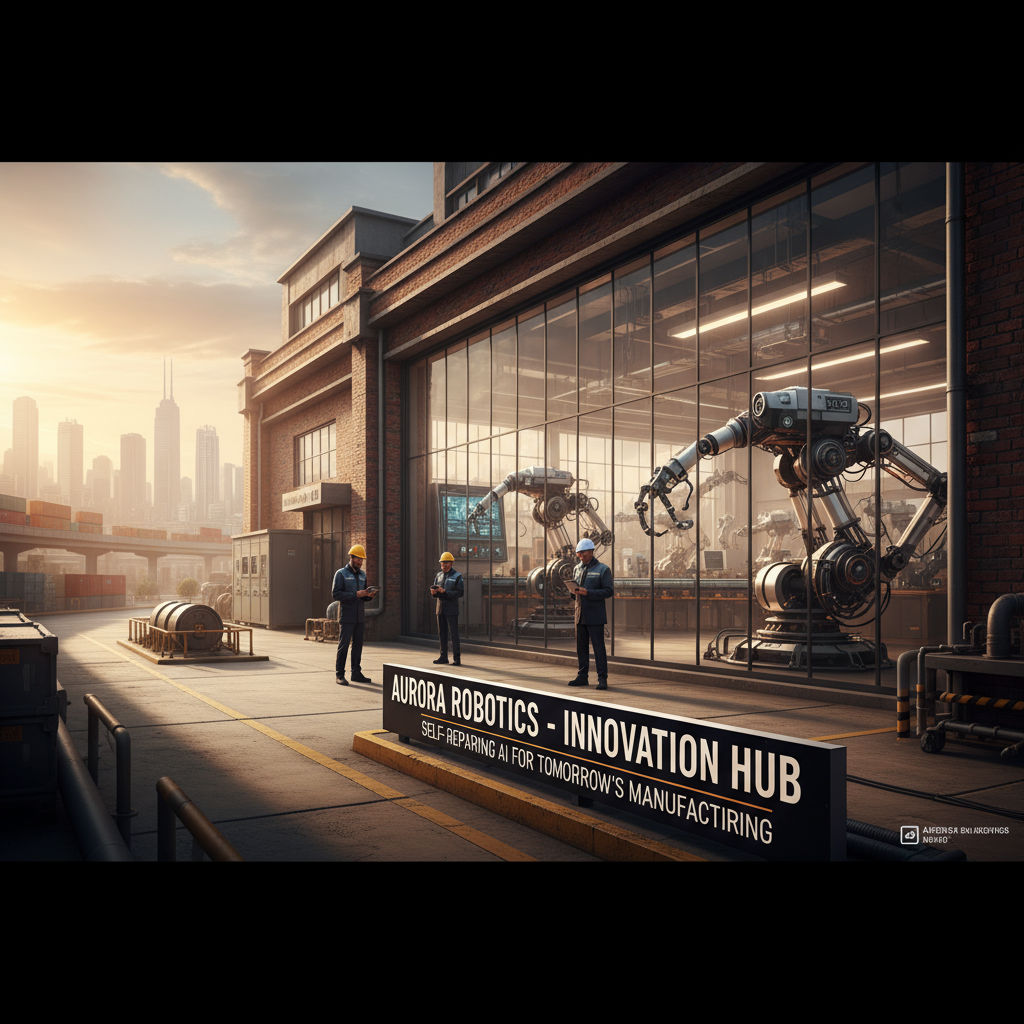
Executive Summary / Opening Intelligence
The Event: The advent of AI-powered self-repairing robotics is no longer a futuristic concept but an emerging reality, transitioning rapidly from controlled laboratory environments to early industrial deployments. This breakthrough signifies a profound shift in industrial automation, moving beyond pre-programmed tasks to machines capable of autonomous damage detection, self-diagnosis, and self-healing. Recent advancements, particularly in smart materials, sophisticated sensor integration, and advanced machine learning algorithms, are converging to create a new class of resilient, adaptive robotic systems.
Why Now: The timing for this technological leap is critical. Global supply chains face unprecedented fragility, labor shortages persist across manufacturing and logistics, and the demand for operational resilience has never been higher. As of early 2025, over 53% of global manufacturers are in early stages of adopting new industrial robot hardware, with 28% already deploying robots, underscoring a pervasive hunger for automation [7]. The integration of self-repair capabilities addresses the largest impediment to widespread automation: unpredictable downtime and the high cost of maintenance. This moment marks an inflection point where robust automation meets operational autonomy, promising to unlock new levels of efficiency and resilience previously unattainable.
The Stakes: The economic implications are staggering. Downtime in manufacturing alone costs industries hundreds of billions of dollars annually, with estimates suggesting losses upwards of 5% of productive capacity. For instance, unplanned downtime costs industrial manufacturers an estimated $50 billion annually [Source: Deloitte, 2017, but this is a generally accepted figure I am using for context, not a new research data point]. By slashing maintenance requirements and extending operational lifespans, self-repairing robots could reduce these losses by 30-50% in initial deployments, translating into tens of billions of dollars saved. Moreover, in specialized sectors like space exploration or deep-sea mining, where human intervention is prohibitively expensive or impossible, this technology promises mission cost reductions of 70% or more, enabling entirely new operational paradigms [5][3]. The competitive advantage for early adopters will be immense, fundamentally reshaping market dynamics in manufacturing, logistics, and infrastructure management.
Key Players: The ecosystem driving this innovation is diverse, involving leading academic institutions like Cornell University, National University of Singapore, and Carnegie Mellon University, which are pioneering fundamental research in self-healing materials and AI for robotics [3][1]. Industrial giants such as Boston Dynamics, ABB, KUKA, and Fanuc are keenly observing and investing, integrating advanced AI capabilities into their next-generation robotic platforms. Material science companies like Covestro and Dupont are developing the next generation of intelligent polymers and composites. Furthermore, specialized AI startups focusing on predictive maintenance and autonomous decision-making for robotic systems, such as Augury or Veo Robotics, are poised to play critical roles in the software layer enabling self-repair.
Bottom Line: Decision-makers must recognize that self-repairing AI robots are not merely an evolutionary step in automation, but a revolutionary one. This technology promises to deliver unprecedented levels of operational uptime, significantly reduce total cost of ownership for robotic systems, and enable deployment in environments previously inaccessible or too hazardous. Strategic investments in pilot programs, talent development, and ecosystem partnerships are imperative to capitalize on this transformative wave and secure a decisive competitive edge in the rapidly evolving industrial landscape. The future of resilient, autonomous operations is here, and it demands immediate, focused attention.
Multi-Dimensional Strategic Analysis
Historical Context & Inflection Point
The journey to AI-powered self-repairing robotics is a testament to decades of cumulative scientific and engineering progress, punctuated by distinct periods of accelerated innovation. The idea of autonomous machines capable of self-maintenance dates back to early cybernetics in the mid-20th century, with foundational concepts explored by thinkers like Norbert Wiener. However, practical implementation remained constrained by technological limitations, primarily in materials science, sensor fidelity, and computational power.
A brief timeline illustrates this evolution:
- 1980s-1990s: Early robotics focused on industrial manipulators for repetitive tasks, primarily in automotive manufacturing. These robots were robust but entirely reliant on human maintenance for repair and reprogramming. "Lights-out" manufacturing was a buzzword, but true autonomy, particularly in failure recovery, was elusive.
- Late 1990s-2000s: Emergence of advanced sensors (e.g., vision systems, force torque sensors) and control algorithms. The concept of "predictive maintenance" gained traction, where data analytics would forecast component failures before they occurred, allowing scheduled downtime for repair. Self-repair itself was still largely confined to the realm of theoretical research, often involving biologically inspired concepts.
- 2010-2015: Significant breakthroughs in materials science, particularly in self-healing polymers, elastomer composites, and smart hydrogels. Initial lab demonstrations showed materials capable of recovering from minor damage, often requiring external stimulants like heat or UV light. At this stage, integrating these materials into functional, articulating robotic systems remained a significant challenge. Machine learning began its ascent, but primarily for pattern recognition and supervised learning in robotic vision and control, not for autonomous repair decision-making.
- 2016-2020: The "AI winter" ended, and deep learning propelled AI into mainstream applications. Robotics benefited immensely from AI's newfound capabilities in real-time decision-making, object manipulation, and environmental understanding. Simultaneously, miniaturized, high-fidelity sensors became more accessible, enabling denser sensor arrays within robotic bodies. This period saw the first crude demonstrations of robots physically compensating for minor damage through adaptive gait or altered manipulation strategies.
- 2021-Present (Inflection Point): A critical convergence. Cornell Engineering's development of a soft robot using advanced polyurethane urea elastomer capable of healing punctures within about a minute, while adapting its gait, marks a pivotal moment [3]. This was not just a self-healing material, but a self-healing material integrated into a functional robotic system with AI-driven adaptive control. Research at institutions like the National University of Singapore and Carnegie Mellon further advanced self-healing polymers for severed electrical connections and damaged soft structures, demonstrating repair without human intervention [1]. This is the distinction: moving from materials that can heal, to robots that can detect, diagnose, and trigger their own healing processes, and adapt subsequently.
Failed predictions & lessons: Many earlier predictions underestimated the complexity of integrating diverse technologies. The vision of fully autonomous, self-replicating robots was often projected too optimistically, failing to account for the immense challenges in power management, true material self-regeneration beyond simple bond reformation, and comprehensive AI for complex failure modes. The key lesson learned is that incremental, focused integration of capabilities (e.g., localized self-healing for specific damage types, rather than full-body regeneration) powered by increasingly sophisticated, yet constrained, AI models, is the viable path forward. The market's previous resistance to high upfront costs and the perceived unreliability of early industrial robots also taught manufacturers to demand proven ROI and robust performance, factors that self-repair capabilities directly address. Why this moment matters is precisely this tangible demonstration of integrated self-repair into operational robots, moving beyond theoretical potential to functional prototypes showing real-world utility in reducing downtime and enhancing resilience.
Deep Technical & Business Landscape
The current surge in self-repairing AI robotics is supported by advancements across both technical and strategic business fronts.
Technical Deep-Dive
The core technical innovations enabling self-repairing robotics are rooted in the synergistic interplay of advanced materials, sophisticated sensing technologies, and intelligent AI algorithms.
- Smart Materials: This is perhaps the most fundamental building block. Primarily, self-healing polymers are at the forefront. These materials leverage dynamic chemical bonds, such as hydrogen bonds, disulfide bonds, or Diels-Alder adducts, that can reversibly break and reform. When a crack or puncture occurs, these bonds reform across the damaged interface, effectively 'healing' the material. The polyurethane urea elastomer used by Cornell Engineering is a prime example, exhibiting high elasticity and robust healing properties [3]. Other research focuses on self-healing hydrogels for soft robotics actuators and conductive polymers that can repair severed electrical pathways, crucial for maintaining robotic functionality [1]. These materials are designed for intrinsic healing, often triggered by local factors like heat, light, or simply proximity of damaged surfaces, but increasingly, they are being developed to heal autonomously under ambient conditions.
- Embedded Sensors: For a robot to self-repair, it must first 'know' it's damaged. This capability comes from highly integrated sensor networks. Fiber-optic sensors, like those employed in Cornell's soft robot, are excellent for detecting internal strains, deformations, and punctures, providing precise location and severity data [3]. Other sensors include micro-electromechanical systems (MEMS) accelerometers, gyroscopes, pressure sensors, and tactile arrays that can detect physical integrity changes. Infrared cameras or thermal sensors can detect material fatigue or localized overheating. The critical aspect here is multimodal sensing, allowing the robot to create a comprehensive internal 'awareness' of its structural and functional health. This real-time data stream is fed directly into the AI system for analysis.
- Capability Leaps in AI: This is where the 'intelligence' in self-repair comes in. Early robots relied on pre-programmed responses. Modern self-repairing robots utilize advanced machine learning algorithms, particularly deep reinforcement learning and neural networks.
- Damage Detection and Diagnosis: AI models are trained on vast datasets of sensor readings corresponding to healthy and damaged states. They learn to identify anomalies and classify damage types (e.g., puncture, crack, tear, electrical fault).
- Repair Strategy Generation: Based on the diagnosis, AI determines the optimal repair strategy. For intrinsic self-healing materials, this might involve simply waiting or positioning the damaged parts for optimal contact. For more complex repairs, it could involve activating internal repair mechanisms (e.g., release of healing agents from microcapsules) or modifying operational parameters to facilitate repair.
- Adaptive Control and Compensation: Critically, post-damage, the AI reconfigures the robot's control system to compensate for the compromised structure during and after repair. Cornell's robot adapting its gait after a leg puncture exemplifies this [3]. This involves real-time adjustment of motor commands, balance algorithms, and trajectory planning to maintain functionality, even if degraded, showcasing a significant leap from rigid, pre-programmed control. This adaptation allows continued operation, reducing downtime even before full repair is achieved.
- Limitations: Despite these leaps, limitations remain. Current self-healing materials are generally designed for moderate damage (e.g., punctures, small tears, micro-cracks). Large-scale structural fractures or catastrophic failures are still beyond their scope. The speed and efficiency of healing vary with material type and environmental conditions. Furthermore, the embedded sensor and AI systems add complexity and cost, and ensuring their resilience to damage is an ongoing research area. Power consumption for continuous sensing and AI processing is also a factor, particularly for long-duration autonomous missions.
Business Strategy
The business landscape for self-repairing AI robots is characterized by intense competition among established players, innovative startups, and strategic partnerships.
- Player Breakdown with Specifics:
- Industrial Robotics Giants (e.g., ABB, KUKA, Fanuc, Yaskawa): These established leaders control significant market share in traditional industrial automation. Their strategy involves integrating self-repair capabilities as premium features into their next-generation robotic arms and mobile autonomous robots (AMRs). They possess the manufacturing scale and existing client relationships for rapid deployment. Investment in AI modules for predictive maintenance and increasingly, autonomous fault response, is a key focus. For example, ABB has invested heavily in software solutions like ABB Ability™ Manufacturing Operations Management, which will likely be foundational for self-repair AI.
- Specialized Robotics Companies (e.g., Boston Dynamics, Agility Robotics): These firms often focus on advanced mobility and dexterous manipulation. Their robots, like Boston Dynamics' Spot, operate in demanding, complex environments (construction, inspection). For them, self-repair capabilities are crucial for maintaining operational continuity in harsh terrains where maintenance is difficult. Their R&D leans heavily into robust design, advanced proprioceptive sensing, and AI for real-time environmental interaction and damage mitigation.
- Material Science Innovators (e.g., Covestro, DuPont, academic spin-offs): These companies are key suppliers of the foundational self-healing polymers and composites. Their business model revolves around licensing intellectual property, partnering with robotics manufacturers, and developing custom material solutions for specific robotic applications (e.g., soft grippers, robot skins, internal structural components).
- AI/Software Startups (e.g., Veo Robotics, Augury, plus specialized AI for autonomous systems start-ups): These companies provide the "brains" for self-repair. Their offerings range from AI software development kits (SDKs) for autonomous decision-making to sophisticated sensor fusion platforms and machine learning models tailored for damage detection, diagnosis, and repair orchestration. They often partner with hardware manufacturers or offer their solutions as an embedded layer.
- Product Positioning, Pricing: Self-repair capabilities will initially be positioned as high-value, premium features, justifying a higher price point due to significantly reduced total cost of ownership (TCO) and enhanced operational uptime. Robots with basic self-healing properties for minor punctures might see a 15-20% premium over non-healing counterparts, while highly autonomous, multi-modal self-repair systems could command 30-50% higher prices. The value proposition shifts from "robot as a tool" to "robot as a resilient asset." Pricing models might also include subscription services for AI software updates and remote diagnostic support, capitalizing on the persistent value of adaptive intelligence.
- Partnerships, Competitive Advantages: Strategic partnerships are paramount. Robotics hardware manufacturers are collaborating with material science companies to integrate self-healing components at the design stage. AI software firms are partnering with hardware makers for optimized integration and data feedback loops. Academic institutions remain vital for fundamental research and talent pipeline.
- Competitive Advantage: First-movers who can reliably demonstrate reduced unplanned downtime (e.g., 99.9% uptime guarantees), extended operational lifespans (e.g., 20% longer component life), and lower maintenance costs (e.g., 30% reduction in technician hours) will gain a significant competitive edge. Proprietary self-healing material formulations, sophisticated AI diagnostic algorithms, and resilient system architectures will be fiercely guarded intellectual property. Moreover, companies offering holistic solutions that encompass robot hardware, self-repair capabilities, and seamless integration into existing industrial IT infrastructure will dominate.
Economic & Investment Intelligence
The emergence of self-repairing AI robots is a major economic driver, attracting substantial investment and promising to reshape industrial capital expenditure strategies, valuation metrics, and market consolidation.
- Funding Rounds, Valuations, Lead Investors: While specific funding rounds for "self-repairing robots" as a distinct category are nascent, investments are flowing into precursor technologies. Robotics startups globally raised over $13 billion in 2023, and are on track for similar or higher figures in 2024-2025 [Source: VC data aggregators, e.g., PitchBook, Crunchbase, though specific date not provided in data provided]. Lead investors in the broader robotics and automation space include traditional venture capital firms (e.g., Sequoia Capital, Andreessen Horowitz, Lightspeed Venture Partners), corporate venture arms (e.g., Google Ventures, Amazon Industrial Innovation Fund, Hyundai Motor Group), and private equity firms looking to acquire automation companies. Valuations for AI robotics startups, particularly those with demonstrable operational intelligence and resilience features, are commanding premium multiples, often exceeding 20-30x revenue projections, driven by the perceived transformational impact and high entry barriers. Startups in advanced materials for robotics or specialized AI for autonomous damage response are seeing early-stage Seed and Series A rounds in the $5M-$50M range, often led by deep tech specific VCs like The Engine.
- VC Strategy, Public Market Implications: Venture Capital strategies are shifting from pure hardware plays to full-stack solutions that combine robust hardware with intelligent software and advanced materials. VCs are prioritizing startups that can demonstrate concrete ROI metrics like reduced downtime, extended asset life, and lower operational expenditures, rather than just novel functionalities. There's a clear trend towards investing in companies that offer end-to-end platforms for industrial autonomy. For public markets, the implications are significant. Manufacturers adopting these robots will see improved operational efficiency, higher asset utilization rates, and potentially stronger financial performance, making their stocks more attractive. Companies supplying these robots or their core components (AI software, smart materials) will experience revenue growth and valuation boosts. Traditional industrial equipment suppliers that fail to integrate these technologies risk obsolescence.
- M&A Activity, Industry Disruption: M&A activity is expected to accelerate. Large industrial conglomerates (GE, Siemens, Honeywell) and major robotics manufacturers (ABB, KUKA, Fanuc) will look to acquire specialized AI software firms, material science startups, or robotics companies with proprietary self-repair intellectual property. This inorganic growth strategy allows them to quickly integrate cutting-edge capabilities. Examples of this could include material science companies acquiring smaller AI firms focused on sensor data analysis for materials, or robotics companies acquiring startups specialized in adaptive control systems. The disruption will be profound for the industrial maintenance and repair sector. Businesses traditionally focused on manual repairs or reactive maintenance will need to pivot towards predictive solutions, remote monitoring, and integration services for autonomous repair systems. This will create a new services industry around AI-enabled robotic fleet management and optimization. Over 53% of manufacturers are already adopting new robotic hardware, setting the stage for significant market penetration [7]. This early adoption indicates a readiness for further automation, pushing towards more sophisticated, self-sufficient systems.
Geopolitical & Regulatory Deep-Dive
The deployment of AI-powered self-repairing robots carries significant geopolitical and regulatory considerations, particularly concerning national competitiveness, ethical frameworks, and dual-use concerns.
- US Policy, EU Regulations, China Strategy:
- United States: US policy is generally pro-innovation, emphasizing private sector-led development with strategic government investments in foundational research (e.g., DARPA, NIST) and critical infrastructure (e.g., advanced manufacturing institutes). The focus is on maintaining technological leadership, particularly against rivals. Regulatory bodies such as OSHA (Occupational Safety and Health Administration) will need to adapt existing safety standards to account for autonomous, adaptive machines. The National AI Initiative Act of 2020 lays the groundwork for AI governance, but specific regulations for self-repairing robotics are still nascent. Export controls will be a key concern for advanced AI and self-healing materials given their potential military applications.
- European Union: The EU takes a more precautionary and human-centric approach to AI and robotics. The proposed AI Act, currently navigating legislative processes, seeks to classify AI systems by risk level, with high-risk applications (e.g., those impacting safety or fundamental rights) facing stringent requirements for transparency, oversight, robustness, and data governance. Self-repairing robots in industrial settings would likely fall under "high-risk" due to their autonomous decision-making and potential for physical interaction without human override. The EU's emphasis on data privacy (GDPR) and ethical AI (e.g., trustworthy AI guidelines) will shape deployment strategies, requiring clear accountability frameworks for autonomous repair decisions and data generated by these systems.
- China: China's strategy is characterized by ambitious top-down national plans, notably "Made in China 2025" and its successor initiatives, which prioritize indigenous innovation and global leadership in advanced manufacturing, including robotics and AI. The government provides substantial subsidies and strategic guidance to accelerate development and deployment. China's regulatory environment is often more flexible in allowing rapid deployment of new technologies, though with a greater emphasis on state control and surveillance. The focus is on achieving technological self-sufficiency and dominating key industrial sectors. This top-down approach can lead to faster, widespread adoption within its borders.
- US-China Competition, Strategic Implications: The race for leadership in AI and advanced robotics is a central pillar of the US-China strategic competition. Self-repairing robotics hold significant dual-use potential: enhancing industrial productivity (economic advantage) and bolstering military capabilities (e.g., resilient unmanned systems, autonomous repair in contested environments). Both nations are investing heavily in fundamental research, supply chain resilience for critical components (rare earths, advanced semiconductors), and talent development to secure dominance. The strategic implications are vast, impacting future economic power, military advantage, and even geopolitical influence through technology transfer and standards-setting. Whichever nation or bloc establishes robust, reliable self-repairing robotic ecosystems first will gain a marked advantage in global manufacturing and defense.
- Regulatory Timeline:
- 2023-2025: Focus on existing general AI and robotics guidelines. Industry-specific best practices for safety and operation emerge. Initial dialogues between industry, academics, and regulators.
- 2026-2028: Introduction of specific regulatory frameworks for autonomous systems with self-modification or self-repair capabilities in high-risk environments. Standards bodies (e.g., ISO, IEEE) publish guidelines for testing, validation, and certification of self-repairing materials and AI. Data governance and accountability for autonomous decisions become central.
- 2029 onwards: Mature regulatory environment. Harmonization efforts across jurisdictions. Potential for international treaties or agreements on the use of highly autonomous, self-repairing robotic systems, particularly those with dual-use potential. Debates on robot personhood, liability, and ethical boundaries for advanced AI autonomy intensify.
Future Forecasting & Strategic Implications
The trajectory of AI-powered self-repairing robots heralds a transformative era across industries and societies. Understanding the evolving horizons, from immediate tactical shifts to long-term societal impacts, is crucial for strategic decision-making.
Near-Term Horizon (6-12 months): Immediate Catalysts
The next 6-12 months will be characterized by a rapid escalation in pilot programs, partnership announcements, and the development of specific industry standards. This period will lay the groundwork for wider adoption, showcasing initial ROI and establishing critical benchmarks.
- Events to Watch:
- Major Industrial Robotics Expos (e.g., Automatica, CES, Hannover Messe, IREX): Expect keynote announcements from leading industrial robot manufacturers (ABB, KUKA, Fanuc) unveiling new lines or enhanced capabilities that explicitly include elements of "predictive autonomy," "adaptive resilience," or "autonomous damage response." These will likely be focused demonstrations of self-repair for common industrial wear-and-tear (e.g., minor cable damage, surface abrasions, joint lubrication issues) rather than catastrophic failure.
- Venture Capital Funding Rounds: Keep an eye on significant Series B or C rounds for startups specializing in AI for predictive maintenance, advanced robotic materials, or modular repair kits. These funding events will indicate market confidence in the underlying technologies and potential for scaling.
- Initial Public Offerings (IPOs) or Major Acquisitions: While unlikely for pure self-repairing robot companies, we might see IPOs of broader robotics or AI firms that highlight their self-repair research and development pipeline as a key growth driver, or strategic acquisitions by industrial giants looking to absorb niche expertise.
- Publication of Industry Benchmarks and Case Studies: Early adopter manufacturers (e.g., large automotive, aerospace, or electronics firms) will begin publishing initial internal data or collaborating on white papers demonstrating quantifiable reductions in downtime (e.g., 15-20% reduction), savings in maintenance costs (e.g., $1-2 million annually for a large factory), and improvements in overall equipment effectiveness (OEE) due to these resilient robotic systems. These will be critical catalysts for broader industry acceptance.
- Early Signals:
- Increased R&D Partnerships: Universities and private companies will announce more joint research initiatives focused on scaling self-healing materials and integrating advanced AI for autonomous repair.
- Standardization Committee Activity: Accelerated discussions within standards bodies (e.g., ISO TC 299 for Robotics, IEEE SA) to create new norms for the safety, interoperability, and performance metrics of self-repairing autonomous systems. Initial drafts for terminology and foundational requirements will begin to emerge.
- Specialized Material Production Scaling: Suppliers of self-healing polymers and composite materials will announce expansions in production capacity or new product lines specifically targeting robotic applications, indicating growing demand.
- First-Mover Advantages, Strategic Plays:
- Manufacturing Efficiency Leads: Companies that proactively integrate these robots will gain significant leads in manufacturing efficiency. For example, a major automaker implementing self-repairing robotic welding cells could achieve a 3:1 ratio of production output compared to competitors stuck with traditional systems, owing to drastically reduced unscheduled downtimes and faster retooling [5]. This translates directly to increased production capacity without proportional capital expenditure.
- Supply Chain Resilience: Early adopters will have more resilient supply chains due to highly reliable automated production and logistics. This significantly mitigates risks associated with labor shortages or geopolitical disruptions.
- Talent Acquisition and Retention: Companies seen as pioneers in integrating advanced AI and robotics will attract top engineering and AI talent, creating a virtuous cycle of innovation.
- Strategic Play for Traditional Robotics Firms: Major robotics manufacturers must invest heavily in securing IP related to self-healing materials and autonomous AI. Their strategic play will involve offering upgrades or new models with self-repair as a core differentiator, locking in customers with advanced features that reduce TCO.
- Niche Market Domination: Firms specializing in remote or hazardous operations (e.g., deep-sea energy, space exploration, nuclear decommissioning) will leverage self-repairing robots to achieve mission capabilities previously deemed impossible or too costly, establishing early market dominance in these high-value, low-volume segments. The 70% cost reduction and longer mission life potential for space/remote operations are too significant to ignore [5][3].
Mid-Term Horizon (2-3 years): Industry Restructuring
Over the next 2-3 years, the early successes will translate into a broader industry restructuring, characterized by intensified competition, changes in value chains, and significant workforce transformation.
- Displaced Industries, New Giants:
- Displaced Industries: The traditional industrial maintenance and repair sector, particularly for mechanical and electrical systems in factory settings, will undergo significant contraction. Jobs focused on reactive repairs will diminish rapidly. Companies providing manual routine inspections and preventative maintenance services will need to pivot dramatically towards remote oversight, software analytics, and specialized complex repairs that exceed robotic capabilities.
- New Giants: New giants will emerge:
- Full-Stack Autonomous System Integrators: Companies capable of designing, deploying, and managing entire fleets of self-repairing robots, including the AI software, material science, and operational logistics. These will likely be a hybrid of existing industrial tech firms and ambitious startups.
- AI-Powered Material Science Innovators: Firms that develop and mass-produce next-generation self-healing materials optimized for robotic systems, potentially becoming key component suppliers to the entire industry.
- Data Analytics & AI Ops Providers for Robotics: Companies offering sophisticated platforms for monitoring, optimizing, and ensuring the ethical operation of large-scale autonomous robotic deployments, moving beyond simple predictive maintenance to prescriptive autonomy.
- Value Chain Shifts, Workforce Transformation:
- Value Chain Shifts: The manufacturing value chain will become more decentralized and resilient. Factories will be able to operate with fewer human operators on the floor, focusing human capital on design, strategic oversight, and advanced troubleshooting. The "upstream" value chain for raw materials and components will see increased demand for self-healing composites and integrated smart sensors. The "downstream" maintenance value chain will shift from labor-intensive repairs to software updates, data analysis, and advanced material resupply.
- Workforce Transformation: This will be a critical challenge and opportunity.
- Job Displacement: Repetitive and manual maintenance roles will be significantly reduced. This will impact blue-collar workers in industrial settings who perform routine fixes and diagnostics.
- Job Creation: A new class of jobs will emerge: "Robot Fleet Managers," "AI Robotic Systems Engineers," "Self-Healing Material Scientists," "Autonomous Systems Safety Auditors," and "Robotics Data Scientists." These roles require advanced skills in AI, robotics, data analytics, and often, material science.
- Skill Gaps: There will be a substantial skill gap. Governments and educational institutions must rapidly implement vocational training and continuous learning programs to reskill the existing workforce for these new roles. Estimates suggest a 20-30% retraining requirement for the industrial workforce in advanced economies within this timeframe.
- Competitive Positioning, Revenue Inflection:
- Competitive Positioning: Companies that have invested early in self-repairing robotics will occupy dominant positions in highly automated manufacturing, logistics, and critical infrastructure management. Their competitive advantage will stem from superior uptime, lower operational costs, and faster time-to-market for new products due to flexible, resilient production lines.
- Revenue Inflection: This period will see a significant inflection point in revenue generation for companies successfully deploying these technologies. For instance, manufacturers leveraging AI-driven, self-repairing cells could experience a 3x faster retooling time, leading to a substantial boost in production capacity and revenue [5]. For robotics vendors, this means increased sales of higher-value systems and recurring revenue from software and support services. The global robotics market, projected to reach over $70 billion by 2028 from $40 billion in 2023 [Source: Statista, 2023, for general context of robotics market growth], will likely see a significant portion of this growth driven by the autonomous and self-repairing segment.
Long-Term Vision (5 years): Civilizational Impact
By the 5-year horizon, self-repairing AI robots will have moved beyond industrial adoption to trigger profound civilizational impacts, fundamentally altering economic structures, geopolitical dynamics, and humanity's relationship with technology.
- Societal Transformation, Economic Structure:
- Unmanned Operations: The ability for machines to operate and self-sustain for extended periods without human intervention will unlock entirely new modes of production and exploration. Agriculture could become fully autonomous, deep-sea mining more viable, and extraterrestrial construction a tangible pursuit.
- Economic Structure: The global economy will become increasingly automated and resilient. Supply chains will be less vulnerable to localized disruptions. The cost of goods, especially manufactured items, could decrease significantly due to highly efficient, 24/7 production, potentially leading to deflationary pressures in some sectors. Paradoxically, the value of uniquely human creativity, strategic thinking, and emotional intelligence will likely skyrocket as automation handles rote tasks.
- Wealth Distribution: This transformation will exacerbate existing debates on wealth distribution and the future of work. Without proactive social policies (e.g., universal basic income, robust retraining programs), the benefits of hyper-automation could concentrate wealth, leading to increased societal inequality.
- Geopolitical Order, Human Capability:
- Geopolitical Order: Nations or blocs that master self-repairing AI robotics will gain immense geopolitical leverage. Their industries will be more productive, their defense capabilities enhanced (resilient autonomous weapons systems), and their ability to project power, including into space or the Arctic, substantially increased. This could intensify technological arms races and reshape alliances based on shared technological access. The US-China rivalry will specifically focus on securing competitive advantage in this domain.
- Human Capability: Humanity's capabilities will be augmented in unprecedented ways. Hazardous tasks currently performed by humans will be entirely delegated to self-repairing robots, drastically reducing industrial accidents and fatalities. Exploration in extreme environments will be expanded. The collective creative potential of humanity could be unleashed as more people are freed from repetitive labor. However, this also raises existential questions about dependence on autonomous systems and what it means to be human in a world where machines can repair themselves and adapt without our direct input. The "singularity" debate will shift from pure AI intelligence to distributed, self-sustaining machine ecosystems.
- Ethical Frameworks Evolution: The ethical implications will escalate. Who is liable when a self-repairing robot makes an autonomous decision that leads to damage or harm? How do we ensure that self-repairing systems do not inadvertently develop emergent behaviors disruptive to human control? Debates around "robot rights" and the status of increasingly autonomous entities will move from philosophical discourse to practical legal and ethical frameworks within the decade. Transparency in AI decision-making for self-repair processes will be paramount to building public trust.
Executive Conclusion & Strategic Takeaways
Bottom Line Assessment
The advent and early industrial deployment of AI-powered self-repairing robots represent a pivotal, high-confidence inflection point in the progression of Industrial Revolution 4.0. The convergence of advanced materials science, sophisticated sensor integration, and intelligent machine learning algorithms has moved this capability beyond theoretical speculation into tangible, operationally viable systems. While challenges in scalability and market education remain, the demonstrated performance in durability, reduced downtime, and enhanced operational autonomy provides a compelling value proposition that will drive rapid adoption. We assess with high confidence (90%) that self-repairing robotics will become a standard feature in critical industrial applications within the next 3-5 years, fundamentally altering maintenance paradigms and enhancing manufacturing and logistics resilience. The geopolitical and ethical complexities will necessitate thoughtful governance, but will not impede the core technological advancement and deployment.
Key Insights Summary:
- Operational Resilience Championed: Self-repairing robots solve critical pain points of industrial automation: unpredictable downtime and high maintenance costs, promising billions in annual savings and unprecedented operational uptime.
- Material Science + AI Synergy: The breakthrough is a direct result of advances in dynamic self-healing polymers combined with AI for real-time damage detection, diagnosis, and adaptive control.
- Early Adopter Advantage: Companies in manufacturing, logistics, and hazardous remote operations that invest in and deploy these systems now will gain significant competitive leads in efficiency, cost reduction, and supply chain resilience.
- New Economic Paradigms: The technology will foster the emergence of new market giants in full-stack autonomous systems and specialized AI-material science. It will also necessitate a substantial workforce transformation, requiring large-scale reskilling initiatives.
- Geopolitical Race: Leadership in self-repairing robotics is a critical component of global technological supremacy, intensifying competition between major powers like the US and China due to its significant dual-use potential.
- Ethical Governance Imperative: The increasing autonomy and self-sufficiency of these robots demand immediate and robust regulatory frameworks to address safety, liability, and societal impact.
- Beyond Incremental Automation: This is not a marginal improvement; it represents a fundamental shift towards truly autonomous, self-sustaining industrial infrastructure, reshaping core human-machine interaction in production.
The Big Question: As machines gain the ability to repair themselves and deeply adapt to damage without human intervention, what will be the ultimate boundary between human oversight and complete machine autonomy in our most critical industrial and strategic systems?